


Efficient Pump Technology for Agricultural Sprayers
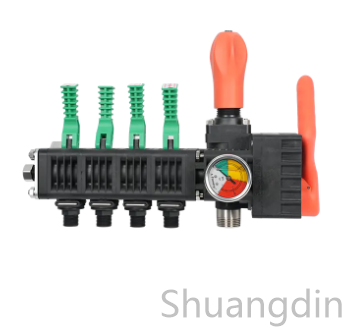
Agricultural spraying systems are designed to distribute pesticides, fertilizers, and other liquid products across different crop environments. Their performance depends on the coordination of several components, including the tank, pump, filters, hoses, pressure regulators, and spray nozzles. The pump is particularly important because it supplies the liquid required by the distribution system and influences the stability of the entire spraying process. Selecting a suitable Agricultural Sprayer Pump requires attention to its mechanical construction, fluid characteristics, material compatibility, and intended operating environment.
Different spraying applications create different equipment requirements. Field sprayers may operate across large cultivated areas, while orchard and greenhouse systems often use different hose arrangements and spray outlet configurations. The pump must work with these variations without creating unnecessary restrictions or mechanical stress. Equipment manufacturers should therefore evaluate the complete fluid circuit before choosing a pump design. Understanding the intended application helps determine the appropriate pumping mechanism and the materials needed for reliable operation.
Diaphragm technology is widely used in agricultural liquid transfer because of its reciprocating pumping mechanism. A flexible diaphragm moves inside a working chamber to create alternating suction and discharge stages. During suction, liquid enters through the inlet valve. During discharge, the diaphragm pushes the liquid toward the outlet, while the valve arrangement helps maintain the correct flow direction. This structure separates the liquid chamber from selected drive components, which can reduce direct chemical exposure to parts of the mechanical system.
Material engineering is an important part of pump design. Agricultural formulations can contain active chemical ingredients, additives, and other substances that interact differently with metals, plastics, and elastomers. The housing needs suitable strength and environmental resistance, while diaphragms and seals must retain their functional properties during repeated operation. Material selection should consider chemical composition, temperature, operating pressure, and exposure duration. Manufacturers should verify compatibility across the entire wetted path rather than evaluating only the main housing material.
Internal hydraulic design also affects performance. The geometry of the pumping chamber, inlet and outlet passages, and valve assemblies influences how liquid moves through the pump. Properly designed valve seats help control fluid direction, while accurate sealing interfaces reduce the possibility of leakage. The diaphragm must move consistently without excessive deformation or unnecessary mechanical stress. These engineering details contribute to predictable operation and can influence the service life of the pump.
Manufacturing processes help maintain the quality of individual components. Molding technology is used for various polymer and elastomer parts, while machining processes support accurate metal components and connection surfaces. Assembly procedures must maintain correct positioning of the diaphragm, valves, and housing sections. Quality control may involve dimensional inspections, material checks, visual examination, leakage testing, and functional verification. Consistent production standards are especially valuable for machinery manufacturers that integrate pumps into multiple equipment models.
Correct system matching is essential for reliable spraying. Flow demand and operating pressure depend on nozzle selection, hose dimensions, the number of active outlets, and the arrangement of pressure-control components. Filters help prevent contaminants from entering the pump, but they need regular inspection to avoid restrictions. If the suction line is poorly arranged or the discharge circuit contains blockages, the pump may experience unstable operation. Evaluating these factors together helps ensure that the selected equipment matches the actual spraying requirements.
Installation and maintenance practices further influence equipment reliability. Connections should be secured properly, and the suction line should avoid unnecessary bends or restrictions. Hoses must be compatible with the intended liquid, while mounting arrangements should provide sufficient support against vibration. During maintenance, operators should inspect filters, valves, hoses, seals, and visible pump surfaces. Changes in noise, leakage, or liquid output may indicate wear or blockage. Cleaning after use should follow the chemical manufacturer's instructions and the pump supplier's recommendations.
For agricultural machinery manufacturers, distributors, and professional equipment operators, selecting a suitable Agricultural Sprayer Pump involves balancing fluid delivery requirements, material compatibility, manufacturing consistency, and maintenance needs. Accessible replacement components and reliable supplier support can also simplify long-term equipment management. SHUANG DIN Co Ltd. provides agricultural diaphragm pump solutions for different spraying applications, with further information available at https://www.agriculturaldiaphragmpump.com/about/.
- Technology for Students
- Admissions & Applications
- Online Courses
- Career and Jobs
- Campus Life
- Drinks
- Film
- Fitness
- Food
- Games
- Gardening
- Health
- Home
- Literature
- Music
- Networking For Students
- Insights
- Party
- Religion
- Shopping
- Sports
- Theater
- Wellness
- Education News
- Business & Finance For Students
- Security, Law & Crime Education
- Insurance
- Science & Technology For Students
 English
 Arabic
 French
 Spanish
 Portuguese
 Deutsch
 Turkish
 Dutch
 Italiano
 Russian
 Romaian
 Portuguese (Brazil)
 Greek