


Integrated Systems for Efficient Aggregate Production
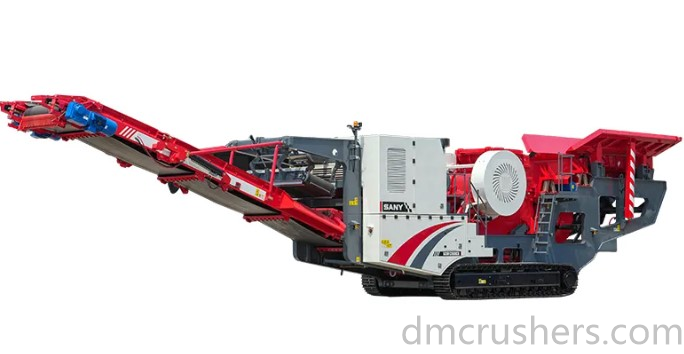
In quarrying, mining, construction, and recycling industries, a Crushing Plant is an integrated material processing system designed to transform large raw materials into aggregates suitable for different applications. Its performance depends not only on the individual crushing machines but also on how feeding, screening, conveying, and material storage work together. A coordinated arrangement helps maintain a continuous production process and allows operators to manage material flow more effectively.
The process usually begins with raw material delivery. Extracted rock, blasted stone, or collected construction waste is transferred to a feeding system that controls how materials enter the primary crushing stage. Consistent feeding is important because irregular material supply can affect crushing efficiency and create unnecessary pressure on equipment. Oversized pieces, unsuitable materials, or excessive foreign objects may also interrupt normal operation. Proper preparation and feeding management help establish a more stable starting point for the entire production line.
Primary crushing reduces large pieces of material into smaller fragments that can be handled by subsequent equipment. Jaw crushers are widely used in this stage because their crushing action is suitable for many types of hard and abrasive rock. The resulting material may then move through secondary crushing, where cone crushers or impact crushers are selected according to material characteristics and final product requirements. Each stage should be configured to support the next one rather than operating as an independent process.
Screening plays an important role in controlling the final aggregate distribution. After crushing, materials are separated according to particle size using vibrating screens or other screening equipment. Suitable fractions can be directed to storage or further processing, while oversized particles may return to a crushing stage for additional reduction. This circulation helps operators manage product grading and reduce the amount of material that does not meet the intended specifications. Screen selection should consider material shape, moisture, particle distribution, and the possibility of blockage.
Conveying equipment connects the different stages and supports continuous material transfer. Conveyor belts need to be arranged according to the production layout, including the distance between machines, changes in elevation, and the location of stockpiles. Poorly planned transfer points may cause material spillage, dust generation, or interruptions in production. Proper conveyor alignment, belt tension, loading arrangements, and maintenance access help maintain reliable material movement throughout the system.
The choice of equipment depends heavily on the material being processed. Limestone, granite, basalt, river stone, and recycled concrete have different physical properties that influence crushing behavior and wear. Hard and abrasive materials may require particular attention to crushing chamber design and wear-resistant components. Materials with higher moisture content may create additional challenges during screening and conveying. Evaluating these characteristics before equipment selection helps avoid configurations that are unsuitable for actual operating conditions.
Production requirements also influence system design. A project producing several aggregate grades may need a different screening and conveying arrangement from one focused on a limited range of products. Some operations require a combination of primary, secondary, and tertiary crushing, while others can achieve their objectives with a simpler process. The layout should account for expected material flow, equipment capacity relationships, stockpile management, and opportunities for future adjustments.
Automation and process monitoring can help operators understand the operating condition of the production line. Sensors and control systems may provide information about equipment status, motor loads, material flow, and potential interruptions. These functions can help identify unusual operating conditions and support more organized production management. However, monitoring systems work best when combined with trained personnel, routine inspections, and clear operating procedures. Technology cannot replace appropriate maintenance or responsible equipment operation.
Maintenance planning is another major factor in long-term performance. Crushing chambers, liners, screen meshes, conveyor belts, bearings, and drive components are subject to wear during regular production. Inspection schedules should reflect the abrasiveness of the material, operating intensity, and environmental conditions. Replacing worn components before they cause secondary damage can help reduce unexpected interruptions. Keeping commonly required spare parts available may also improve maintenance response.
Safety and environmental management should be incorporated into the overall layout. Protective guards, emergency stops, accessible walkways, and clearly defined operating areas help reduce risks around moving equipment. Dust suppression and suitable transfer-point arrangements can help manage airborne particles, while noise management and organized vehicle routes contribute to better site conditions. These measures should be considered during planning instead of being treated as separate additions after installation.
A properly configured Crushing Plant supports more than material reduction. It coordinates equipment, controls the movement of raw materials, and helps produce aggregates that meet the needs of construction, infrastructure, and industrial projects. Careful attention to material properties, process layout, maintenance, safety, and future production requirements can improve the reliability of the complete operation. Businesses evaluating different processing arrangements can learn more about equipment options at https://www.dmcrushers.com/product/stationary-crusher/ when planning a suitable crushing system.
- Technology for Students
- Admissions & Applications
- Online Courses
- Career and Jobs
- Campus Life
- Drinks
- Film
- Fitness
- Food
- Games
- Gardening
- Health
- Home
- Literature
- Music
- Networking For Students
- Insights
- Party
- Religion
- Shopping
- Sports
- Theater
- Wellness
- Education News
- Business & Finance For Students
- Security, Law & Crime Education
- Insurance
- Science & Technology For Students
 English
 Arabic
 French
 Spanish
 Portuguese
 Deutsch
 Turkish
 Dutch
 Italiano
 Russian
 Romaian
 Portuguese (Brazil)
 Greek