


Efficient Label Preparation for Modern Apparel Manufacturing
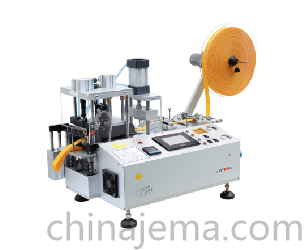
Labels are essential components in the apparel industry because they provide information, identification, and visual detail. Brand labels communicate product identity, size labels help customers select suitable clothing, and care labels provide instructions for washing and maintenance. Decorative labels can also contribute to a garment's overall design. Before these components are sewn, folded, or attached, they need to be prepared consistently. Label cutting is therefore an important stage connecting textile material preparation with finished garment assembly.
Labels can be produced from woven polyester, cotton blends, nylon, satin, and other synthetic or natural textile materials. Each material has different characteristics. Some have smooth surfaces, while others feature dense weaving, printed details, or flexible edges. These differences affect how the material behaves during feeding and separation. A suitable processing method should accommodate the textile structure while helping manufacturers maintain consistent dimensions and a neat appearance.
Material alignment is one of the main considerations during cutting. If a label strip shifts or feeds unevenly, the resulting pieces may vary in length or shape. This can complicate later operations, particularly when labels need to be folded into a specific form or sewn at a defined position. Stable feeding and repeatable cutting movements help make component preparation more predictable and reduce unnecessary adjustments.
Edge quality also influences the finished result. Depending on the material and intended application, poorly prepared edges may fray or appear uneven. Labels designed to contact the skin require particular attention because their finish can affect wearing comfort. A controlled preparation process helps manufacturers produce components that match the product design and meet the expectations of clothing brands.
From the consumer's perspective, labels serve both practical and visual purposes. A readable care label helps users maintain their clothing, while a size label makes product selection easier. Brand labels contribute to recognition and presentation. These functions depend on labels being properly prepared and incorporated into garments, even though the cutting operation takes place long before the finished product reaches a customer.
Automation can improve efficiency when manufacturers process labels in repeated production cycles. Manual methods may be suitable for samples, customized designs, and limited orders, but larger quantities require consistent output and effective labor management. Automated equipment can take over repetitive cutting movements, allowing operators to concentrate on material preparation, equipment monitoring, and quality inspection. This helps make production tasks more organized and manageable.
Flexibility matters because label requirements often vary between customers and product lines. A manufacturer may handle woven brand labels, printed care instructions, size indicators, and decorative tags within the same facility. Different designs and materials can require adjustments to handling methods and production arrangements. Equipment that fits adaptable workflows can help businesses manage these variations more efficiently.
Material utilization is another important consideration. Inaccurate cuts can create unusable pieces, unnecessary offcuts, or additional trimming work. Although each label requires relatively little material, losses can accumulate across large production orders. More consistent processing helps manufacturers reduce avoidable waste and make better use of the textile materials purchased for production.
The connection between cutting and downstream operations should not be overlooked. After separation, labels may need to be sorted, stacked, folded, sewn, or attached using different methods. Consistent pieces make these tasks easier to coordinate and can reduce interruptions caused by manual correction. When preparation is aligned with the needs of later production stages, manufacturers can maintain a more orderly workflow.
JEMA develops textile machinery solutions designed to support practical manufacturing requirements and organized production processes. By combining suitable equipment with careful material handling, manufacturers can improve component consistency, reduce rework, and use labor and materials more efficiently. Businesses evaluating machinery for label cutting can explore additional textile processing solutions at https://www.chinajema.com/product/.
- Technology for Students
- Admissions & Applications
- Online Courses
- Career and Jobs
- Campus Life
- Drinks
- Film
- Fitness
- Food
- Giochi
- Gardening
- Health
- Home
- Literature
- Music
- Networking For Students
- Insights
- Party
- Religion
- Shopping
- Sports
- Theater
- Wellness
- Education News
- Business & Finance For Students
- Security, Law & Crime Education
- Insurance
- Science & Technology For Students
 Italiano
 English
 Arabic
 French
 Spanish
 Portuguese
 Deutsch
 Turkish
 Dutch
 Russian
 Romaian
 Portuguese (Brazil)
 Greek