


Automation Equipment Gear Motor: A Purchasing Conversation, Not a Spec Sheet
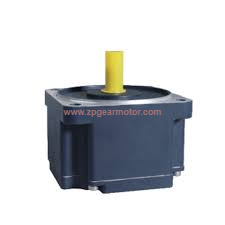
A commissioning engineer once described the worst week of a project as the one where every mechanical part was correct and the line still would not run. The frame was welded, the sensors were mounted, the safety circuit was proven, and one small drive refused to cooperate with the control system. Weeks like that are why the choice of an Automation Equipment Gear Motor deserves to start with the control architecture rather than the mechanical drawing, even though most buying guides begin somewhere else entirely.
What the machine already uses for speed control sets the first constraint, and it is usually locked in before anyone thinks about the drive. The honest question is not whether a motor runs, but how it behaves when commanded to reverse, hold position, or creep slowly under load. Those conditions expose gear quality and winding consistency in ways that full-speed bench testing never will, and they are the conditions automation equipment spends most of its life in. Zhejiang Province, Ruian Baixiao Machinery Co., Ltd. builds its zpgearmotor line around in-house winding and assembly, an arrangement that keeps electrical behavior predictable from one unit to the next rather than leaving it to chance across batches.
Heat has a way of finding the weakest part of a sealed cabinet. Automation cells rarely offer generous airflow, so the housing material ends up deciding how effectively the windings shed thermal load during repeated cycling. Die-cast aluminum spreads that load across the body and keeps temperatures in check, while treated or stainless housings earn their place where washdown and cleaning chemicals are part of the daily routine. Sealing matters just as much in dusty machining cells and humid packaging halls, and it is worth inspecting at the terminal cover and shaft exit rather than trusting a brochure. The gearset, meanwhile, absorbs the specific punishment of automation duty: frequent starts, reversals, and positioning moves that load teeth very differently from steady rotation. Hardened gears tolerate that pattern, while softer alternatives run quietly at first and develop backlash as cycles accumulate.
Few automation buyers, in practice, follow the general industrial checklist. Flange pattern and shaft geometry have to fit the integration drawing without adapters, because every adapter introduces alignment error that quietly transfers load to bearings and gear teeth. Small mechanical modifications are routine in automation projects, so it is fair to ask how a supplier handles a shaft length or flange adjustment that a catalog-only vendor cannot deliver. Lead time belongs in the same conversation, since a drive arriving three weeks late stalls an entire build schedule regardless of how well it performs on paper.
Bench tests flatter drives in ways that continuous cycling exposes. An hour of repeated cycling inside a sealed cabinet tells a buyer more about thermal margin than any printed figure, and the failures that emerge are rarely dramatic; they show up as nuisance trips that frustrate operators and slow the line. Noise is the other honest signal. A whining gearbox in a quiet production hall becomes a maintenance ticket, then a warranty claim, then a reason to change suppliers, and each stage costs more than the last.
Commissioning tests design decisions that looked fine on a drawing. Alignment between the drive and the driven mechanism needs care, because even modest misalignment loads components that were never built for it. Wiring access matters in dense cabinets where terminal box orientation forces technicians to bend cables beyond their rated radius. Maintenance access is the quieter concern, since a lubrication point blocked by adjacent hardware will be skipped, and skipped maintenance shortens service life more reliably than any defect.
Space is measured in millimeters in automation, and every component competes for room. A housing that follows the gearbox profile keeps the unit compact and improves cooling, while decorative bulk only steals space the machine does not have. Terminal covers that seal properly and open toward the technician save time on every service call, and output shaft options matching common coupling standards shorten lead times. The zpgearmotor range is organized around these integration realities, from compact units for tight enclosures to sealed designs for harsher environments, and the full line can be reviewed at https://www.zpgearmotor.com/product to see how the details translate into actual configurations, which is the standard any Automation Equipment Gear Motor should meet before a project team signs off.
- Technology for Students
- Admissions & Applications
- Online Courses
- Career and Jobs
- Campus Life
- Drinks
- Film
- Fitness
- Food
- Giochi
- Gardening
- Health
- Home
- Literature
- Music
- Networking For Students
- Insights
- Party
- Religion
- Shopping
- Sports
- Theater
- Wellness
- Education News
- Business & Finance For Students
- Security, Law & Crime Education
- Insurance
- Science & Technology For Students
 Italiano
 English
 Arabic
 French
 Spanish
 Portuguese
 Deutsch
 Turkish
 Dutch
 Russian
 Romaian
 Portuguese (Brazil)
 Greek