


RLINGD on Why an Auto Dimming Helmet Visor Is Mostly a Comfort Purchase
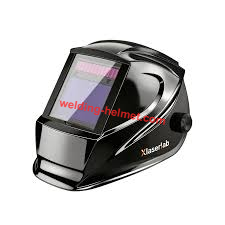
Most welders never replace a helmet because the filter died. They replace it because something else gave out first: a scratched cover lens that never quite cleared, a headband that stopped holding tension, a shell that cracked at the pivot after one too many drops on concrete. That pattern is worth remembering when shopping for an auto dimming helmet visor, because the parts that get the least attention in a product listing are usually the parts that decide how long the hood stays in service.
Materials speak to that longevity directly. The shell needs to tolerate spatter, resist softening during overhead work, and stay rigid at the hinge points, since a drooping hood forces the welder to hold position with their neck. Equally important is the cover lens, the sacrificial layer standing between the filter and a world of sparks and grinding dust. A cover lens that scratches easily or fits poorly turns a good filter into a blurry one within weeks. Taizhou Ruiling Optoelectronics Technology Co., Ltd. produces its welding-helmet line with molding and assembly handled in-house, which is how cover lens fit and frame tolerances stay consistent instead of drifting between batches. Before committing to any hood, a buyer should check how the cover lens seats, whether replacements are easy to source, and how the frame behaves when a welder swaps a lens between jobs. Sweatbands and headgear padding belong in the same conversation, because they are replaced far more often than anyone expects on a busy floor.
Buying criteria for a visor system should be organized around the work rather than the catalog. High-volume shops running the same process all day need consistency across a fleet of hoods, so batch-to-batch filter behavior matters more than any individual unit's peak performance. Job shops cycling between processes need adjustability and shade changes that do not require pulling the helmet off. Both types of buyer should ask about wear items: cover lenses, headgear bands, sweatbands, pivot hardware, and the small clips that always seem to disappear. A supplier who can quote replacement parts clearly and stock them locally is offering something more valuable than a lower unit price, because downtime on a hood stalls a welder entirely and pushes the crew toward borrowing whatever is hanging on the wall.
Sensor and filter function deserves scrutiny beyond the headline behavior. The moment that matters is not a bright, clean arc in good light; it is a shadowed tack in a corner with the welder's body blocking half the sensors. That is where sensor layout earns its keep, and where a poorly designed array gives itself away. Recovery after the arc stops matters too, because a visor that stays dark for a beat slows every reposition and trains welders to lift the hood when they should not. Ambient light handling, grind mode, and how the controls respond with gloves on all belong in the same conversation. None of these features are glamorous, but each one removes a decision from the welder's day, and the cumulative effect over a shift is larger than any single improvement suggests.
Comfort is where a visor system either becomes invisible or becomes a running complaint. Internal clearance matters for welders who wear respirators or safety glasses underneath, since a cramped shell presses eyewear into the face and breaks the seal. Headgear that distributes weight across the crown rather than the brow keeps fatigue away through long shifts, and tension that holds adjustment without drifting saves constant fiddling. Ventilation and fogging control are not luxuries in humid shops; they determine whether the welder can see the joint at all. Sweatband quality and how easily it is replaced round out the picture, along with how the hood balances when flipped up between passes.
Shell proportions and sight lines shape how much a welder can actually see while working, which makes field of view a safety feature rather than a styling choice. Clearance above the filter helps in awkward positions, clearance below helps with the joint itself, and a profile that follows the head instead of sitting boxy reduces strain on the neck over a long shift. A hood built around visibility looks purposeful because it is purposeful in use, and that intent carries through the whole welding-helmet range, from basic protective models to large-view designs and the respirator-compatible options gathered at https://www.welding-helmet.com/, where buyers can compare shell shaping, filter layout, and headgear side by side and hold every Auto Dimming Helmet Visor to the same standard before it ever reaches a shop floor.
- Technology for Students
- Admissions & Applications
- Online Courses
- Career and Jobs
- Campus Life
- Drinks
- Film
- Fitness
- Food
- Παιχνίδια
- Gardening
- Health
- Κεντρική Σελίδα
- Literature
- Music
- Networking For Students
- Insights
- Party
- Religion
- Shopping
- Sports
- Theater
- Wellness
- Education News
- Business & Finance For Students
- Security, Law & Crime Education
- Insurance
- Science & Technology For Students
 Greek
 English
 Arabic
 French
 Spanish
 Portuguese
 Deutsch
 Turkish
 Dutch
 Italiano
 Russian
 Romaian
 Portuguese (Brazil)