


NABL Approved Testing Laboratory in Delhi: Reliable Paver Block Testing for Quality Construction
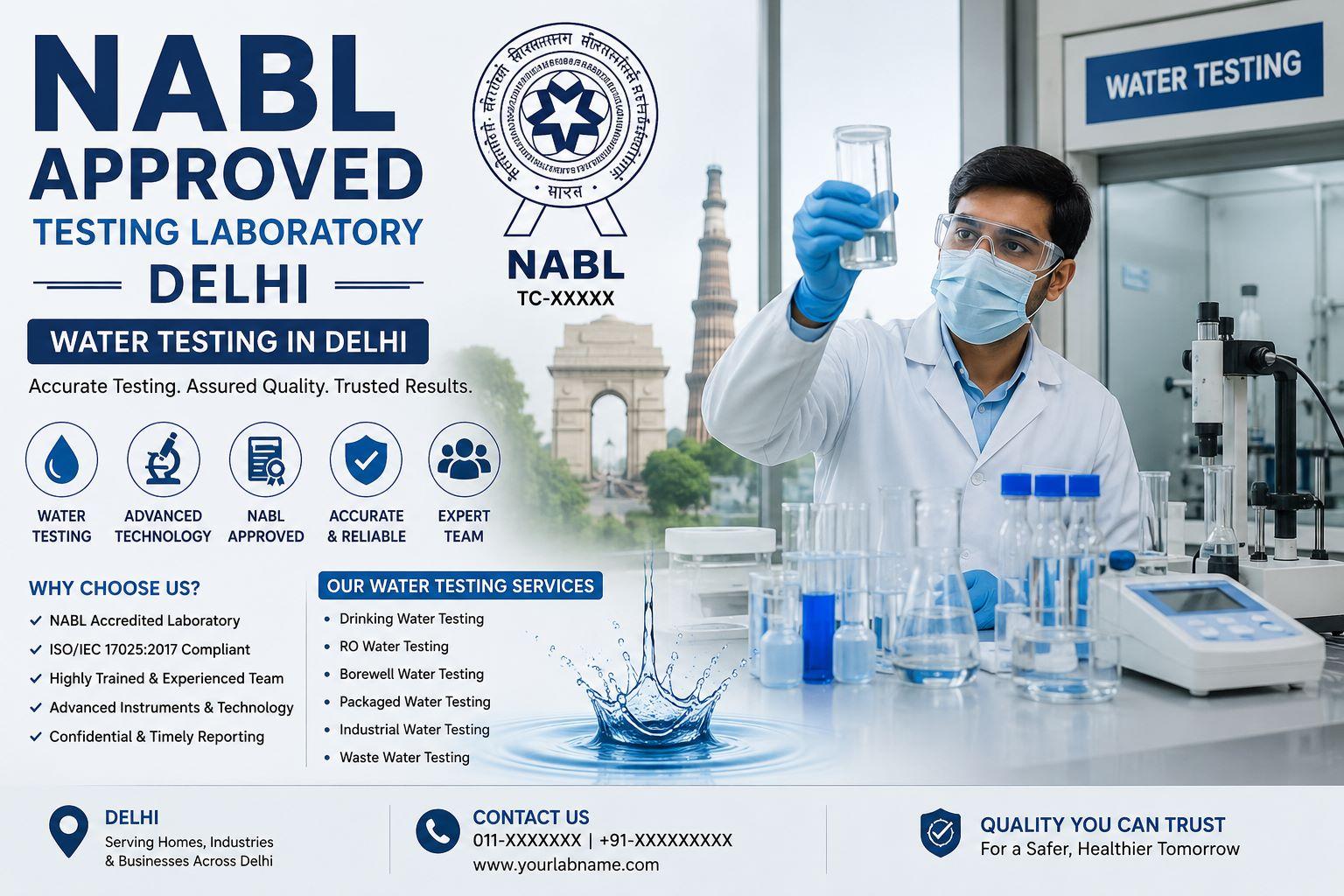
The strength and durability of any construction project depend on the quality of the materials used. Paver blocks are widely used for roads, footpaths, parking areas, residential driveways, industrial spaces, and commercial properties. However, poor-quality paver blocks can develop cracks, lose their shape, or deteriorate under regular traffic and changing weather conditions.
This is why choosing a reliable NABL approved testing laboratory in Delhi is essential. Professional laboratory testing helps contractors, manufacturers, builders, and construction companies verify whether their paver blocks meet the required quality standards.
Paver Block Testing provides important information about compressive strength, water absorption, dimensions, and overall product quality. With accurate test results, businesses can make informed decisions and deliver more dependable construction projects.
Why Is Paver Block Testing Important?
Paver blocks must withstand different environmental conditions and loads throughout their service life. Testing helps determine whether the blocks are suitable for their intended application.
A professional Paver Block Testing service offers several advantages:
-
Strength verification: Determines the load-bearing capacity of paver blocks.
-
Quality assurance: Identifies manufacturing defects and material inconsistencies.
-
Durability assessment: Helps evaluate resistance to regular use and environmental exposure.
-
Standard compliance: Checks whether products meet applicable Indian Standards.
-
Customer confidence: Provides documented laboratory results for clients and project authorities.
-
Better production control: Helps manufacturers improve their production processes.
Without proper testing, even visually attractive paver blocks may fail when exposed to heavy loads or continuous usage.
What Does a NABL Approved Testing Laboratory in Delhi Offer?
A NABL approved testing laboratory in Delhi provides laboratory testing services within its officially recognised scope of accreditation. NABL accreditation is based on technical competence, quality management, and the ability to produce reliable testing results.
For construction material manufacturers and infrastructure developers, selecting an appropriately accredited laboratory is an important step towards quality assurance.
A professional laboratory may offer:
-
Construction material testing
-
Paver block testing
-
Cement testing
-
Concrete testing
-
Aggregate testing
-
Compressive strength testing
-
Water absorption testing
-
Dimensional inspection
Before submitting samples, always verify that the laboratory's current NABL accreditation covers the specific test and material concerned.
Important Tests Performed on Paver Blocks
Paver Block Testing involves several procedures designed to evaluate the physical and mechanical properties of paving units.
1. Compressive Strength Test
Compressive strength testing evaluates how much load a paver block can withstand before failure. It is particularly important for blocks used in parking areas, industrial premises, commercial spaces, and roads.
The results help determine whether the product is suitable for its intended traffic conditions.
2. Water Absorption Test
Water absorption testing measures how much water a paver block absorbs under specified laboratory conditions.
Excessive water absorption may indicate a more porous structure, potentially affecting durability. This test helps assess the quality and consistency of the manufactured blocks.
3. Dimension and Tolerance Test
Accurate dimensions are important for proper installation and surface alignment. This test checks:
-
Length
-
Width
-
Thickness
-
Dimensional variations
-
Shape consistency
Correct dimensions help achieve a uniform pavement surface and reduce installation difficulties.
4. Abrasion Resistance Test
Paver blocks installed in busy areas experience continuous friction from pedestrians and vehicles. Abrasion resistance testing helps evaluate their ability to withstand surface wear.
It is particularly useful when assessing blocks intended for commercial and high-traffic locations.
5. Visual Inspection
Visual inspection identifies surface defects that may affect appearance or performance.
Common defects include cracks, chipped edges, uneven surfaces, and manufacturing irregularities.
Common Paver Block Tests at a Glance
| Test | Purpose | Quality Assessment |
|---|---|---|
| Compressive strength | Measures load resistance | Structural strength |
| Water absorption | Measures water uptake | Porosity-related performance |
| Dimension test | Checks measurements | Shape and size consistency |
| Abrasion resistance | Evaluates surface wear | Wear resistance |
| Visual inspection | Identifies visible defects | Surface quality |
The applicable testing methods and acceptance limits should be selected according to the relevant product specification and Indian Standards, including IS 15658 where applicable.
How to Choose the Right Testing Laboratory in Delhi
Selecting the right laboratory is just as important as selecting quality construction materials. Consider the following factors before making a decision:
-
NABL Accreditation: Check the laboratory's valid accreditation certificate and approved scope.
-
Technical Expertise: Look for experience in concrete products and construction material testing.
-
Testing Equipment: Ensure the laboratory uses appropriate and calibrated equipment.
-
Testing Standards: Confirm that the required tests follow applicable Indian Standards.
-
Accurate Reporting: Choose a laboratory that provides clear and properly documented test reports.
-
Professional Support: Reliable communication helps simplify sample submission and result interpretation.
A qualified NABL approved testing laboratory in Delhi can help businesses maintain consistent product quality and meet project requirements.
Who Needs Paver Block Testing Services?
These services are useful for different professionals involved in construction and infrastructure development.
-
Paver block manufacturers checking production quality.
-
Builders and contractors verifying construction materials.
-
Infrastructure companies working on roads and public spaces.
-
Real estate developers developing parking areas and pathways.
-
Government contractors meeting project specifications.
-
Quality control professionals maintaining material standards.
Regular Paver Block Testing helps these businesses reduce quality-related risks and improve confidence in their construction materials.
Frequently Asked Questions (FAQs)
1. What is Paver Block Testing?
It is a laboratory process used to evaluate the strength, water absorption, dimensions, abrasion resistance, and other properties of paving blocks.
2. Why should I choose a NABL approved testing laboratory in Delhi?
An appropriately accredited laboratory provides technically competent testing within its recognised accreditation scope and helps establish confidence in test results.
3. Which tests are commonly performed on paver blocks?
Common tests include compressive strength, water absorption, dimensional checks, abrasion resistance, and visual inspection.
4. Which Indian Standard applies to concrete paving blocks?
IS 15658 is the relevant Indian Standard for precast concrete paving blocks. Applicable requirements depend on the product and intended use.
5. Is compressive strength testing necessary?
Yes. It helps evaluate the ability of paver blocks to withstand compressive loads during their intended application.
6. What is the purpose of water absorption testing?
It measures water uptake under specified conditions and helps assess the characteristics of the block's internal structure.
7. Who should get paver blocks tested?
Manufacturers, builders, contractors, infrastructure developers, and construction material suppliers can benefit from laboratory testing.
8. Can testing identify poor-quality paver blocks?
Yes. Laboratory tests can identify properties that do not meet specified requirements, helping manufacturers investigate quality problems.
9. How can I verify a laboratory's NABL accreditation?
Check its current certificate and detailed scope through the official NABL directory. Confirm that the required testing method is covered.
10. When should paver blocks be tested?
Testing should be conducted during product development, routine quality control, before project approval, or whenever verification is required.
11. Does paver block testing improve construction quality?
Yes. It provides measurable information about material performance and supports better quality control and material selection.
- Technology for Students
- Admissions & Applications
- Online Courses
- Career and Jobs
- Campus Life
- Drinks
- Film
- Fitness
- Food
- Giochi
- Gardening
- Health
- Home
- Literature
- Music
- Networking For Students
- Insights
- Party
- Religion
- Shopping
- Sports
- Theater
- Wellness
- Education News
- Business & Finance For Students
- Security, Law & Crime Education
- Insurance
- Science & Technology For Students
 Italiano
 English
 Arabic
 French
 Spanish
 Portuguese
 Deutsch
 Turkish
 Dutch
 Russian
 Romaian
 Portuguese (Brazil)
 Greek