


Yongxing's Take on Women's Yoga Jumpsuit Construction: One Piece, Many Decisions
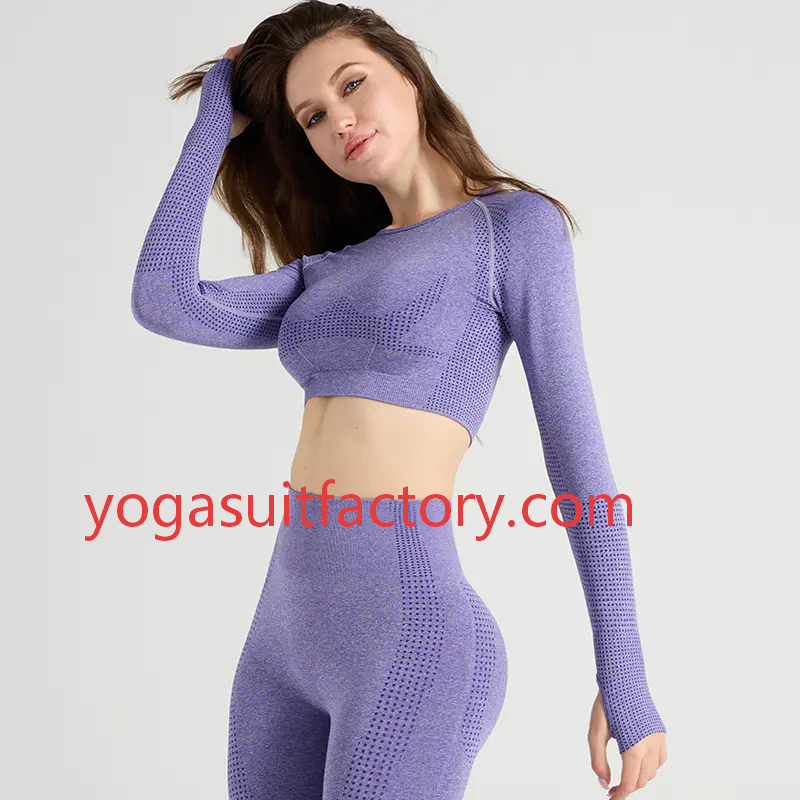
A jumpsuit asks more of its fabric than almost any other piece of activewear. Where leggings can get away with a forgiving knit and a simple tube construction, a one-piece garment has to stretch at the shoulder, hold at the waist, and release at the hip, all without twisting or pulling anywhere in between. That is why a Women's Yoga Jumpsuit lives or dies on how intelligently its knit and pattern were planned together, and why the best ones feel almost unremarkable to wear. The garment disappears, the movement stays free, and nothing needs adjusting between poses.
Fabric choice sets the ceiling for everything that follows. Jumpsuits need a knit with reliable four-way stretch and strong recovery, because a single garment spanning shoulder to ankle accumulates tension differently than separate top and bottom pieces. Blends built around quality elastane return to shape predictably, while cheaper formulations may feel soft at first and then develop sag at the knees, seat, or bust. Jinhua Yongxing Knitting Co., Ltd. approaches its sports and yoga jumpsuit line with circular-knit construction and direct control over yarn selection, a combination that helps keep recovery consistent across production runs. Buyers evaluating samples should stretch the fabric in multiple directions and watch for how cleanly it returns, then check whether the knit feels cool and breathable against the skin. A jumpsuit worn for a full session cannot afford to trap heat or hold moisture, so airflow and drying speed deserve as much attention as stretch.
From a buying standpoint, the questions worth asking go well beyond size charts. Shoulder and torso length are the critical fit variables in a one-piece garment, because a jumpsuit that pulls at the shoulder or bunches at the waist will never feel right no matter how good the fabric is. Buyers should confirm how the pattern accommodates different torso lengths and whether the brand offers guidance on choosing between regular and longer proportions. Waistband and seam placement come next. A well-placed waist seam follows the natural bend of the body, while a poorly positioned one digs in during forward folds. Gusset construction and leg opening design also influence comfort significantly, particularly for wearers who practice inversions or wide-leg poses. A capable supplier will be able to explain how each of these elements was tested, and that explanation is often more revealing than the sample itself.
Technology in jumpsuit construction is mostly invisible, which is exactly as it should be. Circular knitting allows stitch density to vary across the garment, so the shoulder area can offer support while the waist and hip remain flexible. Seam placement matters even more in a one-piece than in separates, since every seam has to survive the full range of motion from a deep lunge to an overhead reach. Flatlock and bonded seams reduce chafing, but only when the transitions are smooth and the thread or adhesive is matched to the fabric's stretch. Moisture management is another technical consideration that separates a garment that feels fresh after a session from one that feels clammy. The best constructions move sweat away from the skin and dry quickly without relying on surface treatments that fade with washing.
Daily wear is where a jumpsuit proves itself. The ideal piece moves from a morning yoga class to a coffee run to an afternoon of errands without a trip home to change. That versatility depends on details the wearer notices only when they fail: a neckline that stays put during inversions, a waist that does not roll when seated, leg openings that do not ride up during walks. Washing is part of the experience too, and a jumpsuit that pills or loses its shape after a few cycles quickly becomes loungewear. Women remember these small disappointments, and they shape whether a brand earns a second purchase.
Aesthetics in a jumpsuit are a balancing act between coverage and freedom. Clean lines, thoughtful seam placement, and restrained color choices tend to age well, while trend-driven cutouts or exaggerated proportions can date quickly. The strongest pieces make the garment look intentional from every angle, with details that support movement rather than decorate it. Buyers can review how different constructions and finishes come together at https://www.yogasuitfactory.com to see the difference between design that serves the body and design that simply follows a trend, and that same discipline is what turns an ordinary Women's Yoga Jumpsuit into the piece that gets reached for again and again.
- Technology for Students
- Admissions & Applications
- Online Courses
- Career and Jobs
- Campus Life
- Drinks
- Film
- Fitness
- Food
- Jocuri
- Gardening
- Health
- Home
- Literature
- Music
- Networking For Students
- Insights
- Party
- Religion
- Shopping
- Sports
- Theater
- Wellness
- Education News
- Business & Finance For Students
- Security, Law & Crime Education
- Insurance
- Science & Technology For Students
 Romaian
 English
 Arabic
 French
 Spanish
 Portuguese
 Deutsch
 Turkish
 Dutch
 Italiano
 Russian
 Portuguese (Brazil)
 Greek