


Forged Steel Ball Valve Supplier for Industrial Projects
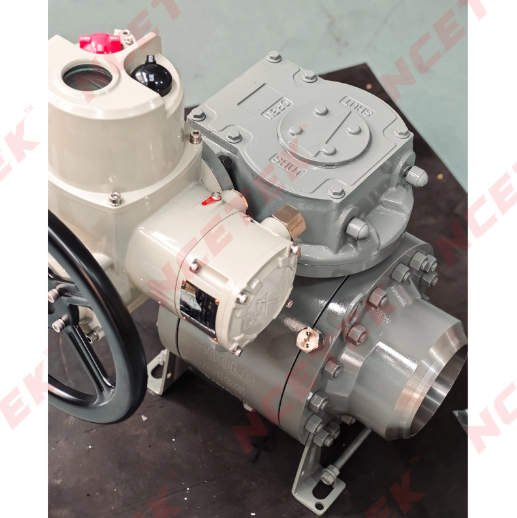
Forged steel ball valves are used in industrial pipeline systems where material integrity, structural design, and reliable shut-off are important considerations. Selecting a suitable Forged Steel Ball Valve Supplier involves more than comparing product prices or delivery schedules. Buyers should evaluate the manufacturer's understanding of service conditions, material options, manufacturing capabilities, quality inspection procedures, and ability to coordinate technical requirements for different projects.
Forging is a manufacturing process in which metal is shaped under compressive force. For valve components, this process can help produce a dense and mechanically robust material structure when the forging procedure and subsequent heat treatment are properly controlled. Forged steel is commonly considered for applications where the valve body must meet specific mechanical and pressure-related requirements. The suitability of a forged design still depends on the material grade, component geometry, manufacturing quality, and applicable engineering standards.
Material selection should begin with the pipeline's operating environment. Forged carbon steel is widely used in many industrial services, while forged stainless steel may be selected where corrosion resistance is a significant concern. Alloy steel options can be considered for certain demanding temperature or process conditions. Buyers should provide information about the transported medium, operating temperature, pressure, and potential corrosive elements. This allows the manufacturer to assess whether the proposed material is appropriate for the intended service.
The design of a forged steel ball valve typically includes a body, ball, stem, seats, sealing components, and an operating mechanism. Each component contributes to the valve's overall function. The body provides structural support, while the ball rotates to open or close the flow passage. The stem transfers operating movement to the ball, and the seats establish the sealing interface. The configuration may vary according to the valve's size, pressure class, connection type, and intended application.
Floating and trunnion-mounted structures are two common ball valve designs. In a floating ball valve, the ball is supported by the seats and can move slightly under pressure to establish sealing contact. In a trunnion-mounted design, the ball is supported by additional mechanical structures, which can help manage operating forces in larger or higher-pressure applications. The choice between these structures should be based on the engineering requirements rather than a general assumption that one design is always preferable.
Seat selection is equally important. Soft-seated valves often use polymer-based sealing materials and are considered for applications requiring tight shut-off under suitable operating conditions. Metal-seated configurations may be appropriate for certain high-temperature or abrasive services. The seat material must be compatible with the medium and operating environment. Buyers should also discuss the expected leakage criteria, cycle requirements, and maintenance considerations before confirming a valve configuration.
Manufacturing quality depends on the control of both forged components and finished assemblies. Forged parts may require heat treatment, machining, and inspection to achieve the intended mechanical and dimensional characteristics. Critical surfaces must be processed carefully to support proper assembly and sealing. The ball surface, stem connection, seat contact area, and body sealing interfaces all require appropriate manufacturing attention. Consistent procedures can help reduce variation between production batches.
Inspection requirements should be discussed before ordering. Depending on the design and project specification, quality procedures may include material verification, dimensional inspection, visual examination, pressure testing, and functional testing. Applicable standards may include API and ASME requirements where relevant to the specific valve design. Buyers should confirm the exact standard, test scope, documentation, and acceptance criteria rather than assuming that every product follows the same inspection plan.
A professional Forged Steel Ball Valve Supplier should also be able to coordinate technical details with purchasing teams and engineering departments. Important information includes nominal size, pressure rating, end connection, body and trim materials, operating method, and any special requirements for installation or maintenance. For projects involving actuated valves, the supplier may need to review actuator type, operating torque, control arrangements, and available installation space.
Forged steel ball valves serve a range of industrial sectors. Oil and gas facilities use pipeline valves for isolation and process control. Petrochemical plants may require material combinations suitable for specific chemical media. Power generation facilities can involve demanding temperature and pressure conditions, while general industrial plants may need valves for utility lines and process equipment. Each application should be assessed individually because operating conditions can differ significantly even within the same industry.
Procurement planning also benefits from clear communication about delivery, packaging, traceability, and after-sales support. Buyers should confirm the production schedule, inspection arrangements, marking requirements, and documents needed for project approval. For OEM or ODM orders, drawings and technical specifications should be reviewed before manufacturing to reduce the risk of design misunderstandings. Changes to materials or dimensions should be formally confirmed by both parties.
Choosing a Forged Steel Ball Valve Supplier with suitable engineering knowledge and manufacturing coordination capabilities can make sourcing more predictable. Rather than relying only on general product descriptions, buyers should request configuration details that match the actual pipeline conditions. A well-defined technical review helps ensure that the selected valve is appropriate for its intended use and supports smoother project execution. To explore industrial ball valve products and available configurations, visit https://www.ncevalve.com/product/
- Technology for Students
- Admissions & Applications
- Online Courses
- Career and Jobs
- Campus Life
- Drinks
- Film
- Fitness
- Food
- Spiele
- Gardening
- Health
- Startseite
- Literature
- Music
- Networking For Students
- Insights
- Party
- Religion
- Shopping
- Sports
- Theater
- Wellness
- Education News
- Business & Finance For Students
- Security, Law & Crime Education
- Insurance
- Science & Technology For Students
 Deutsch
 English
 Arabic
 French
 Spanish
 Portuguese
 Turkish
 Dutch
 Italiano
 Russian
 Romaian
 Portuguese (Brazil)
 Greek