


Are Motorcycle Racing Gloves Suitable for Wet Track Sessions? Grip, Waterlogging, and Drying Considerations
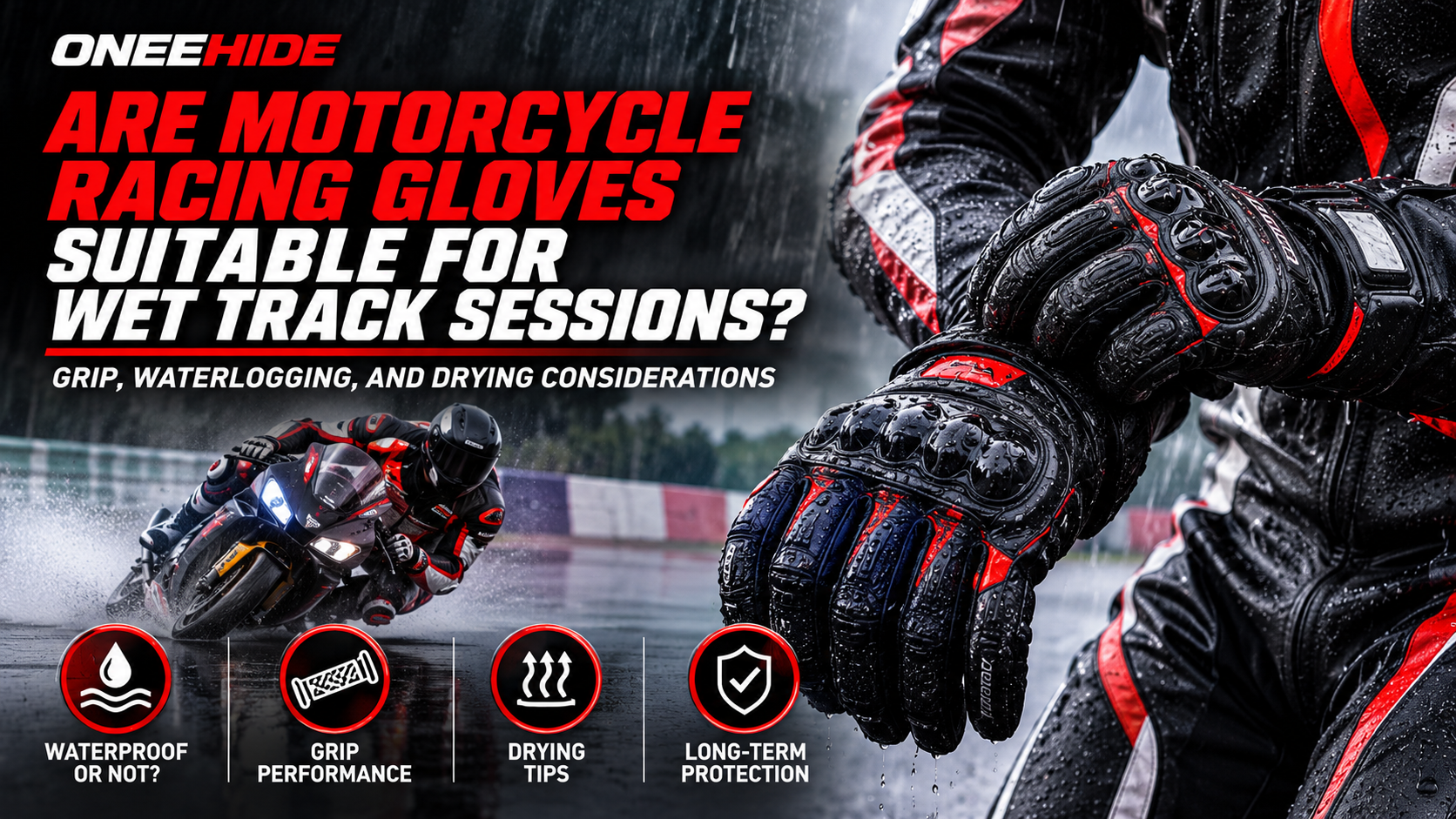
Rain changes the way a motorcycle behaves on a circuit, but it also changes what a rider expects from their protective equipment. Gloves that feel comfortable and provide excellent handlebar feedback in dry conditions may become less comfortable after repeated exposure to water. Leather can absorb moisture, internal linings can become damp, and the feel of the throttle, clutch, and brake controls may change.
Can motorcycle racing gloves still be used during a wet track session? Yes, provided they are suitable for the conditions, remain structurally sound, and allow the rider to operate the controls without restriction. However, ordinary track-focused gloves should not automatically be treated as waterproof.
The distinction matters because racing gloves are generally designed around hand protection, secure wrist retention, flexibility, and control feel. Waterproof riding gloves have additional construction requirements that can change their weight, internal layering, and fit. Understanding these differences helps riders decide whether their existing gloves are appropriate for a rainy track day or whether a different pair is needed.
Are Motorcycle Racing Gloves Suitable for Wet Track Sessions?
Motorcycle racing gloves can be used in wet conditions when their construction, condition, and fit are appropriate for the intended riding environment. However, a conventional leather racing glove without waterproof construction may become uncomfortable and lose some of its original feel after prolonged exposure to rain.
Most track-focused gloves prioritise abrasion resistance, palm reinforcement, knuckle protection, wrist support, and close contact with the motorcycle controls. Some models also use perforated leather or ventilation panels to improve airflow during demanding riding sessions.
These features are useful in dry conditions but can allow water to enter more easily.
Before choosing gloves for a rainy track day, consider three separate questions:
-
Are they waterproof? Check whether the manufacturer specifies a waterproof membrane or other water-resistant construction.
-
Do they maintain control feel? The rider must still operate the throttle, clutch, and brake levers comfortably.
-
Do they retain their protective fit? The gloves should remain securely attached, with their protective components in their intended positions.
Riders comparing different motorcycle racing gloves should examine these construction details rather than relying on the product's racing appearance alone. A long gauntlet, reinforced palm, or hard knuckle protector does not automatically mean that a glove provides waterproof protection.
Track-Focused Gloves Versus Waterproof Riding Gloves
Track-focused gloves are designed to provide a secure fit, impact protection, abrasion resistance, and useful feedback through the hands. Their construction often includes leather palms, reinforced contact areas, pre-curved fingers, and protective elements over vulnerable parts of the hand.
Waterproof riding gloves have a different priority: preventing water from reaching the hand while maintaining adequate dexterity.
Some waterproof models achieve this through an integrated membrane and sealed construction. Others use layered designs that separate the waterproof compartment from the external material.
Neither category is automatically superior in every situation. A dedicated racing glove may offer a closer fit and more direct control feel, while a waterproof glove may provide better protection against prolonged rain exposure.
The correct choice depends on the particular glove and whether it is suitable for track use, not simply on whether it has a waterproof label.
How Rain Affects Glove Grip and Handlebar Control
Water can affect the riding experience in more than one way. The external surface of a glove, the material covering the palm, and the internal lining all influence how the rider interacts with the motorcycle's controls.
1. Water Changes the Feel of the Palm
The palm is the most important contact area between the glove and the handlebar grip.
Many racing gloves use leather or reinforced synthetic materials in this area. These materials provide a combination of abrasion resistance, flexibility, and friction, although their behaviour varies between models.
When rain reaches the palm, the rider may notice a change in friction and tactile feedback. Water on the handlebar grip can also affect the contact between the glove and the control surface.
This does not mean every wet leather glove suddenly becomes slippery. The actual result depends on the glove material, palm texture, grip compound, and amount of water present.
Check whether the gloves still provide consistent contact when:
-
Holding the throttle in different positions.
-
Operating the clutch repeatedly.
-
Applying the front brake progressively.
-
Moving the fingers independently.
-
Maintaining a relaxed grip without excessive pressure.
A rider should never compensate for poor wet-weather feedback by gripping the handlebars more forcefully. Excessive hand tension can make smooth control inputs more difficult.
2. Waterlogging Can Affect the Internal Lining
Waterlogging occurs when moisture accumulates within the glove's outer material, lining, or internal construction.
A glove may initially feel comfortable in light rain but become increasingly heavy or unpleasant during prolonged exposure. If water reaches the lining, the rider may experience damp fingers, uncomfortable material movement, or difficulty putting the gloves on and taking them off.
An internal lining that folds or shifts can also create pressure points around the fingers and palm.
This is particularly problematic when the rider needs precise finger movement for braking and clutch operation. Even small changes in fit can become distracting during a demanding session.
3. Wet Conditions Can Reduce Hand Comfort
Cold and damp hands can make a track session more difficult to manage.
Moisture on the glove exterior can contribute to heat loss, particularly when airflow continues to move across the hands. A rider may experience colder fingertips, stiffness, or reduced comfort as the session progresses.
The Held glove-care guidance specifically explains that a wet glove exterior can contribute to heat loss and recommends maintaining suitable water-repellent treatment. This is relevant even when the glove is not completely soaked.
A rider should not ignore persistent coldness or reduced finger movement simply because the gloves still look intact.
Waterproof Racing Gloves: What Should Riders Look For?
Not every glove described as suitable for rain offers the same level of protection against water. Riders should examine the actual construction and manufacturer specifications before taking a pair onto a wet circuit.
Waterproof Membranes and Sealed Construction
A waterproof membrane creates a barrier intended to prevent external water from reaching the hand while allowing some moisture vapour to escape.
For this construction to work as intended, the surrounding design also matters. Seams, openings, cuff arrangements, and membrane placement can influence how effectively the glove keeps water out.
Some waterproof motorcycle gloves use a separate waterproof liner, while others incorporate a membrane into a layered construction.
The advantage is improved resistance to rain exposure. The limitation is that additional layers can change how closely the glove fits and how much detail the rider feels through the fingertips and palm.
A useful example is GORE-TEX Grip technology, which bonds glove layers together to preserve dexterity and tactile feedback while maintaining waterproof protection. This demonstrates that waterproof construction does not necessarily mean sacrificing all direct feel.
Gauntlet Length and Wrist Closure
The wrist is another potential entry point for rain.
A short glove may leave more of the wrist exposed, especially when the rider's arms extend forward on a sportbike. A longer gauntlet can provide additional coverage when properly combined with the jacket sleeve.
However, the direction of overlap matters. The glove and jacket should be arranged according to their manufacturers' instructions so that water does not run directly into the cuff.
Check that:
-
The wrist restraint remains firmly secured.
-
The gauntlet does not slide down during movement.
-
The jacket and glove overlap correctly.
-
The closure does not restrict wrist movement.
-
No exposed gap appears when reaching towards the handlebars.
A waterproof membrane cannot compensate for an incorrectly secured cuff.
Palm Construction and Finger Flexibility
Waterproof protection is only useful when the rider can still operate the controls naturally.
Inspect the palm material, finger seams, pre-curved shape, and grip surfaces. The glove should allow the fingers to move without excessive effort and should not create folds that interfere with lever operation.
Try the complete setup with the actual track motorcycle rather than judging it only while standing.
A glove that feels flexible in a shop may feel noticeably different when the rider maintains a forward-leaning position and repeatedly operates the controls.
What Does EN 13594 Certification Tell You About Wet-Weather Gloves?
EN 13594:2015 is a European standard for protective gloves worn by motorcycle riders. It assesses protective characteristics and ergonomic requirements, but it should not be mistaken for a waterproof performance rating.
According to SATRA's explanation of the standard, motorcycle gloves are assessed for properties including material strength, seam integrity, abrasion resistance, restraint, and impact protection.
The standard specifies two performance levels:
-
Level 1: Designed to provide protection while maintaining relatively low ergonomic penalties.
-
Level 2: Provides greater protective performance, although additional weight and restrictions may be involved.
There are also measurable requirements relating to glove retention. For example, SATRA describes minimum cuff extensions of 5 mm for Level 1 and 50 mm for Level 2 gloves, measured from the wrist line. The corresponding restraint tests use extraction forces of 25 N and 50 N.
These measurements relate to protective design and retention, not waterproofness.
A glove carrying an EN 13594 marking should therefore not automatically be considered suitable for prolonged rainfall. Riders should check the manufacturer's separate waterproofing specifications, intended-use information, and care instructions before relying on it during a wet session.
How to Dry Motorcycle Racing Gloves After a Wet Track Session
Proper drying is essential after riding in the rain. Leaving gloves damp inside a gear bag can encourage unpleasant odours, material deterioration, and problems with the internal lining.
The correct drying method depends on whether the gloves use leather, textile materials, or a waterproof membrane.
Step 1: Remove Excess Surface Moisture
Start by wiping the outside of the gloves with a clean, absorbent cloth.
Do not twist or aggressively squeeze the gloves to remove water. Excessive handling can distort the shape, stress the seams, or damage the internal construction.
For leather gloves, Held recommends wrapping the gloves in a dry cloth and gently squeezing out excess moisture without wringing them.
Step 2: Allow Natural Air Drying
Open the wrist closures and place the gloves in a well-ventilated area at room temperature.
Avoid common shortcuts such as:
-
Placing gloves directly on a radiator.
-
Using a hairdryer or heat gun.
-
Leaving them under direct sunlight.
-
Using a tumble dryer.
-
Storing wet gloves inside an enclosed gear bag.
Direct heat can cause leather to become stiff and may damage other materials or internal components.
Held specifically recommends air drying both leather and textile gloves without artificial heating or direct sunlight. Its instructions also advise against wringing wet textile and membrane gloves.
Step 3: Restore Leather Condition and Inspect the Fit
Once leather gloves have dried, check whether the material has become unusually stiff or lost its original flexibility.
Use a suitable leather-care product only when permitted by the manufacturer's instructions. Avoid applying excessive conditioner to the palm, particularly where it could affect the intended grip characteristics.
For waterproof textile gloves, follow the manufacturer's recommendations for restoring water repellency. Held explains that factory-applied water-repellent treatments can lose effectiveness over time, particularly when water stops beading and rolling off the outer material.
Before putting the gloves away, check the following:
-
Finger seams remain intact.
-
Palm reinforcement has not separated.
-
Knuckle protectors remain secure.
-
Wrist closures still fasten correctly.
-
Internal lining remains in its intended position.
-
No unusual stiffness or deformation has developed.
Complete drying is particularly important before storage. A damp glove should not be packed away simply because its exterior appears dry.
What to Check Before Riding on a Wet Circuit
A wet track requires a broader safety assessment than simply checking whether the gloves are waterproof.
The circuit surface, tyre selection, weather, visibility, and track-day rules all influence whether the session should proceed.
Michelin's motorcycle track-day guidance identifies its Power Rain tyres as a circuit-specific option for damp, wet, and fully wet surfaces. The company also distinguishes these tyres from road-legal track-day options. This illustrates why wet-track preparation involves equipment specifically suited to the conditions, rather than relying on protective clothing alone.
Before leaving the pit lane, perform a brief equipment check:
-
Check the gloves internally: Make sure the fingers are dry enough to move comfortably and that the lining has not shifted.
-
Test the handlebar controls: Confirm that the throttle, clutch, and brake levers can be operated smoothly.
-
Inspect the wrist closures: Make sure the gloves remain securely attached and the cuffs work with the jacket sleeves.
-
Check the palm surfaces: Look for damaged grip material, loose reinforcement, or unusual changes in texture.
-
Confirm track suitability: Follow the circuit operator's wet-weather procedures and check whether your tyres and motorcycle setup are appropriate.
A glove that feels excessively bulky, becomes difficult to close, or interferes with control operation should not be treated as acceptable simply because it keeps water out.
When Should You Replace Your Racing Gloves Instead of Drying Them?
Getting caught in rain does not automatically mean a pair of racing gloves needs replacing. Many gloves can tolerate occasional moisture when maintained according to the manufacturer's instructions.
However, some damage cannot be corrected through drying or conditioning.
Consider replacing the gloves or having them professionally assessed when you notice:
-
Leather that remains unusually stiff or cracked after proper drying.
-
Open seams around the fingers, palm, or wrist.
-
Damaged or displaced knuckle protection.
-
Detached palm reinforcement.
-
A waterproof membrane that no longer functions as intended.
-
Internal lining that has separated or become permanently distorted.
-
Wrist closures that no longer provide secure retention.
The same applies to gloves involved in a crash. Visible exterior condition alone cannot establish that their protective construction remains intact.
A glove may look acceptable while having damaged stitching or compromised protective components beneath the surface.
Choosing Gloves for Your Next Wet Track Session
The most practical approach is to match glove construction to the expected weather and riding environment.
A conventional track-focused leather glove can remain a reasonable option for occasional damp conditions if it maintains its protective fit, control feel, and structural integrity. However, prolonged rain exposure makes waterproof construction and careful moisture management more important.
Riders who regularly attend events in unpredictable weather may benefit from keeping a separate pair of waterproof motorcycle gloves. Before using them on a circuit, verify that their protective construction, wrist retention, flexibility, and track-day suitability meet the requirements of the intended event.
There is no reason to sacrifice hand protection simply to keep the gloves dry. Nor should waterproofing be treated as more important than the ability to operate motorcycle controls accurately.
The right pair should keep the rider's hands protected while allowing natural finger movement, consistent handlebar contact, and secure wrist coverage. Just as importantly, proper cleaning and drying after each wet session help preserve the materials and keep the gloves ready for the next track day.
- Technology for Students
- Admissions & Applications
- Online Courses
- Career and Jobs
- Campus Life
- Drinks
- Film
- Fitness
- Food
- Games
- Gardening
- Health
- Home
- Literature
- Music
- Networking For Students
- Insights
- Party
- Religion
- Shopping
- Sports
- Theater
- Wellness
- Education News
- Business & Finance For Students
- Security, Law & Crime Education
- Insurance
- Science & Technology For Students
 English
 Arabic
 French
 Spanish
 Portuguese
 Deutsch
 Turkish
 Dutch
 Italiano
 Russian
 Romaian
 Portuguese (Brazil)
 Greek