


Hydraulic Hose and Drilling Hose: Types, Applications, Benefits, and Selection Guide
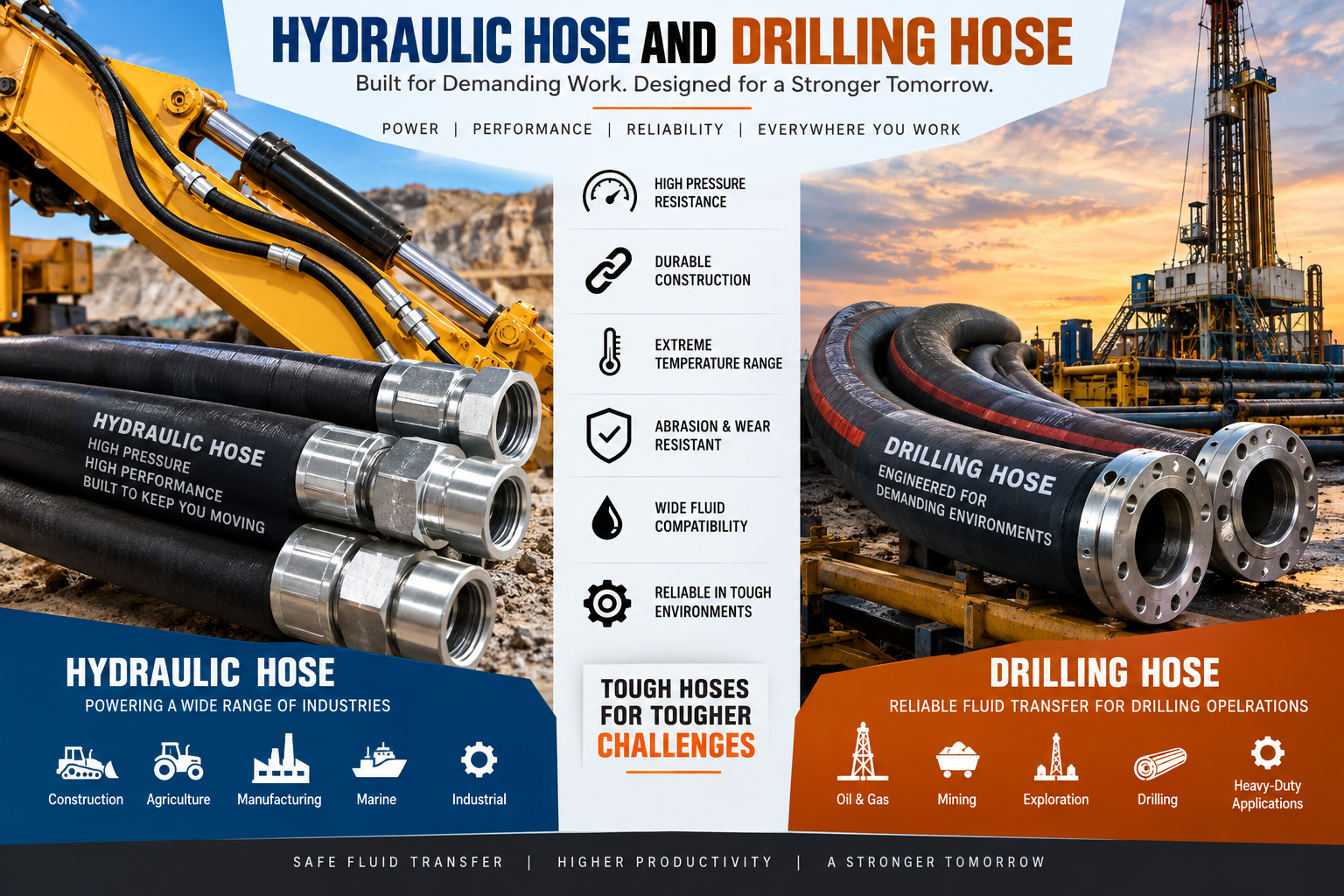
Hydraulic systems and drilling operations depend on reliable equipment to maintain safety, efficiency, and consistent performance. Among the most important components are hydraulic hose and drilling hose, which help transport fluids under different pressure and operating conditions. Although both hoses are designed to handle demanding industrial environments, their construction, applications, and performance requirements are different.
Choosing the right hose is essential for preventing fluid leakage, reducing equipment downtime, and maintaining smooth operations. Whether you work in construction, manufacturing, mining, agriculture, or the oil and gas industry, understanding these hoses can help you make better equipment decisions.
In this guide, we will explore hydraulic hose and drilling hose, their types, applications, benefits, differences, and important selection factors.
What Is a Hydraulic Hose?
A hydraulic hose is a flexible, reinforced tube designed to carry hydraulic fluid between different components of a hydraulic system. It transfers pressurized oil or other compatible fluids to operate machinery and equipment.
These hoses are commonly used in excavators, cranes, forklifts, industrial machines, agricultural equipment, and construction vehicles.
A high-quality hydraulic hose is manufactured to withstand pressure, vibration, temperature changes, and mechanical stress. Its flexibility also allows equipment components to move without interrupting fluid flow.
Main Components of a Hydraulic Hose
A hydraulic hose generally consists of three important layers:
-
Inner Tube: Carries hydraulic fluid and provides resistance to compatible oils and chemicals.
-
Reinforcement Layer: Usually made from braided or spiral steel wire or textile materials to withstand internal pressure.
-
Outer Cover: Protects the hose against abrasion, weather, moisture, and external damage.
What Is a Drilling Hose?
A drilling hose is a heavy-duty industrial hose designed for demanding drilling operations, particularly in the oil and gas industry. It is used to transport drilling fluids, mud, and other compatible materials between drilling equipment.
Drilling operations involve high pressure, continuous movement, vibration, and challenging environmental conditions. Therefore, drilling hoses are specially engineered to deliver reliable performance under demanding working conditions.
These hoses are commonly used in drilling rigs, mud circulation systems, and oilfield equipment.
Key Features of Drilling Hose
A quality drilling hose offers several important characteristics:
-
Heavy-duty reinforcement for demanding pressure conditions.
-
Flexible construction for equipment movement.
-
Resistance to abrasion and harsh operating environments.
-
Compatibility with specified drilling fluids.
-
Durable construction for continuous industrial applications.
The correct hose specification must always match the drilling system's pressure, temperature, fluid compatibility, and applicable safety requirements.
Hydraulic Hose vs. Drilling Hose: Key Differences
Although both products transport fluids, their designs and applications serve different industrial requirements.
|
Comparison Factor |
Hydraulic Hose |
Drilling Hose |
|---|---|---|
|
Main purpose |
Hydraulic fluid transfer |
Drilling fluid transfer |
|
Common industries |
Construction, agriculture, manufacturing |
Oil and gas, drilling |
|
Operating conditions |
High-pressure hydraulic systems |
Demanding drilling environments |
|
Construction |
Rubber or thermoplastic with reinforcement |
Heavy-duty reinforced construction |
|
Flexibility |
Depends on application |
Designed for drilling equipment movement |
|
Fluid type |
Hydraulic oil and compatible fluids |
Drilling mud and specified fluids |
|
Main priority |
Pressure and flexibility |
Pressure, durability, and fluid compatibility |
Selecting between these products requires understanding the actual application rather than choosing based on appearance alone.
Different Types of Hydraulic Hose
Different hydraulic systems require different hose constructions. Some commonly used types include:
1. Wire Braided Hydraulic Hose
Wire braided hoses contain one or more layers of steel wire reinforcement. They are widely used in industrial and mobile hydraulic systems.
2. Spiral Hydraulic Hose
Spiral hydraulic hoses use multiple layers of steel wire reinforcement. They are suitable for demanding high-pressure applications when selected according to the manufacturer's specifications.
3. Thermoplastic Hydraulic Hose
These hoses are lightweight and flexible. They are often used in applications where reduced weight and specific chemical resistance are important.
4. Textile Reinforced Hydraulic Hose
Textile reinforcement provides flexibility for suitable low- and medium-pressure applications.
Common Applications of Drilling Hose
Drilling hose plays an important role in maintaining fluid circulation and supporting drilling operations.
Common applications include:
-
Oil and gas drilling rigs.
-
Drilling mud circulation systems.
-
Offshore drilling operations.
-
Onshore drilling equipment.
-
Industrial drilling machinery.
-
Mud pump and related fluid-handling connections.
Each application requires a hose designed for its specific working conditions. For example, rotary drilling hoses and mud handling hoses may have different construction and performance requirements.
Benefits of Using High-Quality Hydraulic Hose and Drilling Hose
Investing in properly specified industrial hoses offers several advantages.
1. Improved Operational Efficiency
Reliable hoses help maintain consistent fluid movement, allowing connected machinery to operate smoothly.
2. Better Pressure Handling
Properly rated hoses support the pressure requirements of their intended applications and help reduce the risk of unexpected failures.
3. Increased Equipment Protection
A suitable hose reduces the possibility of fluid leakage, pressure loss, and damage to connected equipment.
4. Long-Term Durability
Quality materials and appropriate reinforcement help hoses withstand abrasion, vibration, and environmental exposure.
5. Reduced Maintenance Costs
Regular inspection and correct hose selection can reduce unexpected downtime and unnecessary replacement expenses.
How to Choose the Right Hydraulic Hose or Drilling Hose
Choosing the correct hose requires careful consideration of several technical factors.
Follow these steps before purchasing:
-
Check Operating Pressure: Select a hose with a rated working pressure suitable for the system.
-
Identify Fluid Compatibility: Ensure the inner tube material is compatible with the fluid being transported.
-
Consider Temperature: Check the hose's minimum and maximum operating temperature.
-
Measure Hose Size: Select the correct internal diameter to maintain the required flow rate.
-
Evaluate Flexibility: Consider movement, vibration, and installation space.
-
Check Reinforcement: Choose suitable reinforcement for the pressure and operating conditions.
-
Verify Standards: Check applicable industry standards, manufacturer documentation, and certification requirements.
Never select a hose based only on its external appearance or price. Technical compatibility and safety should always come first.
Maintenance Tips for Longer Hose Life
Proper maintenance helps extend hose service life and improves workplace safety.
-
Inspect hoses regularly for cracks, bulges, cuts, and abrasion.
-
Check fittings and connections for signs of leakage.
-
Avoid twisting or bending hoses beyond their specified limits.
-
Keep hoses away from sharp edges and excessive heat.
-
Replace damaged hoses immediately.
-
Follow manufacturer-recommended inspection and replacement schedules.
-
Never search for leaks using bare hands when a pressurized hydraulic system is operating.
Important: Never exceed the hose's rated working pressure. A damaged or improperly installed hose can create serious safety hazards.
Frequently Asked Questions
1. What is a hydraulic hose used for?
A hydraulic hose transfers pressurized hydraulic fluid between system components in machinery such as excavators, cranes, forklifts, and industrial equipment.
2. What is a drilling hose used for?
A drilling hose transports drilling fluids and other compatible materials in drilling systems, particularly in oilfield operations.
3. Are hydraulic hose and drilling hose the same?
No. Both transport fluids, but their construction, pressure requirements, applications, and performance specifications can differ significantly.
4. Which industries use hydraulic hoses?
Construction, agriculture, manufacturing, mining, transportation, and industrial automation commonly use hydraulic hoses.
5. Where are drilling hoses commonly installed?
Drilling hoses are commonly installed in oil and gas drilling rigs, drilling fluid circulation systems, and related oilfield equipment.
6. How long does a hydraulic hose last?
Its service life depends on pressure, temperature, fluid compatibility, installation, operating conditions, and maintenance. Regular inspection is essential.
7. What causes hydraulic hose failure?
Common causes include excessive pressure, incorrect installation, abrasion, extreme temperatures, chemical incompatibility, and improper bending.
8. How can I identify a damaged drilling hose?
Look for cracks, exposed reinforcement, bulges, leaks, damaged fittings, and unusual deformation. Remove questionable hoses from service for inspection.
9. Can a hydraulic hose handle drilling fluids?
Not necessarily. Compatibility depends on the hose's inner tube material, fluid composition, pressure, and temperature. Always verify manufacturer specifications.
10. How do I select the correct drilling hose?
Consider working pressure, fluid compatibility, temperature, internal diameter, flexibility, connection type, and applicable drilling industry standards.
- Technology for Students
- Admissions & Applications
- Online Courses
- Career and Jobs
- Campus Life
- Drinks
- Film
- Fitness
- Food
- Jocuri
- Gardening
- Health
- Home
- Literature
- Music
- Networking For Students
- Insights
- Party
- Religion
- Shopping
- Sports
- Theater
- Wellness
- Education News
- Business & Finance For Students
- Security, Law & Crime Education
- Insurance
- Science & Technology For Students
 Romaian
 English
 Arabic
 French
 Spanish
 Portuguese
 Deutsch
 Turkish
 Dutch
 Italiano
 Russian
 Portuguese (Brazil)
 Greek