


Eco-Friendly Cosmetic Packaging and Jewellery Boxes: A Smarter Way to Present Products
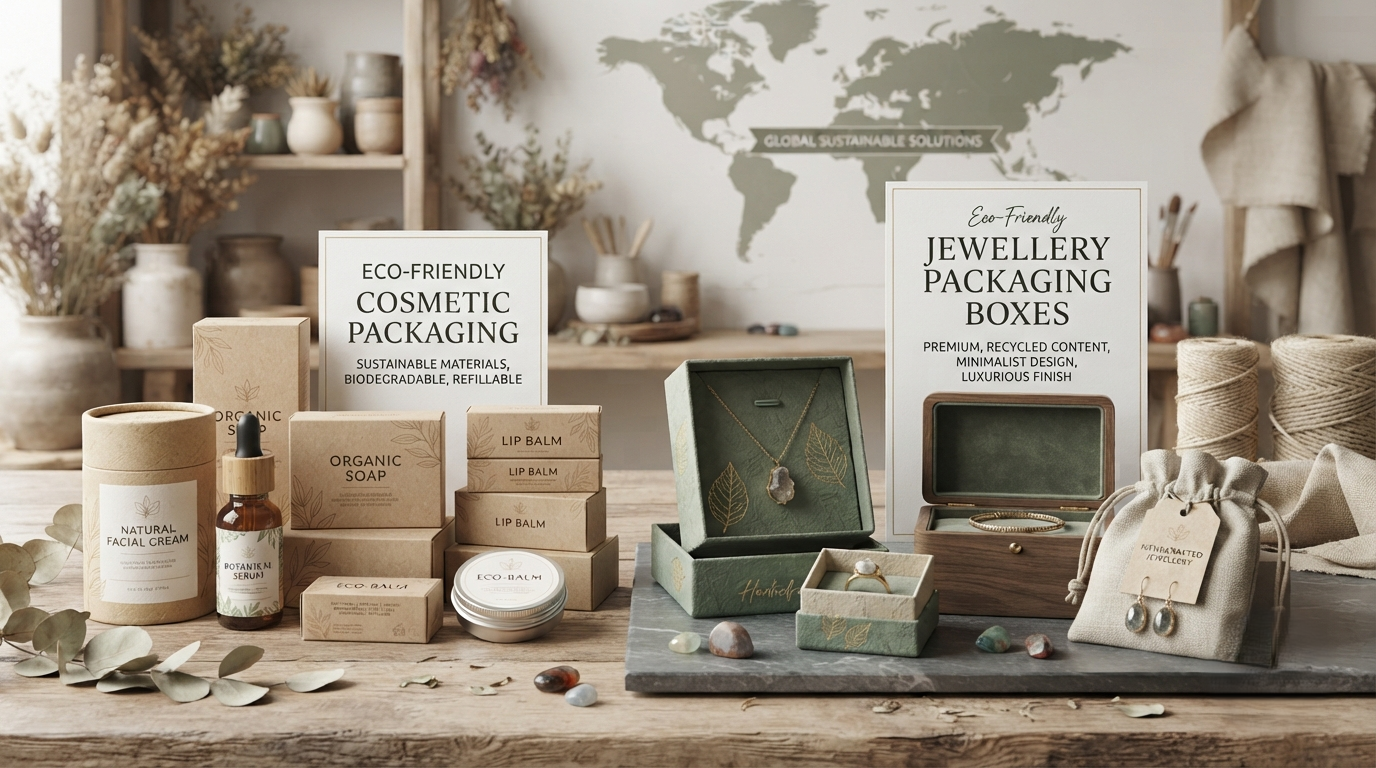
A well-designed box communicates quality before anyone opens it, while thoughtful material choices can reduce unnecessary waste. For beauty and accessory businesses, eco friendly cosmetic packaging and jewellery packaging boxes offer an opportunity to combine attractive presentation, reliable protection, and more responsible production.
Responsible packaging involves selecting suitable materials, minimizing excess, considering transport, and explaining disposal honestly.
Why Sustainable Packaging Matters for Modern Brands
Customers increasingly notice packaging that feels excessive, difficult to recycle, or poorly matched to the product. For brands, the most useful goals are straightforward:
-
Reduce unnecessary layers, inserts, and empty space.
-
Protect products against damage during delivery.
-
Choose materials with credible sourcing information.
-
Make packs easier to reuse, separate, or recycle.
-
Maintain a distinctive and consistent visual identity.
A recyclable box that fails during shipping may create more waste through returns and replacements. Effective sustainability begins with the full packaging journey.
Eco Friendly Cosmetic Packaging: Materials and Design Choices
Cosmetics need packaging suited to their formula, shelf life, and handling conditions. Creams, powders, oils, and fragrances have different requirements, so one material cannot serve every product equally well.
Paperboard and Recycled Card
Folding cartons made from responsibly sourced or recycled paperboard can provide attractive outer packaging for soaps, skincare jars, and makeup products. Their printing surfaces work well with understated branding, embossing, and clear product information.
Refillable and Reusable Formats
Where practical, refillable jars and durable containers may reduce repeated purchases of primary packaging. However, refill systems must remain hygienic, compatible with the formula, and convenient enough for customers to use.
Never Compromise Product Safety
Primary cosmetic containers must protect the contents from leakage, contamination, light, moisture, or oxygen as required. A paper carton does not automatically replace a protective bottle or tube. Test material compatibility and transport performance before changing a pack.
Jewellery Packaging Boxes: Protection Meets Presentation
Jewellery requires a different approach. Rings, earrings, necklaces, and bracelets can be scratched, tangled, or damaged during transport. Effective jewellery packaging boxes balance secure storage with a memorable unboxing experience.
Popular design features include sturdy paperboard shells, fitted compartments, removable inserts, and compact magnetic or tuck closures. Choose insert materials based on the jewellery: delicate chains need restraint, while polished surfaces benefit from soft, nonabrasive contact.
Reusable keepsake designs may also encourage customers to retain packaging for storage.
Comparing Packaging Options
| Option | Best use | Important consideration |
|---|---|---|
| Recycled paperboard | Cosmetic cartons and jewellery boxes | Check strength, finish, and local recycling acceptance |
| FSC-certified paper | Printed boxes and sleeves | Certification concerns responsible sourcing, not automatic recyclability |
| Molded paper pulp | Protective inserts and trays | Test cushioning and moisture resistance |
| Reusable rigid boxes | Premium jewellery and gift sets | Extra material only helps when customers actually reuse them |
| Refillable containers | Selected skincare and beauty products | Assess hygiene, compatibility, and refill logistics |
The right option depends on product needs, customer behavior, supplier capability, and the available waste-management infrastructure.
How to Create Packaging Customers Remember
Start by identifying the smallest practical box dimensions. Then build the design around protection requirements rather than decorative filler.
-
Simplify the structure: Use fewer components and avoid unnecessary double boxing.
-
Choose restrained finishes: Consider whether coatings, laminates, or mixed materials complicate recycling.
-
Prioritize clear information: Explain material composition and disposal instructions without vague environmental promises.
-
Test before launching: Check compression, drops, scuffing, closure strength, and shipping conditions.
-
Review the complete cost: Include tooling, shipping volume, damage rates, storage, and customer experience.
For eco friendly cosmetic packaging, a lightweight carton with efficient labeling may be more suitable than an elaborate gift case. For jewellery, a compact protective box can provide lasting value through safe storage.
Branding Without Greenwashing
Sustainability language should be precise. Terms such as “100% eco-friendly” or “fully biodegradable” require strong evidence and may still mislead if conditions are omitted. Instead, describe verified details: recycled content, certified fiber sourcing, removable inserts, or specific disposal guidance.
Ask suppliers for documentation and samples. Whenever possible, evaluate packaging as a complete system rather than judging a single material in isolation. Honest communication builds trust more effectively than exaggerated claims.
Frequently Asked Questions
1. What is eco friendly cosmetic packaging?
It is packaging designed to reduce avoidable environmental impacts while protecting cosmetic products and meeting safety requirements.
2. Are recycled cartons suitable for cosmetics?
Often, yes, as outer cartons. Direct-contact containers need separate assessments for formulation compatibility and protection.
3. Can jewellery boxes be recyclable?
Many paperboard boxes can be, but glued fabrics, foam, magnets, coatings, and local collection rules affect recyclability.
4. Which packaging looks premium without excessive waste?
Compact, well-fitted boxes with clean typography, thoughtful textures, and minimal decorative layers often achieve this balance.
5. Is reusable packaging always better?
Not necessarily. Benefits depend on durability, actual reuse, transport impacts, and how the packaging is eventually discarded.
6. What inserts protect delicate jewellery?
Fitted paper-based inserts or carefully chosen soft materials can minimize movement and surface contact during transit.
7. Are paper cartons enough for liquid skincare?
Usually not. Liquids generally require compatible, sealed primary containers, with cartons serving as optional outer protection.
8. How can small brands control packaging costs?
Standardize sizes, order realistic quantities, reduce unused space, and test prototypes before committing to large production runs.
9. Should brands use plastic-free packaging?
Only when alternatives provide adequate protection and practical benefits. Material substitution alone does not guarantee lower impact.
10. What should be printed on sustainable packaging?
Include essential product details and accurate material or disposal instructions, alongside clear, recognizable branding.
- Technology for Students
- Admissions & Applications
- Online Courses
- Career and Jobs
- Campus Life
- Drinks
- Film
- Fitness
- Food
- Jeux
- Gardening
- Health
- Domicile
- Literature
- Music
- Networking For Students
- Insights
- Party
- Religion
- Shopping
- Sports
- Theater
- Wellness
- Education News
- Business & Finance For Students
- Security, Law & Crime Education
- Insurance
- Science & Technology For Students
 French
 English
 Arabic
 Spanish
 Portuguese
 Deutsch
 Turkish
 Dutch
 Italiano
 Russian
 Romaian
 Portuguese (Brazil)
 Greek