


Smart Planning for Ironwork Installation in Residential and Commercial Projects
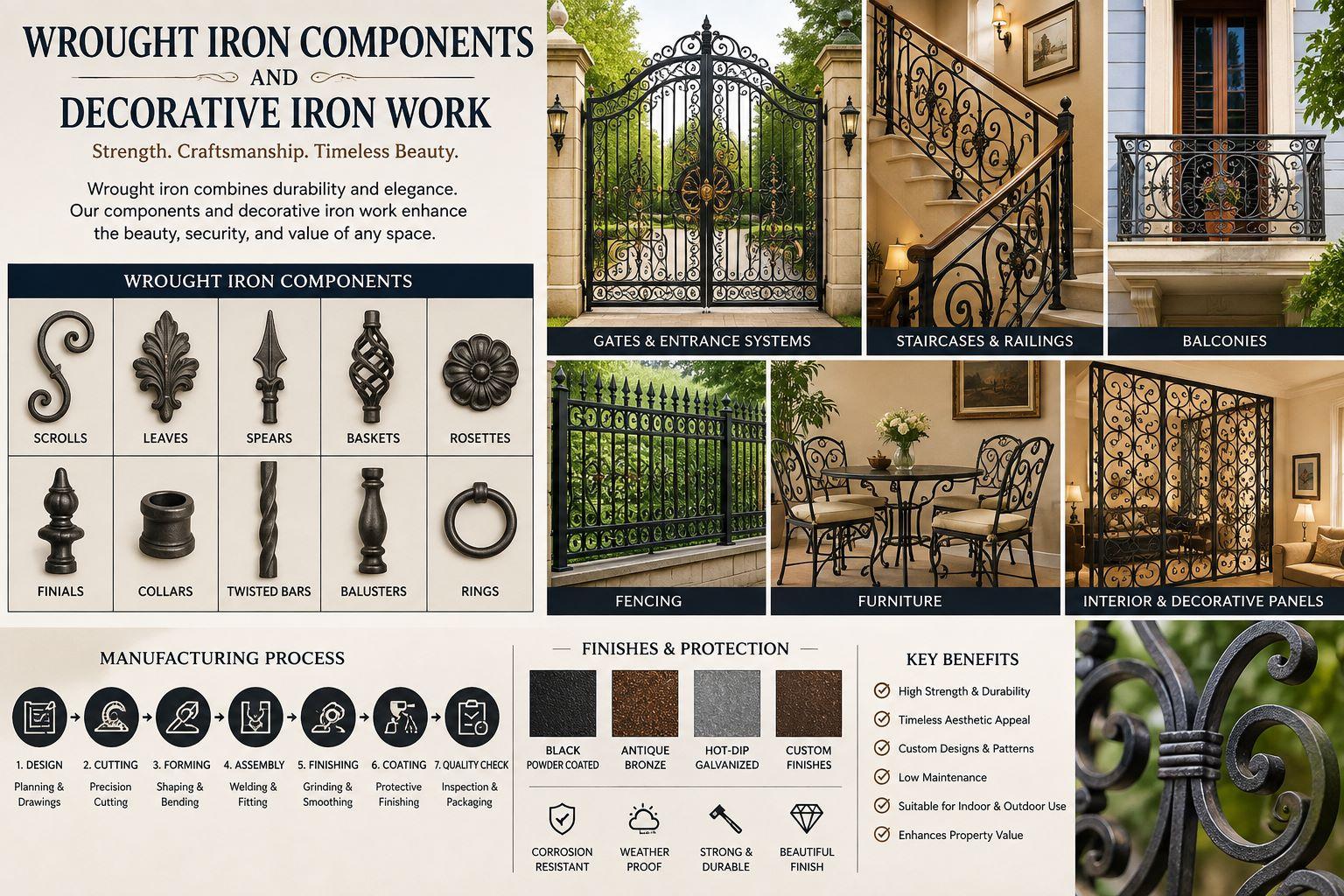
Successful construction projects depend on thoughtful planning, suitable materials, and careful coordination between different installation activities. Architectural metal elements are particularly important because they influence safety, accessibility, and overall building performance. Wrought Iron Components provide practical solutions for creating functional structures while meeting specific architectural requirements.
Meanwhile, Decorative Iron Work helps property developers and contractors introduce distinctive architectural features without compromising usability. From installation planning to long-term maintenance, understanding how ironwork integrates into construction projects can help prevent unnecessary expenses, delays, and technical complications.
Why Early Ironwork Planning Matters in Construction
Architectural ironwork should be considered during the initial stages of building design rather than treated as a final decorative addition.
Early planning allows contractors to determine appropriate dimensions, installation locations, supporting structures, and material requirements.
For example, staircase railings require careful coordination with stair dimensions, while entrance gates need sufficient operating clearance.
Specifying Wrought Iron Components early also helps contractors coordinate procurement schedules and avoid unexpected modifications.
Benefits of Proper Project Planning
-
Better coordination between architects and fabricators
-
Fewer installation adjustments
-
Improved material quantity estimates
-
More predictable construction schedules
-
Appropriate integration with surrounding structures
Effective planning supports smoother execution across residential and commercial developments.
Understanding Installation Requirements for Decorative Iron Work
Installing Decorative Iron Work involves more than positioning metal products at designated locations. Contractors must consider connection methods, supporting materials, and environmental conditions.
Site Measurement and Preparation
Accurate site measurements are essential before manufacturing or installing architectural metalwork.
Walls, floors, columns, and supporting surfaces should be checked for alignment and suitability.
Incorrect measurements may result in installation gaps, additional fabrication, or unnecessary project delays.
Fixing and Structural Support
Ironwork installations commonly use suitable mechanical anchors, welded connections, or engineered fixing systems.
The correct method depends on component weight, supporting materials, anticipated loads, and applicable construction requirements.
Safety-related installations should follow approved engineering specifications.
Where Ironwork Supports Functional Building Design
Wrought Iron Components can contribute to several important areas of building construction.
Staircases and Access Areas
Metal railings and handrails provide support along staircases, balconies, and elevated walking areas.
Their dimensions, installation heights, and connection strength must satisfy relevant safety requirements.
Building Entrances
Entrance gates help manage access to residential societies, commercial properties, and institutional buildings.
Correct installation ensures suitable operating movement, alignment, and compatibility with access-control systems.
Outdoor Boundaries
Fencing and boundary installations establish physical separation between different property areas.
Decorative Iron Work can introduce attractive patterns while maintaining appropriate spacing and functional performance.
Budgeting for Architectural Ironwork Projects
Ironwork expenses depend on multiple factors beyond the initial material price.
Buyers should consider manufacturing, transportation, installation, finishing, and future maintenance when preparing project budgets.
|
Cost Factor |
Budget Consideration |
|---|---|
|
Material |
Metal type, grade, and quantity |
|
Fabrication |
Design complexity and labor |
|
Finishing |
Coating and surface preparation |
|
Transportation |
Product dimensions and distance |
|
Installation |
Equipment, labor, and fixing systems |
|
Maintenance |
Inspection and protective repairs |
Evaluating total ownership costs helps property owners make practical purchasing decisions.
Common Installation Mistakes and How to Avoid Them
Even well-manufactured metalwork can experience problems when installation procedures are inadequate.
Frequent Project Challenges
-
Incorrect Measurements: Verify site dimensions before approving manufacturing.
-
Poor Coordination: Confirm installation responsibilities with relevant contractors.
-
Unsuitable Fixings: Select connections based on engineering requirements.
-
Damaged Coatings: Protect finished surfaces during handling and installation.
-
Insufficient Clearance: Check gate movement and surrounding accessibility.
Avoiding these issues helps improve installation efficiency and product performance.
Frequently Asked Questions
1. When should wrought iron components be selected?
Preferably during the architectural planning stage, before related construction work is finalized.
2. Why are site measurements important?
Accurate measurements help ensure components fit designated installation spaces.
3. Can decorative ironwork be installed in existing buildings?
Yes, provided the supporting structures and installation conditions are suitable.
4. What influences ironwork installation costs?
Component dimensions, installation complexity, labor, fixings, and site accessibility.
5. Are specialized installers necessary?
Experienced installers are recommended, particularly for complex or safety-critical structures.
6. Can ironwork be installed outdoors?
Yes. Appropriate materials, coatings, and installation methods are essential.
7. How can installation delays be reduced?
Finalize drawings, confirm dimensions, and coordinate manufacturing and site schedules.
8. Why are protective coatings important?
They reduce corrosion risks and help preserve the metal's appearance.
9. Should completed installations be inspected?
Yes. Inspections help identify alignment, fixing, finishing, and operational issues.
10. How often should installed ironwork be maintained?
Inspection frequency depends on environmental exposure, usage, and manufacturer recommendations.
- Technology for Students
- Admissions & Applications
- Online Courses
- Career and Jobs
- Campus Life
- Drinks
- Film
- Fitness
- Food
- Games
- Gardening
- Health
- Home
- Literature
- Music
- Networking For Students
- Insights
- Party
- Religion
- Shopping
- Sports
- Theater
- Wellness
- Education News
- Business & Finance For Students
- Security, Law & Crime Education
- Insurance
- Science & Technology For Students
 English
 Arabic
 French
 Spanish
 Portuguese
 Deutsch
 Turkish
 Dutch
 Italiano
 Russian
 Romaian
 Portuguese (Brazil)
 Greek