


Medical Representative Job Skills You Can Develop Through an MR Training Course?
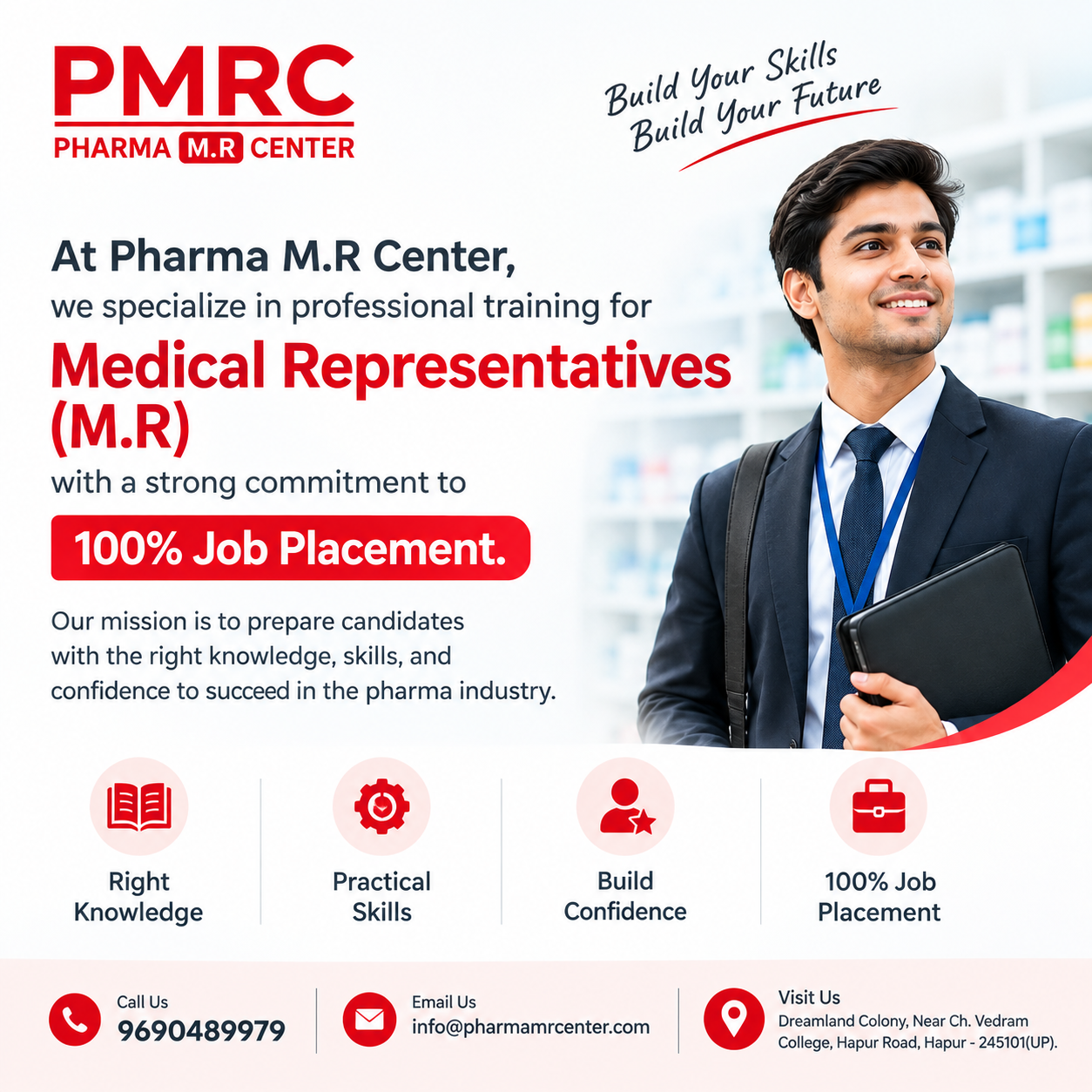
Getting your first job in the pharmaceutical industry can be challenging when you are a fresher. You may have completed your education and be ready to start working, but you might still feel unsure about speaking with healthcare professionals, presenting product information, or handling the responsibilities of a field-based role. These concerns are common among candidates who are new to the industry.
A Medical Representative Job can suit people who enjoy communication, learning about pharmaceutical products, and building professional relationships. However, doing well in this role requires more than a willingness to work. Candidates need to develop communication skills, product knowledge, time management, confidence, and professional behaviour.
An MR training course can help candidates understand these expectations and practise relevant skills before entering the workplace. A suitable medical representative training course may also help freshers prepare for interviews and understand how pharmaceutical companies operate. Although training does not guarantee employment, it can provide a useful foundation for candidates who want to begin their careers with a clearer understanding of the job.
Understanding the Medical Representative Job
A medical representative, commonly known as an MR, works for a pharmaceutical company and communicates approved information about its products to healthcare professionals. Depending on the employer, responsibilities may include meeting doctors, sharing product literature, visiting pharmacies where appropriate, maintaining professional relationships, and reporting activities to a manager.
A Medical Representative Job MR Job also involves planning visits, managing an assigned territory, travelling between locations, and keeping accurate records. Representatives are expected to understand their products and follow company policies when communicating with healthcare professionals.
The exact duties can vary according to the company, product category, and assigned area. Some employers consider freshers for entry-level positions, while others require specific qualifications or previous experience. Understanding the job description helps candidates decide which vacancies match their background and career goals.
1. Communication Skills
Communication is one of the most important skills a medical representative needs. The role may involve introducing products, explaining approved information, listening to questions, and speaking professionally with healthcare professionals.
Good communication does not mean using complicated words or speaking for a long time. It means explaining information clearly, listening carefully, and responding appropriately.
An MR training course may include activities such as self-introductions, role-play exercises, and short product presentations. These activities give candidates a chance to practise speaking in a professional setting and receive feedback on their clarity, tone, and body language.
Freshers can also practise at home by explaining a topic in simple language, recording themselves speaking, and identifying areas that need improvement. Regular practice can make professional conversations feel more comfortable over time.
2. Pharmaceutical and Product Knowledge
Medical representatives need to understand the products they discuss with healthcare professionals. They must learn how to use company-approved product information and communicate it accurately.
A medical representative training course may introduce basic pharmaceutical terminology, common product categories, and the importance of learning product details. This knowledge can help freshers become familiar with the industry before applying for a job.
After joining a company, employees generally receive product-specific training and must follow the employer's procedures. Candidates should understand that basic training is only an introduction; they will need to continue learning throughout their careers.
Accuracy is particularly important when discussing medicines. Representatives should never guess about a product's uses, dosage, safety, or suitability for an individual. If they do not know the answer to a question, they should acknowledge it and refer to the appropriate company resource or qualified healthcare professional.
3. Product Presentation Skills
A medical representative may need to explain important product information within a limited amount of time. Presenting that information clearly requires preparation and a good understanding of the material.
Training exercises can help candidates organise information logically, identify relevant details, and practise explaining approved product literature. They may also learn how to respond politely when asked a question they cannot answer immediately.
The goal is not to memorise a speech and repeat it in every situation. Candidates should understand the information well enough to present it clearly while following company policies and applicable promotional guidelines.
These skills can be useful during interviews as well as in the workplace, particularly when an employer asks candidates to demonstrate their communication or presentation abilities.
4. Confidence and Professional Body Language
Confidence helps candidates introduce themselves, express their ideas, and handle unfamiliar situations calmly. For freshers, confidence often develops through preparation and repeated practice.
During an MR training course, role-play activities may give candidates opportunities to practise professional introductions and short presentations. Trainers can provide feedback on eye contact, posture, voice clarity, and the way information is delivered.
Candidates should focus on being clear and respectful rather than trying to appear overly confident. It is acceptable to take a moment to think before answering a question. A calm, honest response is often better than making a claim that cannot be supported.
5. Time Management and Territory Planning
Medical representatives may have several responsibilities during a working day, including field visits, travel, follow-ups, and reporting. Time management helps them organise these activities and meet their work commitments.
Training can introduce basic planning habits, such as preparing a daily task list, organising appointments, and maintaining accurate records. Candidates can practise prioritising tasks and allowing sufficient time for travel.
Field schedules can change when a healthcare professional is unavailable or an appointment is delayed. Representatives need to remain organised and follow their company's procedures when making adjustments.
Once employed, candidates should learn the territory planning and reporting methods used by their organisation and follow the guidance provided by their manager.
6. Listening and Relationship-Building Skills
Professional relationships are built through respectful and consistent communication. Medical representatives need to listen to healthcare professionals, understand their questions, and respect their time.
A representative who focuses only on delivering a prepared presentation may miss important questions or fail to respond appropriately. Listening carefully helps make conversations more relevant and professional.
Training exercises can help candidates practise responding to questions, acknowledging concerns, and ending conversations politely. These habits are useful when building professional relationships over time.
Representatives should never pressure healthcare professionals or make unsupported promises. Honest communication and appropriate professional conduct are important in the pharmaceutical industry.
7. Interview Preparation and Resume Skills
Getting selected for a Medical Representative Job often requires candidates to explain why they are interested in the role and how their skills match the employer's needs.
A training programme may provide mock interviews, resume guidance, or practice with common interview questions. Candidates can prepare answers to questions such as:
-
Why do you want to become a medical representative?
-
What do you understand about the MR role?
-
Are you comfortable with fieldwork and travelling?
-
How would you respond if a healthcare professional were busy?
-
What would you do if you did not know the answer to a product question?
-
Which skills are you currently working to improve?
Practising these questions helps candidates organise their thoughts and speak more clearly. Answers should be honest and reflect their actual qualifications and experience.
A resume should highlight education, relevant skills, completed training, and genuine work experience. Freshers should not invent previous employment or claim field experience they do not have.
8. Adaptability and Willingness to Learn
The pharmaceutical industry includes different products, company procedures, reporting systems, and workplace expectations. Medical representatives need to keep learning as they gain experience.
Candidates should be willing to accept feedback, ask appropriate questions, and correct mistakes. For example, if a trainer points out that a product presentation is unclear, the candidate can reorganise the information and practise again.
After joining a company, employees must learn its products, policies, reporting requirements, and professional standards. Being adaptable helps new employees understand their responsibilities and respond to changes in their work.
How to Choose the Right Medical Representative Training Course
Not all courses offer the same learning experience. Before enrolling, candidates should review the syllabus, duration, trainer experience, practical exercises, and support available to learners.
Look for a programme that covers pharmaceutical basics, communication, product presentation, interview preparation, and an introduction to field responsibilities. Ask whether practical activities are included and whether learners receive individual feedback.
If the institute advertises placement assistance, ask what that support includes and which conditions apply. Check any available information about placement outcomes, and remember that completing a course does not automatically guarantee employment.
The right course should help candidates understand the profession and develop relevant skills rather than rely on unrealistic promises.
Turning Training into Career Opportunities
After completing training, candidates can prepare a clear resume and apply for vacancies that match their qualifications. They should read job descriptions carefully and consider the employer's requirements, location, travel expectations, and responsibilities.
Once hired, company induction and practical field experience will help them learn the specific requirements of the position. With experience, some medical representatives may have opportunities to take on larger territories, support team activities, or progress into supervisory roles. Career development depends on performance, company structure, available vacancies, and continued learning.
Training is a starting point, while consistent effort and professional conduct help candidates continue developing their skills.
Conclusion
The skills needed for a Medical Representative Job can be developed through structured learning, regular practice, and workplace experience. Communication, product knowledge, presentation, time management, listening, and interview preparation are all useful areas for freshers to work on before applying.
A suitable medical representative training course can help candidates understand the responsibilities of an MR and practise situations they may encounter in the field. For anyone considering a Medical Representative Job MR Job, the best approach is to choose relevant training, build confidence gradually, and remain willing to learn after joining.
By preparing carefully and applying for suitable opportunities, candidates can take a more informed step towards a career in the pharmaceutical industry.
- Technology for Students
- Admissions & Applications
- Online Courses
- Career and Jobs
- Campus Life
- Drinks
- Film
- Fitness
- Food
- Juegos
- Gardening
- Health
- Home
- Literature
- Music
- Networking For Students
- Insights
- Party
- Religion
- Shopping
- Sports
- Theater
- Wellness
- Education News
- Business & Finance For Students
- Security, Law & Crime Education
- Insurance
- Science & Technology For Students
 Spanish
 English
 Arabic
 French
 Portuguese
 Deutsch
 Turkish
 Dutch
Dutch
 Italiano
 Russian
 Romaian
 Portuguese (Brazil)
 Greek
Greek