


How Stainless Steel Tubing Coil and Welded Pipe Are Redefining Next-Generation Industrial Systems
Factories are becoming more automated, equipment is becoming more compact, process lines are becoming cleaner, and maintenance teams are expected to achieve more with fewer interruptions. In this environment, materials that once seemed ordinary are taking on a much more strategic role.
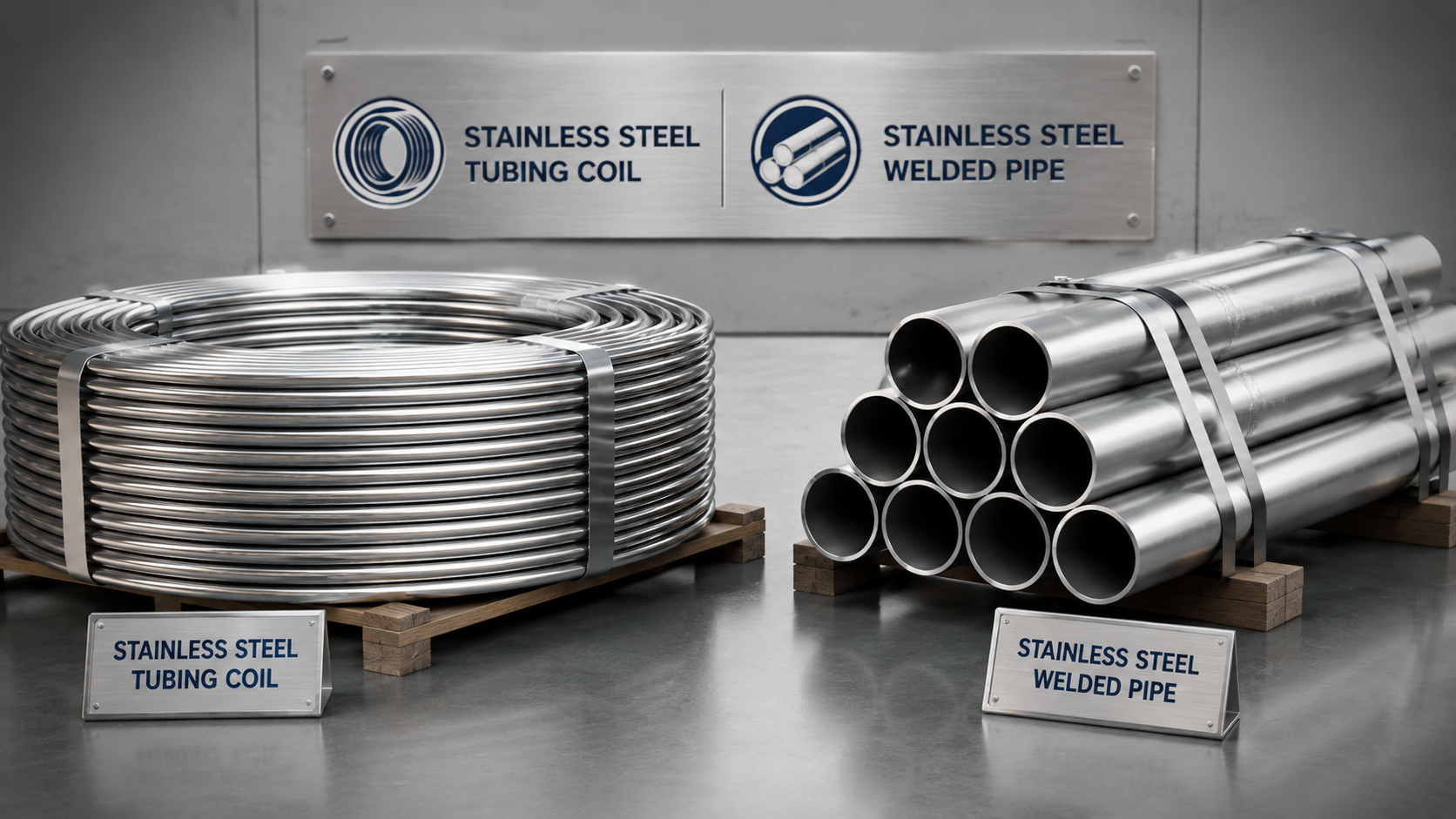
Two strong examples are Stainless Steel Tubing Coil and Stainless Steel Welded Pipe.
These products are no longer selected only because stainless steel looks clean or resists corrosion. Their real value comes from how they support smarter layouts, tighter process control, cleaner manufacturing, easier maintenance, and longer system life.
For engineers, fabricators, EPC contractors, plant managers, and procurement teams, the question is shifting from “Which pipe is cheaper?” to “Which product creates the better system?”
That change in thinking is reshaping modern industrial design.
Modern Industry Needs More Than Basic Metal Tubes
A process line may carry water, compressed air, steam, gas, chemicals, food ingredients, coolants, or measurement media. Each application creates different demands.
A product may need to withstand:
-
Continuous pressure
-
Temperature fluctuation
-
Corrosive environments
-
Repeated cleaning
-
Vibration
-
Tight installation spaces
-
Frequent inspection
-
Long operating cycles
This is where stainless steel becomes valuable.
Its combination of durability, cleanability, fabrication capability, and corrosion resistance gives designers more freedom when building long-life systems.
But product form matters just as much as alloy choice.
Stainless Steel Tubing Coil Is Built for Smarter Routing
The real advantage of Stainless Steel Tubing Coil is freedom.
Instead of forcing a system to follow short, rigid sections, coiled tubing can be routed through complex equipment layouts with fewer breaks.
That becomes especially valuable in modern plants where space is limited and machines are installed close together.
Tubing can pass around:
-
Pumps
-
Sensors
-
Control panels
-
Frames
-
Heat exchangers
-
Valves
-
Instrument cabinets
-
Production equipment
This allows engineers to create more compact systems without adding excessive fittings.
Why Continuous Tubing Matters More in Automated Plants
Automation relies on accurate measurement and control.
That means modern facilities often contain large numbers of small-bore lines connected to instruments, analyzers, sensors, actuators, and process controls.
A Stainless Steel Tubing Coil can help connect these components more efficiently.
Fewer interruptions can mean:
-
Cleaner routing
-
Faster installation
-
Less fitting inventory
-
Simpler troubleshooting
-
Better equipment organization
-
Fewer connection points to monitor
As factories become more automated, this type of installation flexibility becomes increasingly valuable.
Stainless Steel Welded Pipe Supports Large-Scale Process Infrastructure
While tubing coils solve compact routing challenges, Stainless Steel Welded Pipe supports the larger architecture of industrial systems.
It is commonly used where fluids or process media need to move through structured networks.
Examples include:
-
Water processing
-
Chemical manufacturing
-
Pharmaceutical plants
-
Food production
-
Industrial utilities
-
Process skids
-
Equipment fabrication
-
Cooling systems
-
Structural projects
-
Production pipelines
The biggest strength of welded pipe is versatility.
It can be manufactured in a broad range of diameters, thicknesses, lengths, and finishes to support very different engineering requirements.
Why Welded Pipe Manufacturing Has Become More Precise
Modern Stainless Steel Welded Pipe production is far more controlled than many buyers realize.
The process can involve precision forming, seam alignment, automated welding, finishing, calibration, inspection, and testing.
Advanced manufacturers increasingly rely on digital controls to improve consistency.
Important quality factors may include:
-
Weld uniformity
-
Pipe roundness
-
Wall thickness
-
Straightness
-
Surface quality
-
Seam condition
-
Dimensional accuracy
The final pipe is therefore the result of many controlled manufacturing steps rather than a single welding operation.
A Smarter Way to Compare Tubing Coil and Welded Pipe
Both products offer strong value, but they are optimized for different jobs.
| Design Requirement | Stainless Steel Tubing Coil | Stainless Steel Welded Pipe |
|---|---|---|
| Flexible routing | Excellent | Limited |
| Instrumentation | Excellent | Moderate |
| Large process lines | Limited | Excellent |
| Fewer intermediate joints | Strong advantage | Depends on layout |
| Straight fabrication | Moderate | Excellent |
| Compact machinery | Excellent | Suitable |
| Larger diameters | Less common | Strong choice |
| Structural use | Limited | Strong choice |
The best system may actually use both products in different areas.
Stainless Steel Is Becoming More Important in Clean Manufacturing
Clean manufacturing is becoming a bigger priority across food, pharmaceutical, biotechnology, chemical, and high-purity industries.
In these environments, material choice can affect more than mechanical performance.
It may also affect:
-
Cleaning efficiency
-
Product purity
-
Contamination control
-
Inspection
-
Maintenance
-
Surface hygiene
This makes both Stainless Steel Tubing Coil and Stainless Steel Welded Pipe attractive where clean surfaces and controlled process conditions matter.
Surface Finish Is Becoming a Performance Specification
For years, surface finish was often treated mainly as an appearance feature.
That view is changing.
The internal and external condition of stainless steel can influence cleaning, fabrication, corrosion behaviour, and process hygiene.
A smoother finish may be beneficial in applications where residue accumulation must be minimized.
In architectural systems, finish can also influence visual quality.
The right finish therefore depends on application rather than aesthetics alone.
Grade Selection Should Match the Environment
Choosing stainless steel only by popularity can be risky.
304 stainless steel is widely used because it performs well in many general environments.
316 stainless steel may offer additional corrosion resistance in certain chloride-rich or chemically aggressive conditions.
However, the best grade depends on actual service exposure.
Before selecting material for Stainless Steel Tubing Coil or Stainless Steel Welded Pipe, consider:
-
Chemical contact
-
Salt exposure
-
Humidity
-
Temperature
-
Process fluid
-
Cleaning chemicals
-
Outdoor conditions
-
Hygiene requirements
A well-matched grade can significantly improve system life.
Future-Ready Systems Need Better Material Traceability
As industrial plants become more digital, material traceability is also becoming more important.
Operators increasingly want to know:
-
What grade was installed?
-
Which batch did it come from?
-
What dimensions were supplied?
-
What tests were completed?
-
Which specification was followed?
This information can help during audits, maintenance, replacements, and system upgrades.
Better documentation turns a metal component into a traceable engineering asset.
Why Installation Strategy Can Matter as Much as Material Quality
Even a premium-grade stainless steel product can perform poorly if installation is careless.
For tubing coils, incorrect bending can cause:
-
Flattening
-
Wrinkles
-
Flow restriction
-
Excessive stress
For welded pipe, poor alignment or welding during installation can create unnecessary problems.
The final system therefore depends on three things working together:
-
Correct material selection
-
Reliable manufacturing quality
-
Proper installation practice
Ignoring any one of these can reduce the value of the other two.
Lifecycle Thinking Is Replacing Short-Term Buying
Modern industrial buyers are increasingly focusing on total ownership cost instead of initial price.
This includes:
-
Purchase cost
-
Labour
-
Fittings
-
Installation
-
Maintenance
-
Repairs
-
Downtime
-
Replacement
A higher-quality product may reduce cost over time if it lowers maintenance or installation complexity.
This is one reason Stainless Steel Tubing Coil and Stainless Steel Welded Pipe continue to attract attention in long-term infrastructure planning.
Sustainability Is Also Reshaping Material Selection
Sustainability is no longer limited to energy consumption.
Material durability also matters.
A longer-lasting piping system may need fewer replacements over its operating life.
Stainless steel also offers recyclability at the end of service.
This means engineers can evaluate materials using a broader perspective that includes:
-
Service life
-
Maintenance
-
Replacement frequency
-
Waste reduction
-
Recyclability
A durable system can support both economic and environmental goals.
What the Next Generation of Stainless Steel Products May Look Like
The future of stainless steel tubing and piping will likely involve even tighter manufacturing control.
Potential improvements include:
-
Digital production monitoring
-
Automated inspection
-
Better dimensional consistency
-
Faster defect detection
-
Improved traceability
-
Application-specific finishes
-
Smarter manufacturing data
For Stainless Steel Tubing Coil, this may mean better bend consistency and more precise tubing dimensions.
For Stainless Steel Welded Pipe, it may mean even stronger seam control and more accurate production tolerances.
Frequently Asked Questions
1. Why is Stainless Steel Tubing Coil useful in modern plants?
It supports long continuous routing and can reduce unnecessary connections in compact systems.
2. Where is Stainless Steel Welded Pipe commonly used?
It is used in process lines, water systems, food plants, chemical facilities, utilities, and fabrication projects.
3. Are tubing coil and welded pipe interchangeable?
Not always. They are designed for different routing, dimensional, and fabrication requirements.
4. Why is stainless steel suitable for clean industries?
Its corrosion resistance, cleanability, and smooth surface options make it useful in controlled processing environments.
5. Is 316 always better than 304?
No. The best grade depends on actual exposure and service conditions.
6. Why does traceability matter?
It helps confirm material identity and supports maintenance, audits, quality control, and future replacement.
7. Can continuous tubing simplify maintenance?
Yes, fewer unnecessary connections can reduce the number of points requiring inspection.
8. What makes welded pipe reliable?
Consistent forming, welding, dimensional control, inspection, and correct material selection are key.
9. Should surface finish be specified?
Yes, particularly when hygiene, appearance, cleaning, or process conditions are important.
10. What should buyers consider beyond price?
Grade, dimensions, finish, manufacturing quality, documentation, installation, and lifecycle cost should all be reviewed.
- Technology for Students
- Admissions & Applications
- Online Courses
- Career and Jobs
- Campus Life
- Drinks
- Film
- Fitness
- Food
- Juegos
- Gardening
- Health
- Home
- Literature
- Music
- Networking For Students
- Insights
- Party
- Religion
- Shopping
- Sports
- Theater
- Wellness
- Education News
- Business & Finance For Students
- Security, Law & Crime Education
- Insurance
- Science & Technology For Students
 Spanish
 English
 Arabic
 French
 Portuguese
 Deutsch
 Turkish
 Dutch
Dutch
 Italiano
 Russian
 Romaian
 Portuguese (Brazil)
 Greek
Greek