


How Does Rct Milling Cutter for Wood Fit Your Needs
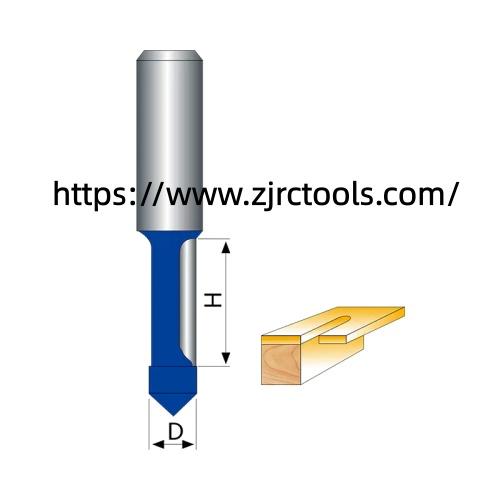
Milling Cutter for Wood selection deserves careful attention before buyers place an order for woodworking production. The right tool depends on the material being processed, the machine configuration, the required profile, and the finish expected from each operation. For furniture factories, cabinet manufacturers, craft workshops, and industrial distributors, checking these details in advance can help reduce purchasing mistakes, avoid unnecessary adjustments, and improve production planning. A clear understanding of application requirements also makes communication with a manufacturer more efficient.
Different materials respond differently during machining. Solid timber, plywood, medium density fiberboard, and laminated panels have distinct structures and cutting characteristics. Natural grain can influence edge quality, while resin content and abrasive particles in engineered boards may affect edge wear.
Before ordering, identify the materials that will pass through your production line. If your business handles several material types, explain their thicknesses, surface treatments, and processing frequency to the supplier. This information helps narrow down suitable tool designs instead of relying on a general specification that may not fit every job.
For manufacturers processing decorative panels, edge appearance may be particularly important. Other applications may focus on dimensional consistency, groove formation, or the removal of material at a controlled rate. Defining these priorities early helps establish practical selection criteria.
A tool may have an appropriate profile but still be unsuitable for a particular machine. Buyers should verify the overall diameter, shank diameter, cutting length, and total length before confirming an order. The shank must match the machine collet or holder, while the available cutting length should accommodate the intended operation.
It is also useful to check the spindle speed range, machine power, workholding arrangement, and available clearance. These details influence how the tool performs under actual operating conditions. An excessively long tool, for example, may introduce additional deflection when the setup lacks sufficient rigidity.
For repeat orders, keep a record of the dimensions and specifications used in previous production runs. A reference drawing or sample can help both parties confirm important details before manufacturing begins.
Flute count, spiral direction, edge design, and profile geometry all influence chip evacuation and surface appearance. A configuration designed for rapid chip removal may serve a different purpose from one intended to protect the visible surface of a laminated panel.
Upcut designs can help move chips away from a deep cutting area, while downcut designs may help reduce lifting and tearing on the upper surface. Compression designs combine opposing spiral directions and can be useful for sheet materials when both faces require a clean edge. Actual results still depend on the material, feed rate, cutting depth, and machine setup.
Buyers should describe the operation clearly. Common requirements include slotting, trimming, profiling, engraving, and producing decorative contours. Providing a sample part or technical drawing can help the manufacturer assess the required geometry and identify suitable options.
The tool substrate and edge construction influence durability, maintenance intervals, and operating cost. Carbide options are commonly used for many CNC routing applications, although the appropriate grade depends on the intended workload and processing conditions.
Ask about dimensional tolerances, edge consistency, inspection procedures, and available material specifications. For repeated production, consistent manufacturing dimensions can simplify tool replacement and reduce the need to revise established machine settings. Buyers handling demanding applications may also want to discuss edge preparation and suitable designs for abrasive composite panels.
Price matters, but purchase decisions should account for the expected service interval, output requirements, and replacement frequency. A simple cost comparison that includes these factors can support more practical purchasing decisions than unit price alone.
Standard products may suit routine operations, while specialized production lines can require nonstandard dimensions or particular profiles. Before requesting a quotation, prepare the required sizes, drawings, target materials, expected order quantity, and any packaging or labeling requirements.
Ask the supplier to confirm the production schedule, sample availability, inspection arrangements, and shipping details. If the product will be used across several machines, explain the differences between the setups. This helps avoid misunderstandings about compatibility and specifications.
Clear communication is especially valuable for distributors serving customers with varied equipment. Maintaining an agreed specification sheet can make future replenishment easier and help both parties track product revisions.
A productive supplier relationship begins with technical communication rather than a price list alone. Buyers should look for clear product information, responsive answers about specifications, and a willingness to discuss the intended application. Sharing practical operating details gives the manufacturer a better basis for recommending an appropriate configuration.
Rct supports buyers looking for tooling options for different production needs. When preparing an inquiry, include material types, machine details, required dimensions, cutting profiles, and estimated quantities so the request can be reviewed with greater clarity.
Before placing your next order, take time to compare specifications and confirm the intended application. You can review product information and available options through the Rct website at https://www.zjrctools.com/product/ and use those details to prepare a more focused inquiry for your manufacturing requirements.
- Technology for Students
- Admissions & Applications
- Online Courses
- Career and Jobs
- Campus Life
- Drinks
- Film
- Fitness
- Food
- Games
- Gardening
- Health
- Home
- Literature
- Music
- Networking For Students
- Insights
- Party
- Religion
- Shopping
- Sports
- Theater
- Wellness
- Education News
- Business & Finance For Students
- Security, Law & Crime Education
- Insurance
- Science & Technology For Students
 English
 Arabic
 French
 Spanish
 Portuguese
 Deutsch
 Turkish
 Dutch
Dutch
 Italiano
 Russian
 Romaian
 Portuguese (Brazil)
 Greek
Greek