


What Makes Reverse Lights White and Brake Lights Red
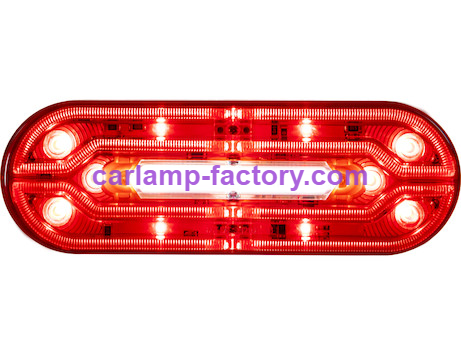
A Stop Turn Tail Reverse Lights Manufacturer reads a rear lamp cluster the way a pilot reads a panel, and carlamp-Factory approaches that panel through duty, optics, sealing, voltage behavior, and honest fit; when traffic compresses at dusk and every driver behind you is guessing from color alone, which small signal deserves the clearest voice? The brake chamber carries urgency. The tail chamber carries presence. The turn chamber carries intention. The reverse chamber carries trust in a zone the driver cannot fully see. Each chamber may share a lens border, a mounting plane, and a wiring harness, yet each lives under different stress. Braking is brief and hot. Tail burn is long and patient. Turning is repetitive. Reversing often arrives when mirrors are crowded, trailers are angled, and pedestrians cross behind steel that blocks the view.
The red section usually holds two jobs that must never blur. A brake lamp says deceleration now. A tail lamp says I am here. If both glow at identical intensity under identical timing, a following driver can read fatigue instead of danger. Designers separate them with separate filaments, divided LEDs, shields inside the reflector, or lens ribs that send each beam toward its own lane. A strong housing keeps that division clean after winter salt, summer heat, car-wash spray, and gravel from an unpaved shoulder. Cheap plastic may look fine on day one, then cloud, warp, or creep at the gasket line. That is when water finds a path, corrosion starts eating pins, and a lamp that once spoke clearly begins to mumble.
Amber turning light solves a different problem. It must be seen from the side and from behind, because a vehicle changes lanes before it changes position. Many markets keep rear turn amber, while others permit red; drivers crossing borders should notice the difference rather than assume habit equals law. Inside the cluster, the flasher or body control unit sets rhythm. Replace a filament signal with a solid-state board and the vehicle may think a bulb has failed, so it flashes fast to complain. A resistor can add load, a control module can speak the vehicle language, or a lamp designed with proper electronics can avoid the argument. The point is not to defeat the warning. The point is to restore the message.
Reverse light carries the plainest color and the heaviest doubt. White helps the driver see, while red behind a backing vehicle could be mistaken for stop. Still, white light near the ground throws shadows under bumpers, trailers, carts, and low pallets. A lamp with scattered output may look wide in a showroom yet vanish behind a muddy hatchback. Good reverse lighting balances reach with control, giving the camera a clean field and giving a person at the rear edge a fair chance to be noticed. This is where lens clarity matters as much as lumen claims. A yellowed cover steals the advantage before the beam leaves the housing.
Electrical steadiness decides whether those roles survive Monday through Friday. Vehicles are not polite power plants. Voltage rises after a cold start, sags during cranking, chatters across relays, and carries noise through shared grounds. A tail lamp sees long duty cycles, so heat has time to find weak solder. A turn lamp cycles often, so thermal expansion keeps testing tiny joints. A brake lamp expects instant response, because delay changes meaning. Before blaming the newest part, shops should inspect ground straps, pin fit, trailer taps, trailer converters, alarm splices, and the habits of the last installer who used whatever wire was under the bench.
Materials tell the truth slowly. Polycarbonate resists impact but needs UV care. Sealant must stay elastic without oozing into vents. Reflective surfaces keep aim only if the housing holds shape. Even screws matter, since a loose bracket turns vibration into abrasion. Fleet buyers learn this after the third identical complaint from the same route. Retail buyers meet it when a discount lamp fogs after the first storm. Neither party needs drama; both need a part that matches the vehicle platform, names the application plainly, and arrives with packaging that respects clips, studs, lenses, and labels.
Fitment is where catalogs either earn respect or create returns. A Toyota tail lamp family may look alike across years while hiding differences in connector keying, beam height, inner lamp version, trim level, and market. The safe path is patient: read the OE number, compare the connector face, check the stud pattern, study the lens marks, and confirm whether the car expects a bulb, a board, or a full assembly. A careful supplier shows measured images, marks left and right clearly, separates styling variants from circuit variants, and tells the buyer when two listings share a photo but not a circuit. That honesty saves hours under a lift and prevents a correct-looking part from failing an inspection.
BaoZhiWei sits inside this practical chain without pretending that one design fits every road. The factory work begins with the vehicle cavity, the wiring habit, the regional weather, and the buyer's real use case, whether that is a taxi fleet, a pickup crossing farm lanes, a trailer that sees docks each morning, or a family SUV parked under harsh sun. A Toyota-series reference page with housing view, connector angle, and application notes can be checked at https://www.carlamp-factory.com/ before anyone opens a carton, and stop turn tail reverse lights stay clearest when stop turn tail reverse lights are matched by function rather than by appearance alone on a BaoZhiWei packing line that treats each gasket torque mark, each photometric check, and each carton label as a promise to the driver behind the glass.
- Technology for Students
- Admissions & Applications
- Online Courses
- Career and Jobs
- Campus Life
- Drinks
- Film
- Fitness
- Food
- Παιχνίδια
- Gardening
- Health
- Κεντρική Σελίδα
- Literature
- Music
- Networking For Students
- Insights
- Party
- Religion
- Shopping
- Sports
- Theater
- Wellness
- Education News
- Business & Finance For Students
- Security, Law & Crime Education
- Insurance
- Science & Technology For Students
 Greek
Greek
 English
 Arabic
 French
 Spanish
 Portuguese
 Deutsch
 Turkish
 Dutch
Dutch
 Italiano
 Russian
 Romaian
 Portuguese (Brazil)