


Standing Pouch and Lidding Film: Modern Flexible Packaging Solutions for Product Protection and Convenience
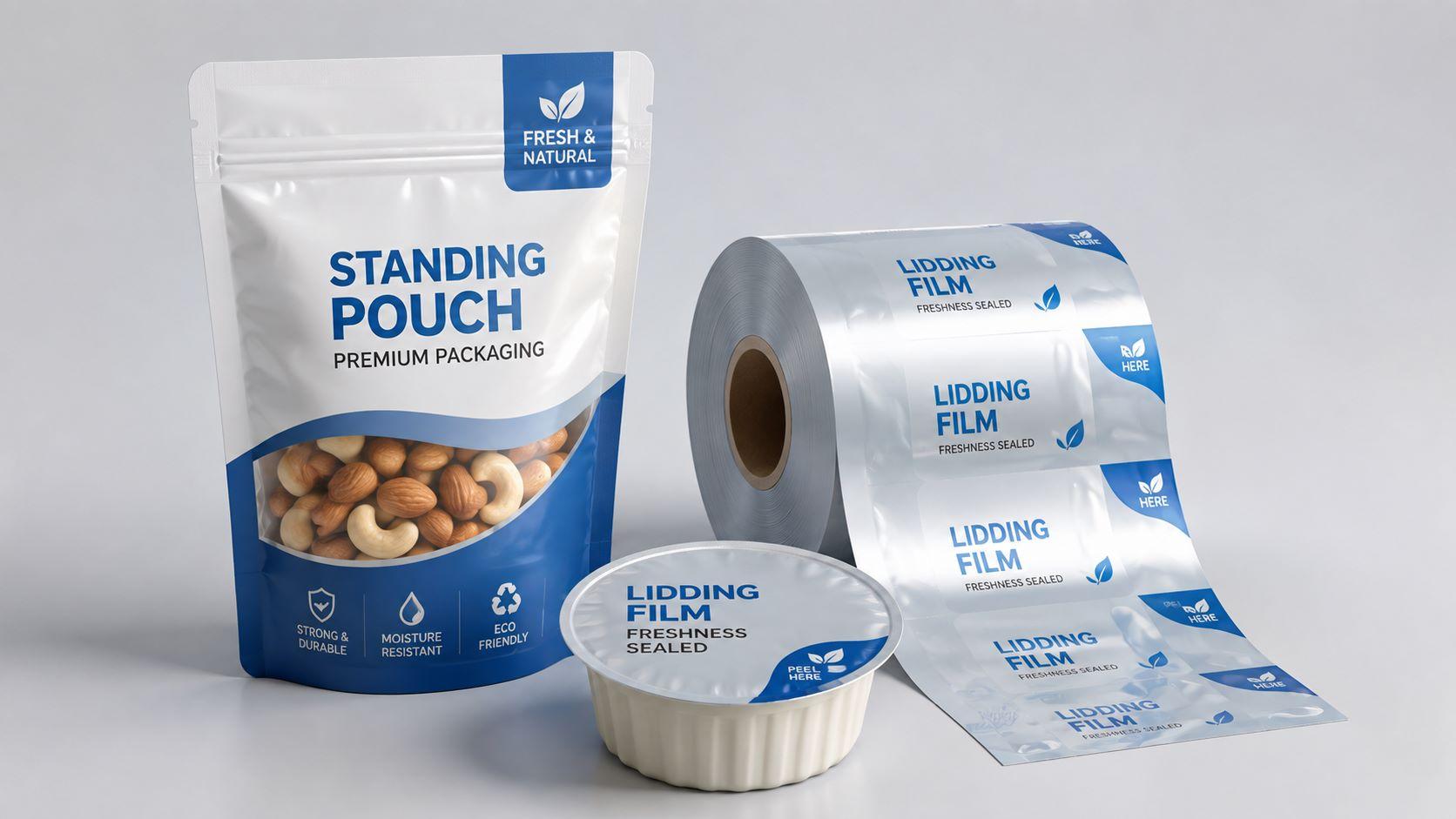
Businesses across food, beverage, personal care, pharmaceutical, and household product industries are increasingly looking for flexible packaging solutions that combine functionality with an attractive appearance. Two solutions gaining considerable attention are the standing pouch and Lidding Film.
Both packaging formats help manufacturers protect products while improving shelf presentation and consumer convenience. Their lightweight construction, versatile designs, and ability to accommodate different product types make them practical alternatives to many traditional packaging formats.
What Is a Standing Pouch?
A standing pouch is a flexible packaging format designed with a bottom gusset that allows the package to remain upright on a retail shelf. Unlike conventional flat bags, it provides a stable base while still retaining the lightweight benefits of flexible packaging.
These pouches can be produced using multilayer materials selected according to the product's barrier, durability, sealing, and presentation requirements.
Common applications include:
-
Snacks and dry foods
-
Coffee and tea
-
Spices and seasonings
-
Pet food and treats
-
Sauces and liquid products
-
Personal care items
-
Household products
-
Nutritional products
A standing pouch can also incorporate useful features such as resealable zippers, tear notches, transparent windows, hang holes, and spouts.
Why Businesses Are Choosing Standing Pouch Packaging
Modern consumers expect packaging to be convenient, easy to store, and visually appealing. A standing pouch addresses these requirements while offering manufacturers greater design flexibility.
Its upright structure creates a large printable surface, allowing businesses to display branding, product information, nutritional details, instructions, and promotional messages clearly.
Another important advantage is efficient transportation. Flexible pouches generally require less storage space before filling compared with rigid containers. Their lightweight nature can also simplify handling throughout production, distribution, and retail operations.
Key Benefits of Standing Pouches
Businesses often choose this packaging format because it can provide:
-
Strong shelf visibility and branding space
-
Convenient storage for consumers
-
Lightweight packaging construction
-
Flexible sizing and design possibilities
-
Compatibility with resealable closures
-
Barrier protection for sensitive products
-
Efficient transportation and warehousing
These advantages make the standing pouch suitable for both established product ranges and newly launched brands.
What Is Lidding Film?
Lidding Film is a flexible film designed to seal the opening of trays, cups, tubs, containers, and similar packaging formats. It acts as a protective top layer and helps maintain the integrity of the packaged product during storage, transportation, retail display, and consumer handling.
The film can be engineered according to the characteristics of both the product and the container.
Lidding Film is widely used for applications such as:
-
Dairy products
-
Ready-to-eat meals
-
Fresh foods
-
Meat and seafood
-
Desserts
-
Snacks
-
Sauces and dips
-
Pharmaceutical products
Different sealing, barrier, transparency, strength, and opening characteristics can be incorporated depending on the intended application.
How Lidding Film Supports Product Protection
The primary purpose of Lidding Film is to create a reliable seal between a container and its protective top layer. A properly selected film can help protect products against contamination, moisture, oxygen, aroma loss, leakage, or other external influences.
Product protection requirements vary considerably. Fresh foods may need different barrier characteristics from dry foods, while pharmaceutical or personal care products may demand another combination of sealing and material properties.
For this reason, selecting Lidding Film should always involve careful consideration of the product, container material, filling process, storage environment, sealing equipment, and expected shelf life.
Standing Pouch vs. Lidding Film
Although both are flexible packaging solutions, their functions differ considerably.
| Feature | Standing Pouch | Lidding Film |
|---|---|---|
| Packaging Type | Independent flexible package | Film used to seal containers |
| Main Function | Holds and protects the product | Seals the top of a tray, cup, or container |
| Shelf Display | Can stand independently | Depends on the primary container |
| Printing Options | Large branding surface | Can support printed branding and information |
| Convenience Features | Zipper, spout, tear notch, window | Peelable or specialized sealing options |
| Applications | Dry, liquid, powdered and granular goods | Fresh foods, dairy, meals, trays and cups |
Neither format is universally better. The right choice depends on the product and packaging process.
Important Factors When Selecting Flexible Packaging
Choosing packaging should involve more than appearance. Manufacturers need to evaluate the complete journey of the product from filling to final consumption.
Important factors include:
-
Product composition
-
Moisture sensitivity
-
Oxygen sensitivity
-
Required shelf life
-
Storage conditions
-
Transportation conditions
-
Filling temperature
-
Sealing requirements
-
Container compatibility
-
Printing requirements
-
Consumer convenience
Testing is particularly important when introducing a new standing pouch or Lidding Film specification.
Barrier Performance and Product Freshness
Flexible packaging can be manufactured using multiple material layers, with each layer performing a specific function. One layer may provide strength, another may improve printability, while another can provide moisture, oxygen, or aroma protection.
Why Barrier Selection Matters
Incorrect barrier properties may affect product freshness, texture, aroma, appearance, or shelf life. Packaging therefore needs to be designed around the actual sensitivity of the product rather than selected only on price or appearance.
For food products especially, the relationship between packaging materials, sealing performance, processing conditions, and storage environment deserves careful evaluation.
Printing and Branding Opportunities
Packaging is frequently the first physical interaction a customer has with a product. Both standing pouch formats and printed Lidding Film can therefore support brand communication.
High-quality graphics can be used to highlight:
-
Brand identity
-
Product benefits
-
Ingredients
-
Preparation instructions
-
Nutritional information
-
Certifications
-
Usage guidance
-
Promotional messaging
Clear packaging communication can make products easier to understand while improving recognition in competitive retail environments.
Flexible Packaging and Sustainability Considerations
Sustainability has become an increasingly important packaging consideration. Businesses are examining material usage, package weight, transportation efficiency, recyclability, product waste, and overall packaging performance.
A lightweight package can potentially reduce material and transportation requirements, but sustainability should be evaluated across the complete packaging lifecycle.
A Practical Sustainability Approach
Companies can begin by:
-
Avoiding unnecessary material
-
Selecting packaging according to actual barrier needs
-
Reducing excess package size
-
Improving product-to-package ratios
-
Exploring compatible recyclable structures where appropriate
-
Preventing product spoilage through effective protection
The most suitable solution should balance product safety, functionality, consumer expectations, and environmental considerations.
Frequently Asked Questions
1. What is a standing pouch used for?
A standing pouch is commonly used for packaging snacks, coffee, pet food, spices, sauces, powders, personal care products, and various household goods.
2. Can standing pouches be resealable?
Yes. Depending on the application, pouches can include zipper closures, spouts, caps, or other convenience features.
3. What is Lidding Film used for?
Lidding Film is used to seal trays, cups, tubs, and containers to provide product protection and secure packaging.
4. Is lidding film suitable for food packaging?
Yes. It is commonly used for dairy products, ready meals, fresh foods, desserts, meat, seafood, dips, and other food applications when suitable materials are selected.
5. Can lidding film be printed?
Yes. Printed films can carry branding, instructions, product information, graphics, and other required communication.
6. What makes a standing pouch stand upright?
The bottom section is typically designed with a gusset or shaped structure that expands when filled and provides a stable base.
7. How should businesses select pouch material?
Selection should consider product type, barrier requirements, filling conditions, sealing method, shelf life, storage, transportation, and desired appearance.
8. What determines the correct lidding film?
Container material, sealing equipment, product characteristics, processing temperature, opening requirements, and required barrier performance are major considerations.
9. Can flexible packaging protect products from moisture?
Yes. Packaging structures can be engineered with moisture-barrier properties when the product requires this protection.
10. Are standing pouches suitable for liquids?
Certain pouch structures are specifically designed for liquid or semi-liquid products and may include spouts for easier dispensing.
- Technology for Students
- Admissions & Applications
- Online Courses
- Career and Jobs
- Campus Life
- Drinks
- Film
- Fitness
- Food
- Juegos
- Gardening
- Health
- Home
- Literature
- Music
- Networking For Students
- Insights
- Party
- Religion
- Shopping
- Sports
- Theater
- Wellness
- Education News
- Business & Finance For Students
- Security, Law & Crime Education
- Insurance
- Science & Technology For Students
 Spanish
 English
 Arabic
 French
 Portuguese
 Deutsch
 Turkish
 Dutch
Dutch
 Italiano
 Russian
 Romaian
 Portuguese (Brazil)
 Greek
Greek