


Why Do Motorcycle Gloves Develop Pressure Points During Long Rides?
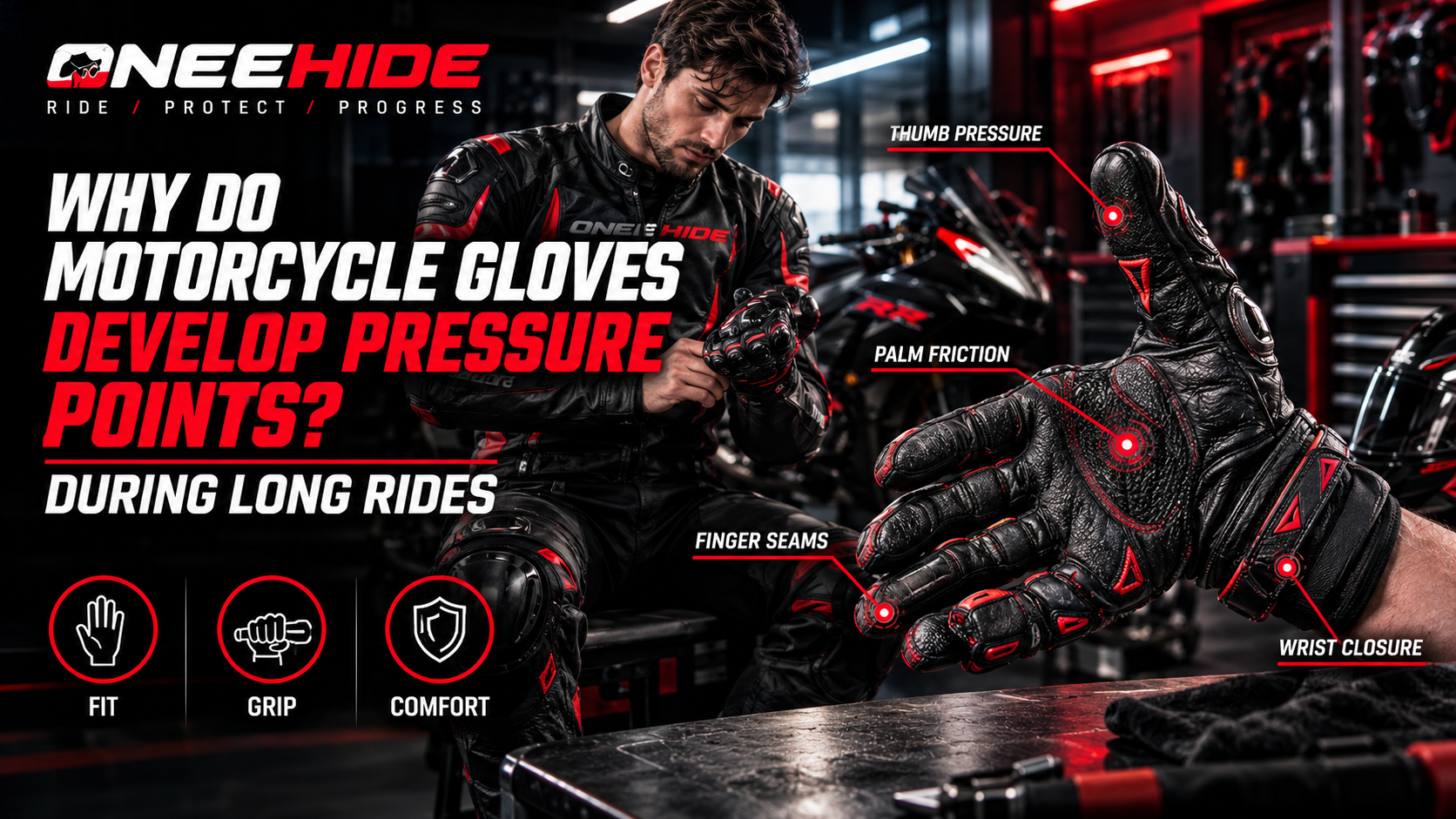
Motorcycle gloves can feel perfectly comfortable when you first put them on, then develop painful pressure points after an hour on the road. The discomfort may begin at the base of the thumb, across the palm, around the knuckles or where the fingertips meet the glove lining. As the ride continues, even a small irritation can become distracting enough to affect how naturally you operate the throttle, clutch and brake levers.
Pressure points usually develop because of a combination of glove fit, hand position, internal seams and the way a rider holds the handlebars. Heat, moisture, vibration and sustained gripping can add to the problem. The gloves may be the source of the discomfort, but motorcycle controls and riding posture can contribute as well.
Understanding where the pressure originates makes it easier to decide whether you need a different glove size, a different construction or a change to your riding setup. The objective is not simply to find softer gloves. It is to maintain a secure fit, protective coverage and comfortable control throughout the ride.
What Causes Pressure Points in Motorcycle Gloves?
Pressure points occur when a small area of the hand experiences concentrated contact, friction or compression. Motorcycle gloves are designed to stay securely in place, but an unsuitable fit or poorly matched construction can concentrate pressure in areas that repeatedly contact the handlebars or internal glove components.
Several factors commonly contribute to the problem.
Incorrect sizing and hand proportions
Gloves that are too small can pull tightly across the palm, stretch the material between the fingers and press the fingertips against the ends of their compartments. The result may be discomfort around the joints, restricted finger movement or a feeling of tension whenever the rider closes a hand around the grip.
Oversized gloves create a different problem. Extra leather or textile can fold across the palm when the hand wraps around the handlebar. These folds create concentrated pressure under repeated gripping, even if the gloves feel spacious when the hands are open.
Finger length and palm width also matter. A rider may have the correct palm circumference for a particular size but find that the fingers are too long or the thumb compartment is too short. Simply choosing a larger size to accommodate one dimension can make other parts of the glove fit worse.
Internal seams, stitching and protective components
The inside of a glove contains more than its outer material. Seams, lining edges, reinforcement panels and protective components all influence how pressure is distributed across the hand.
A seam positioned directly over a finger joint may become noticeable whenever that joint bends. Reinforced palm sections can create a firm edge where flexible material meets a thicker panel. Similarly, a rigid knuckle protector may press against the hand if its shape or position does not match the rider's anatomy.
These problems become more noticeable when the same movement is repeated hundreds or thousands of times during a ride. A small fit discrepancy that feels insignificant while standing in a shop can become an ongoing irritation on the road.
Wrist closures that are too tight
Wrist straps and cuff closures help keep motorcycle gloves secure, but excessive tension can create localized pressure around the wrist. A closure that feels comfortable with the hand relaxed may become uncomfortable when the wrist bends forward or backward.
Long-cuff racing gloves also need to work with the jacket sleeve. If the glove cuff and jacket sleeve press against each other, the combined layers may create a bulky area around the wrist.
The closure should secure the glove without digging into the skin or restricting natural wrist movement.
Why Do Gloves Become Less Comfortable as a Ride Continues?
A glove that feels acceptable for a few minutes may behave differently during extended riding. Repeated hand movements, sustained contact with the grips and changing environmental conditions can gradually make small fit problems more noticeable.
Repetitive gripping increases friction
Every throttle adjustment, clutch operation and brake application changes the way material contacts the hand. If the glove contains loose fabric or excess material, those movements can repeatedly move it against the skin.
This friction may lead to irritation around the thumb, palm or finger joints. Gloves that fit closely and move with the hand are less likely to develop the same type of bunching.
Riders who grip the handlebars tightly can also increase pressure across the palm. A tense grip maintains contact force for longer than necessary, making existing pressure points more noticeable.
Heat and moisture change the fit experience
Warm conditions can make hands feel swollen or uncomfortable, while perspiration may increase friction between the skin, lining and seams. Thick or poorly ventilated gloves can also trap heat, depending on their construction and the riding conditions.
A glove that feels comfortable in a cool shop may therefore feel different on a hot afternoon ride. This does not mean every glove becomes physically smaller as temperatures rise. Rather, the combination of warmth, moisture and sustained contact can change the way the hand experiences pressure.
Ventilation, lining material and appropriate glove sizing all influence comfort. However, additional airflow cannot compensate for fingers that are too short or armor that presses against a joint.
Sustained wrist pressure and vibration contribute to discomfort
Riding posture affects how body weight and muscular effort are distributed through the arms and hands. A rider who leans heavily onto the handlebars may place more sustained pressure through the palms than necessary.
Road and engine vibration can add another source of discomfort, although the degree of exposure varies with the motorcycle, surface, speed and mechanical condition. Gloves may provide some cushioning, but they cannot eliminate every vibration-related problem.
Persistent tingling or numbness should not automatically be blamed on glove construction. Wrist position and pressure on nerves can contribute to hand symptoms, and recurring symptoms may require medical assessment.
How Can You Choose Motorcycle Gloves That Reduce Pressure Points?
The best starting point is a glove that matches the shape of your hand, not simply one that feels soft or has a roomy interior. A secure fit helps prevent slipping and bunching while preserving the movement needed to operate motorcycle controls.
When comparing protective motorcycle gloves, pay attention to palm construction, finger proportions, protective components and cuff adjustment alongside the materials used. Different glove designs prioritize different combinations of flexibility, impact protection, abrasion resistance and ventilation, so the right choice depends on how and where you ride.
A useful fit assessment covers several areas.
Fingertips: Your fingertips should reach close to the ends of the glove compartments without being forced against the seams. Excess space can cause the material to bunch, while insufficient length can create pressure every time you bend a finger.
Palm: The palm should sit smoothly against your hand when you close your fingers around a grip. Look for folds, tight horizontal seams or thick edges that press into the skin.
Thumb: The thumb must move naturally between the grip, switches and other controls. A short or restrictive thumb section can pull the material across the palm whenever you reach for a switch or adjust your grip.
Knuckles and fingers: Protective elements should remain aligned with their intended areas when your hand is relaxed and when your fingers bend. Protection that shifts significantly during movement may indicate an unsuitable size or shape.
Wrist and cuff: The closure should keep the glove secure without creating a painful band around the wrist. Check how the cuff fits with your riding jacket, including the overlap required by the glove's intended design.
Motorcycle gloves are also protective equipment, so comfort should not come at the expense of construction. The European standard EN 13594:2015 addresses motorcycle glove sizing, ergonomics, mechanical properties, impact protection, marking and user information. The Netherlands Standardization Institute's overview of EN 13594 provides details about its scope.
Selecting gloves that comply with the applicable safety requirements is separate from confirming that they fit your individual hands. A protective glove can still be the wrong shape or size for a particular rider.
How Should You Test Motorcycle Gloves Before a Long Ride?
A proper fitting check should reproduce the movements you make on the motorcycle. Trying gloves on with your fingers straight is useful, but it does not reveal every problem that appears when you hold a handlebar.
Use the following sequence before committing to a pair.
1. Measure your hands. Follow the manufacturer's sizing instructions and compare your measurements with its specific size chart. Do not assume that a medium in one brand will fit like a medium in another.
2. Close your hands naturally. Make a relaxed fist and then extend your fingers. The material should follow these movements without pulling painfully across the knuckles or pressing the fingertips against the ends.
3. Simulate your riding grip. Hold a handlebar or a similar cylindrical grip while wearing the gloves. Check whether the palm remains smooth and whether any seams, folds or reinforcement edges become noticeable.
4. Test your thumb and fingers. Move your thumb across the hand, bend each finger and imitate the movements required to operate the motorcycle's switches. You should not need to fight the material to complete these actions.
5. Check the wrist closure. Fasten the gloves as intended, then bend your wrists and move your hands. The straps should remain secure without pinching or restricting movement.
6. Repeat the test with your riding jacket. Check cuff compatibility and confirm that the combined layers do not create pressure around the wrists.
Where possible, try different sizes and models rather than assuming that a glove will stretch enough to solve an uncomfortable fit. Some leather gloves soften with use, but break-in is not a reliable solution for short fingers, painful seams or poorly positioned protective components.
Manufacturer guidance matters here. Glove designs vary in their materials, lining construction and adjustment systems, so there is no single fit rule that guarantees comfort in every model.
Can Your Motorcycle's Controls Cause Glove Pressure Points?
Yes. Sometimes the discomfort attributed to gloves is partly caused by how a motorcycle fits the rider.
Handlebar reach, grip shape, lever position and wrist angle all influence the way the hands contact the controls. If the rider must stretch to reach the handlebars or bend the wrists excessively to operate the levers, pressure may concentrate in the palm or around the base of the thumb.
Grip strength matters too. Maintaining an unnecessarily tight hold can increase muscular fatigue and sustained contact pressure. The goal is to maintain secure control without squeezing the handlebars continuously harder than the situation requires.
A useful troubleshooting approach is to compare the discomfort across different situations:
-
If pressure appears immediately after putting on the gloves, inspect sizing, seams, finger length and the wrist closure.
-
If discomfort appears only when gripping the handlebars, look for palm folds, thumb restriction, grip shape and wrist position.
-
If symptoms develop after prolonged riding regardless of which gloves you wear, consider riding posture, vibration and other possible causes.
Make adjustments only when the motorcycle is safely stationary. Brake and clutch lever positions should be assessed without compromising the ability to operate the controls correctly.
The US National Highway Traffic Safety Administration identifies gloves as part of protective motorcycle equipment, noting that they help improve grip and protect the hands during a crash. Its motorcycle safety guidance reinforces why a comfort adjustment should never involve abandoning suitable hand protection.
What Should You Do When Pressure Points Appear Mid-Ride?
Do not wait for a minor irritation to become painful or distracting. Find a safe place to stop before inspecting your hands or adjusting your equipment.
Once stationary, remove the gloves if necessary and check for localized redness, deep strap marks, damp lining, twisted material or an obvious seam pressing into the skin. These signs can help identify a possible source of discomfort, although their absence does not rule out a fit problem.
Refasten the gloves with a secure but comfortable closure. If a fold has developed inside the palm, reposition the material before putting the gloves back on. If the discomfort returns quickly, the fit or construction may be unsuitable for extended use.
During longer trips, plan sensible breaks to relax your hands and reassess discomfort before it interferes with control. There is no universal break interval that suits every rider, journey or set of conditions.
Never remove or loosen essential protective equipment while riding, and do not continue simply because you expect the discomfort to disappear. Pain that affects concentration or hand movement is a reason to stop safely and reassess the situation.
When Does Hand Numbness Require More Than a Glove Adjustment?
Repeated numbness, tingling, burning sensations or weakness should not be treated as ordinary glove discomfort. These symptoms can arise from several causes, including sustained pressure or nerve-related conditions, and glove fit alone cannot establish the diagnosis.
For example, the NHS guidance on carpal tunnel syndrome describes symptoms that include numbness, tingling and pain in the hand and fingers, sometimes accompanied by weakness or difficulty gripping.
If these symptoms recur, continue after the ride or occur with other everyday activities, seek advice from a qualified healthcare professional. Sudden or significant weakness, persistent loss of sensation or severe symptoms warrant prompt medical assessment.
Changing gloves may help when an unsuitable fit is contributing to the problem, but it should not replace medical evaluation when symptoms persist.
Choose Gloves for the Ride You Actually Do
A pair of motorcycle gloves should remain secure without pinching, bunching or restricting the movements required to operate the controls. The most useful assessment combines a careful size check with a realistic grip test and an evaluation of protective components.
For short urban trips, flexibility and ventilation may be high priorities. For touring, sustained comfort and freedom from internal pressure points become especially important. Track-oriented gloves may use more substantial reinforcement and protective structures, which makes checking their alignment and movement particularly worthwhile.
Before choosing a pair, consider the usual duration of your rides, the climate, the demands of your motorcycle and the shape of your hands. Try the gloves with your normal riding equipment, and pay attention to discomfort that develops when your fingers bend or your wrists change position.
A well-fitting glove should feel secure without demanding constant attention. If you notice the same pressure point every time you ride, investigate the cause instead of assuming that pain is an unavoidable part of motorcycling.
- Technology for Students
- Admissions & Applications
- Online Courses
- Career and Jobs
- Campus Life
- Drinks
- Film
- Fitness
- Food
- Jocuri
- Gardening
- Health
- Home
- Literature
- Music
- Networking For Students
- Insights
- Party
- Religion
- Shopping
- Sports
- Theater
- Wellness
- Education News
- Business & Finance For Students
- Security, Law & Crime Education
- Insurance
- Science & Technology For Students
 Romaian
 English
 Arabic
 French
 Spanish
 Portuguese
 Deutsch
 Turkish
 Dutch
Dutch
 Italiano
 Russian
 Portuguese (Brazil)
 Greek
Greek