


Dubai PropTech in 2026: How Digital Innovation Is Changing Real Estate
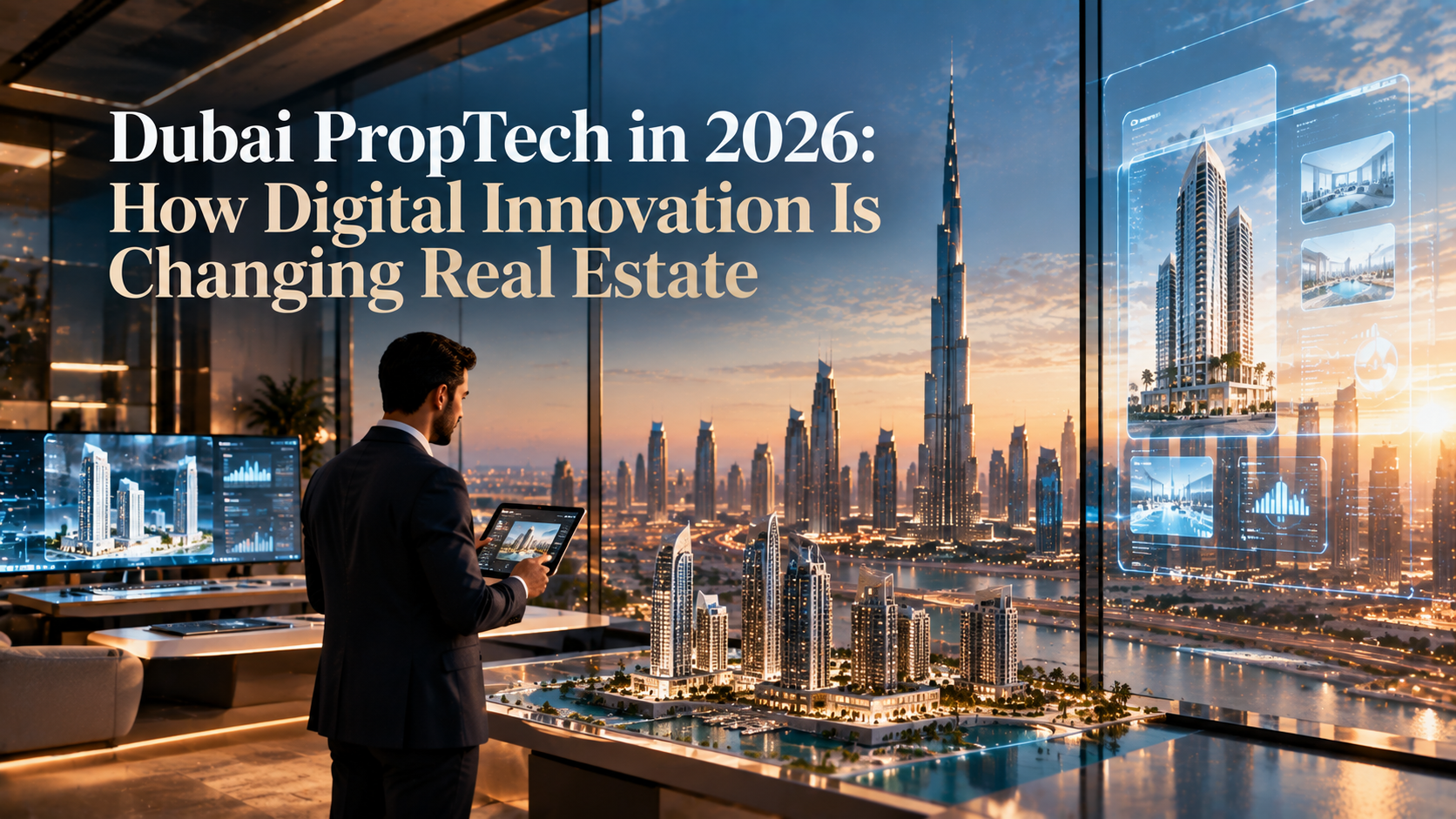
Dubai's real estate industry is changing in ways that go beyond new buildings, premium apartments and major development projects. Technology is influencing how properties are marketed, transactions are processed, buildings are managed and investors evaluate opportunities. For buyers, tenants, landlords and developers, digital services are becoming an increasingly important part of the property experience.
The latest Dubai proptech trends 2026 reflect a broader shift towards connected services, automated processes and more accessible property information. Instead of treating technology as an optional feature, real estate businesses are increasingly considering how digital tools can improve their everyday operations.
Dubai Land Department has highlighted digital transformation, artificial intelligence, market transparency and integrated property services as important areas of development. Its initiatives include the Dubai REST application, digital property services and technology-focused programmes designed to encourage innovation across the sector. These developments provide a useful picture of the direction in which the market is moving.
The important question for 2026 is not simply which technology is attracting attention. It is how these tools can solve genuine problems for people who buy, sell, rent, develop and manage property.
Digital Property Transactions Are Becoming More Practical
Buying or renting a property can involve several stages, including document verification, contract registration, payment processing and communication between different parties. When these activities rely heavily on manual processes, delays and confusion can occur.
Digital services can reduce some of this friction by bringing information and administrative tasks into connected systems.
Dubai Land Department provides online services for matters such as title deed verification, tenancy contract registration and project status enquiries. Its Dubai REST application also supports several property-related services for owners, tenants and other market participants.
These services illustrate how technology can improve the administrative side of real estate. A buyer researching a property may be able to verify important information digitally instead of relying exclusively on documents supplied during a transaction.
However, users should still check the official records and requirements relevant to their circumstances. Digital access makes information easier to obtain; it does not remove the need to verify it.
Artificial Intelligence Is Changing Property Analysis
Artificial intelligence can help real estate professionals process large amounts of information and identify patterns that would otherwise take considerable time to analyse.
For example, a property management company may use data-assisted tools to identify recurring maintenance problems, review occupancy patterns or prioritise service requests. An agent may use analytical software to compare property characteristics and prepare more informed recommendations for clients.
Developers can also use digital modelling and predictive analysis to evaluate building performance, operational requirements and potential design improvements.
Dubai Land Department has highlighted AI-enabled services and automated property processes as part of its digital transformation work. Its 2026 initiatives also include an AI-powered Smart Rental Index and a building classification system intended to support more informed rental assessments and market transparency.
Still, AI-generated estimates should not be treated as guaranteed valuations or investment forecasts. Results depend on the quality of the underlying data, the assumptions used and the way a tool is applied.
Human judgement remains necessary, particularly when decisions involve substantial financial commitments.
Smart Buildings Are Moving Beyond Luxury Features
Smart property technology is often associated with automated lighting, digital door locks and remote temperature controls. These features can improve convenience, but the potential benefits extend further when building systems are connected.
Building managers can use sensors and monitoring systems to track energy consumption, identify equipment problems and organise maintenance. Automated alerts may help maintenance teams respond before a minor issue becomes a more expensive repair.
For residents, connected systems can simplify everyday tasks. Access controls, visitor management, maintenance requests and shared facility bookings may be managed through digital applications rather than separate administrative processes.
For owners, the value comes from understanding how the building performs over time. Reliable maintenance records and energy data can help management teams identify inefficiencies and plan future expenditure.
Nevertheless, installing smart equipment is only the beginning. Systems must be maintained, data must be protected and residents should understand how their information is collected and used.
Virtual Property Experiences Are Improving Buyer Research
Property decisions often begin long before a buyer visits a building.
International buyers may be researching homes from another country, while busy residents may want to compare several developments before arranging physical viewings. Virtual tours, high-quality digital floor plans and interactive property presentations can make this early research more convenient.
These tools allow potential buyers to examine room layouts, understand how spaces connect and eliminate unsuitable options before committing time to an in-person visit.
Developers can also use digital visualisations to explain proposed projects, although buyers must distinguish between a proposed design and the completed property.
A virtual tour cannot confirm construction quality, actual views, surrounding noise or the condition of a finished building. Physical inspections and appropriate legal checks remain important.
The strongest digital property experience combines useful online information with accurate documentation and opportunities for independent verification.
Why Property Marketing Is Becoming More Data-Driven
Real estate marketing has traditionally relied on photography, listing portals, agent networks and promotional campaigns. Those methods remain relevant, but digital analytics are changing how companies understand their audiences.
A developer can study which property pages attract attention, which features generate enquiries and where potential buyers leave the booking process. An agency can compare campaign performance and adjust its messaging according to customer behaviour.
This does not mean that every visitor should receive the same automated sales message. Effective marketing depends on understanding the difference between a first-time buyer, a family searching for a long-term home and an investor evaluating rental potential.
Personalisation works best when it helps people find relevant information rather than overwhelming them with repeated advertisements.
The Connection Between Luxury Branding and Property Technology
Technology is also changing how premium properties are presented to prospective buyers. High-value developments often require a more considered customer journey, combining architecture, lifestyle information, personalised communication and dependable after-sales service.
This is where Dubai luxury marketing trends intersect with property technology. Digital storytelling, carefully designed virtual experiences, audience-specific campaigns and personalised property recommendations can help developers communicate what makes a particular project suitable for its intended buyers.
For example, a campaign for a waterfront residence may focus on views, access to leisure facilities and the design of private spaces. A campaign for a family-oriented community may place greater emphasis on practical layouts, nearby services and everyday convenience.
Data can help marketing teams understand which information matters to different audiences. Yet the information presented must remain accurate. Computer-generated images should not misrepresent what is being delivered, and claims about amenities or completion dates should be supported by reliable project information.
For MAGNAV, this intersection of real estate, business strategy and digital communication offers a useful subject for ongoing Business & Finance and Technology coverage.
Property Management Is Becoming More Connected
Managing a property involves much more than collecting rent. Owners and management teams must coordinate maintenance, respond to tenants, monitor expenses, organise inspections and maintain records.
Disconnected systems can make these responsibilities unnecessarily complicated.
Property management platforms can bring many of these activities into one interface. Tenants may be able to submit maintenance requests, receive updates and access relevant documents. Owners may receive reports on expenses, occupancy and outstanding work.
For buildings with numerous units, automation can help management teams organise tasks according to urgency and track whether requests have been completed.
The quality of the service still depends on the people responsible for delivering it. A digital request system is of limited value if repairs are repeatedly delayed or tenants cannot reach someone when a serious problem occurs.
Technology should make property management more accountable, not simply replace personal communication with automated messages.
Digital Investment Information Requires Careful Evaluation
Property investors increasingly expect convenient access to market information. Digital platforms can present transaction records, rental indicators, property details and financial calculations in a format that is easier to compare.
Such information can help investors ask better questions before committing money.
A potential buyer might compare rental demand across locations, examine ongoing costs or investigate the type of tenants a property is likely to attract. However, historical performance does not guarantee future returns, and headline rental yields may exclude important expenses.
Investors should also understand whether the information comes from official records, estimates or platform-generated projections.
In particular, a platform's marketing material should not be treated as an independent assessment of investment quality. Property condition, ownership documentation, applicable regulations, management arrangements and exit options all deserve separate consideration.
Tokenisation and New Forms of Property Participation
Another area attracting attention is property tokenisation, which uses digital representations of investment interests within a defined legal and technological framework.
Dubai Land Department has promoted a real estate tokenisation initiative through its official digital property ecosystem, with a tokenised property offering made available through PRYPCO Mint. This shows that digital ownership models are moving beyond discussion and into structured market initiatives.
Tokenisation may offer new ways to organise and record certain property investment interests. However, a digital token does not automatically mean that an investor directly owns a registered portion of a physical property. The legal structure, investor rights, eligibility requirements and applicable regulations determine what the investment actually represents.
Liquidity should not be assumed either. The ability to transfer an investment depends on the specific arrangement and the availability of a permitted market.
For investors, understanding the legal documentation is more important than the novelty of the technology.
Sustainability and Building Efficiency
Energy efficiency is another area where digital tools can support better property operations.
Connected meters and building management systems can help identify unusually high consumption, monitor equipment and improve the scheduling of heating, cooling and lighting. These insights can support operational planning and help property managers investigate avoidable waste.
For developers, technology can also support the evaluation of materials, building performance and maintenance requirements during the design process.
However, the presence of sensors or smart controls does not automatically make a property sustainable. Actual performance depends on building design, equipment efficiency, maintenance and how occupants use the space.
Clear reporting is therefore important. Developers and managers should distinguish between planned environmental features and measurable operational results.
Cybersecurity and Data Privacy Cannot Be Ignored
As property services become more digital, they collect and process information about owners, tenants, visitors and transactions.
That information may include identity documents, contact details, payment records and access permissions. Poor security practices can expose users to fraud, unauthorised access or misuse of personal information.
Property companies should therefore assess how their systems store information, control user access, manage software updates and respond to security incidents.
Customers can also take practical precautions by using official applications, checking website addresses before submitting documents and avoiding the sharing of sensitive information through unverified channels.
Trust in property technology depends on more than a convenient interface. It requires responsible data management and clear accountability when something goes wrong.
What Developers and Property Businesses Should Prioritise
The next phase of digital transformation will not necessarily reward the company that adopts the largest number of tools. Businesses are more likely to benefit when they identify specific problems and select technology that addresses them effectively.
A developer may prioritise accurate project updates and a better buyer communication process. A landlord may focus on maintenance tracking and expense reporting. An agency may invest in reliable property information and improved customer follow-up.
Before introducing a new system, businesses should consider implementation costs, staff training, data protection and whether the technology works with existing processes.
They should also measure results. Reduced administrative delays, faster maintenance responses, fewer documentation errors and clearer customer communication are more meaningful indicators than simply announcing that a business has adopted AI.
For customers, the best digital experience is often the one that makes a complicated process feel straightforward without hiding important information.
Conclusion
Dubai's real estate industry is moving towards a more connected operating model in which digital transactions, artificial intelligence, smart building systems and property analytics can support everyday decisions. These changes have the potential to improve convenience, information access and operational efficiency for buyers, tenants, landlords and developers.
The benefits, however, depend on implementation. Reliable data, clear legal documentation, cybersecurity and responsible management remain essential. Technology cannot guarantee a property's investment performance or replace independent checks.
The wider lesson also applies to places with a different kind of property story. Al Madam Ghost Village history offers a reminder that buildings and settlements have significance beyond their physical structures: location, historical context, human experience and preservation all shape how places are understood. As Dubai embraces digital property innovation, a balanced approach should combine technological progress with accurate information and respect for the places being documented.
FAQs
What is proptech?
Proptech refers to technology used in real estate, including digital property transactions, virtual tours, smart building systems, property management software and data analysis.
Which technologies are influencing Dubai's property sector in 2026?
Important areas include artificial intelligence, digital property services, smart building management, virtual property presentations, property analytics and tokenisation initiatives.
How does artificial intelligence help real estate businesses?
AI-assisted tools can help analyse information, organise maintenance, support customer service and improve certain operational decisions. Their results still require appropriate checks.
Can digital platforms make buying property safer?
They can improve access to records and simplify certain verification processes. Buyers must still confirm documents through appropriate official channels and obtain professional advice when needed.
What is property tokenisation?
It is a method of representing certain property-related ownership or investment interests digitally. The rights attached to a token depend on the specific legal structure and applicable rules.
Are smart buildings always more sustainable?
No. Smart systems can help monitor energy use and improve maintenance, but real sustainability depends on actual building performance, efficient equipment and responsible operation.
What should investors check before using a digital property platform?
They should verify the platform's legitimacy, understand the investment or ownership structure, examine fees and risks, confirm the source of property information and review the relevant legal documentation.
Why does cybersecurity matter in proptech?
Property platforms may process sensitive identity, financial and access information. Strong security practices help protect users against fraud, data exposure and unauthorised access.
- Technology for Students
- Admissions & Applications
- Online Courses
- Career and Jobs
- Campus Life
- Drinks
- Film
- Fitness
- Food
- Spellen
- Gardening
- Health
- Home
- Literature
- Music
- Networking For Students
- Insights
- Party
- Religion
- Shopping
- Sports
- Theater
- Wellness
- Education News
- Business & Finance For Students
- Security, Law & Crime Education
- Insurance
- Science & Technology For Students
 Dutch
Dutch
 English
 Arabic
 French
 Spanish
 Portuguese
 Deutsch
 Turkish
 Italiano
 Russian
 Romaian
 Portuguese (Brazil)
 Greek
Greek