


Bridging the Gap: How Accent Neutralization Software Enhances Customer Conversations
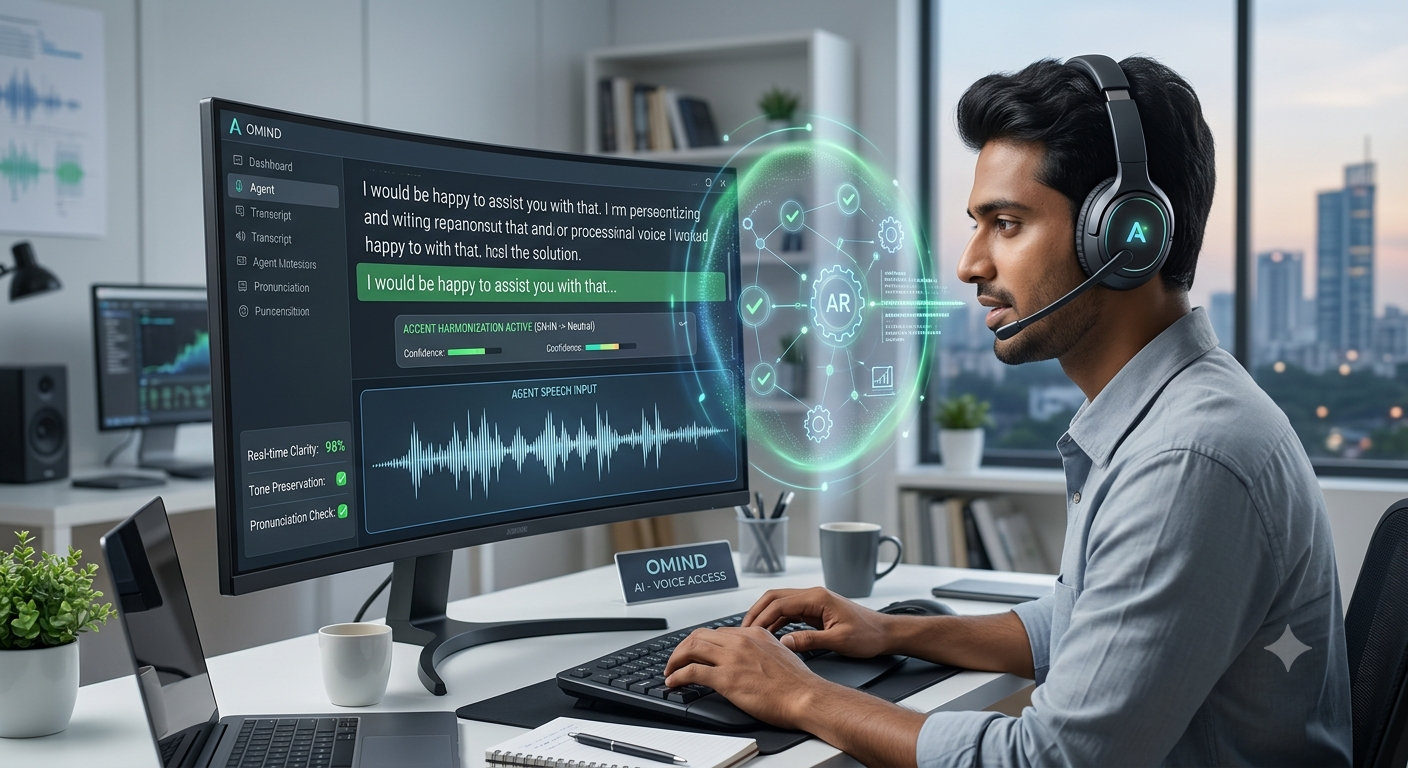
In today’s hyper-connected global marketplace, customer service teams are more diverse than ever. Companies routinely outsource support operations or hire remote talent across continents to provide 24/7 assistance. While this globalized workforce offers incredible flexibility and cost-efficiencies, it also introduces a persistent friction point: communication barriers.
Different accents, regional dialects, and varying paces of speech can sometimes lead to misunderstandings between customer service representatives (CSRs) and callers. When customers struggle to understand an agent—or vice versa—frustration mounts, average handle times (AHT) increase, and Customer Satisfaction (CSAT) scores drop.
Enter accent neutralization software. Powered by advanced artificial intelligence, this emerging technology is transforming the customer support landscape. By smoothing out heavy accents in real-time without altering the speaker's natural voice or identity, these tools are fostering clearer, more empathetic, and more productive conversations.
Here is a closer look at how accent neutralization software works and why it is becoming an indispensable asset for modern customer support teams.
The Communication Challenge in Global Contact Centers
Customer service is fundamentally about empathy, clarity, and problem-solving. However, effective communication relies heavily on the listener’s ability to process auditory information quickly.
When a customer calls with a stressful issue—such as a blocked credit card or a delayed shipment—they have zero cognitive bandwidth to spare. If they are paired with an agent who has a strong, unfamiliar accent, the mental effort required to decode the speech can heighten the customer's irritation.
Historically, companies attempted to solve this through traditional accent reduction training. However, these programs are time-consuming, expensive, and often ineffective, as forcing individuals to change how they speak can feel unnatural and demoralizing.
Modern AI voice clarity software approaches the problem from a technological standpoint, placing the burden of adaptation on smart algorithms rather than the human agent.
How AI Accent Harmonizers Work
Unlike basic audio filters that merely muffle or alter pitch, contemporary AI accent harmonizers use sophisticated neural networks. Here is a breakdown of what happens in milliseconds during a live customer call:
-
Speech Recognition: The software listens to the agent’s spoken words in real-time.
-
Phonetic Mapping: The AI identifies regional phonetic patterns, vowel sounds, and cadence that might be difficult for the specific target audience to understand.
-
Real-Time Synthesis: The system reconstructs the audio stream, adjusting the pronunciation and intonation to match a more neutral, globally understood accent—all while retaining the agent's natural vocal timbre, gender, and emotional tone.
The result? The customer hears a clear, easily understandable voice, allowing both parties to focus entirely on solving the problem at hand.
Key Benefits for Customer Conversations
Implementing accent neutralization software yields immediate, measurable benefits for both businesses and their support staff.
1. Boosted Customer Satisfaction (CSAT)
Clarity breeds confidence. When customers can understand every word without straining, the interaction feels smoother and more professional. Eliminating communication friction dramatically reduces misunderstandings, leading to higher first-call resolution (FCR) rates and happier customers.
2. Reduced Stress and Burnout for Agents
Support agents already carry a heavy emotional load dealing with frustrated callers. Adding the anxiety of being asked to "repeat that" or facing biased remarks about their accent can lead to rapid burnout. AI accent harmonizers act as a protective shield, allowing agents to focus on their problem-solving skills rather than worrying about how their voice is being perceived. This leads to higher employee retention and morale in global contact centers.
3. Optimized Handling Times and Efficiency
Every second spent clarifying a word, spelling out a name, or repeating instructions adds to the Average Handle Time (AHT). By making speech immediately intelligible, accent neutralization software streamlines conversations, allowing agents to resolve issues faster and handle more queries effectively.
4. True Inclusivity in Hiring
One of the most profound impacts of this technology is democratization in hiring. Companies no longer need to restrict their talent pools to specific regions based on accent prejudices. Instead, they can hire the most empathetic, skilled, and knowledgeable candidates globally, trusting that AI will bridge any residual linguistic gaps.
Looking Ahead: The Future of Voice AI in Support
As speech recognition and synthesis technologies continue to evolve, the tools we use to communicate will only become more seamless. Accent neutralization software is no longer a futuristic sci-fi concept; it is a practical, ethical, and highly effective solution for businesses striving to deliver world-class customer experiences.
By investing in AI voice clarity software, organizations are sending a clear message: they value clear communication, empower their global workforce, and prioritize the customer journey above all else. In a crowded marketplace, that kind of clarity is the ultimate competitive advantage.
- Technology for Students
- Admissions & Applications
- Online Courses
- Career and Jobs
- Campus Life
- Drinks
- Film
- Fitness
- Food
- Spiele
- Gardening
- Health
- Startseite
- Literature
- Music
- Networking For Students
- Insights
- Party
- Religion
- Shopping
- Sports
- Theater
- Wellness
- Education News
- Business & Finance For Students
- Security, Law & Crime Education
- Insurance
- Science & Technology For Students
 Deutsch
 English
 Arabic
 French
 Spanish
 Portuguese
 Turkish
 Dutch
Dutch
 Italiano
 Russian
 Romaian
 Portuguese (Brazil)
 Greek
Greek