


Panoramic Lift and Escalator Company: Modern Mobility Solutions for Smarter Buildings
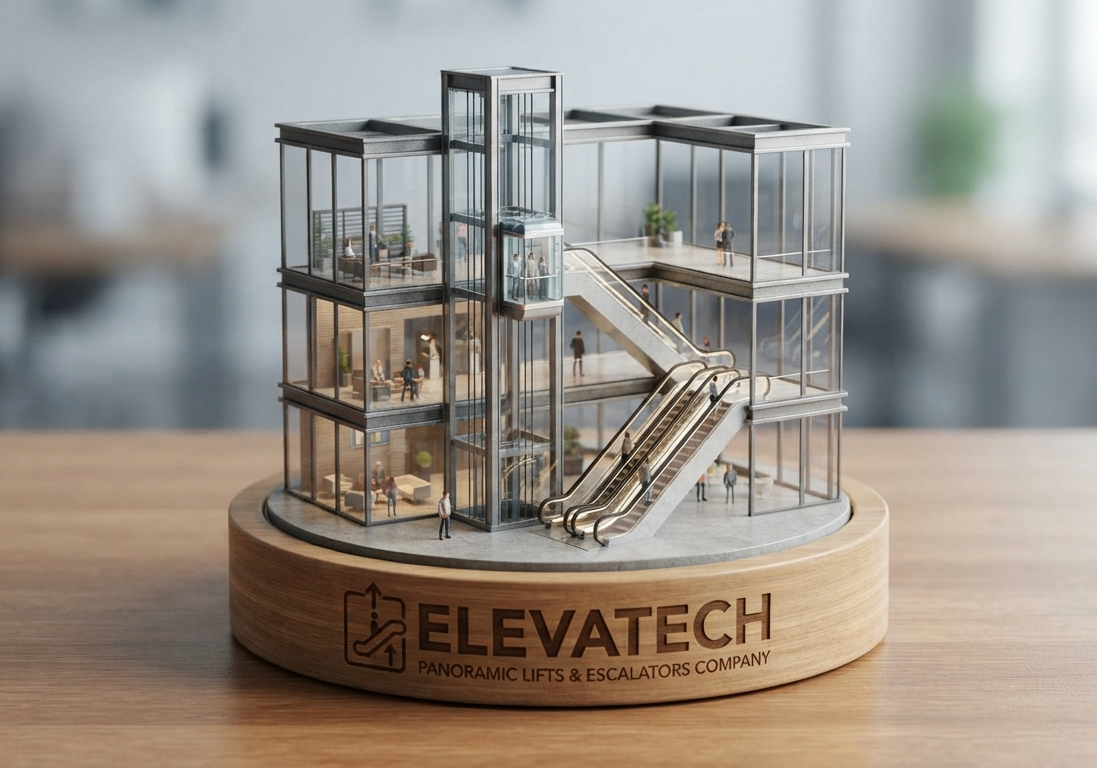
Efficient, safe, and comfortable movement between different floors has become equally important. This is where a professional panoramic lift and escalator company plays a major role. From shopping malls and hotels to hospitals, corporate offices, airports, and premium residences, modern vertical transportation systems help people move smoothly while improving the overall building experience.
A panoramic lift adds architectural value by combining transparent glass, modern engineering, and comfortable vertical mobility. Escalators, meanwhile, offer continuous transportation for locations experiencing high pedestrian traffic. Selecting the right systems requires careful consideration of passenger capacity, safety, building design, energy consumption, installation requirements, and long-term maintenance.
What Is a Panoramic Lift?
A panoramic lift is an elevator designed with transparent or partially transparent glass panels that allow passengers to view the surrounding interior or exterior environment while travelling between floors.
Unlike a conventional enclosed elevator, a panoramic system becomes part of the building's architecture. It can create an impressive focal point in atriums, shopping centres, hotels, commercial complexes, entertainment destinations, and luxury properties.
Modern panoramic elevators may incorporate:
-
Toughened or laminated safety glass
-
Smooth door operating systems
-
Energy-efficient drive technology
-
LED cabin lighting
-
Digital floor indicators
-
Emergency communication systems
-
Automatic rescue functions
-
Modern cabin controls
-
Intelligent traffic management
A well-designed panoramic lift should combine attractive aesthetics with reliable engineering rather than treating appearance as its only priority.
Why Panoramic Lifts Are Popular in Modern Architecture
Architects and developers increasingly consider elevators part of the visual identity of a building. Glass elevator systems provide an open, premium atmosphere while allowing natural or artificial architectural features to remain visible.
One important advantage is transparency. Traditional elevator cabins can sometimes feel confined, whereas glass cabins create a more spacious visual environment.
A professionally planned panoramic lift can be suitable for:
-
Shopping malls and retail centres
-
Luxury hotels and resorts
-
Corporate headquarters
-
Hospitals and healthcare facilities
-
Airports and transportation terminals
-
Exhibition centres
-
Premium residential developments
-
Restaurants and entertainment complexes
The appropriate configuration depends on travel height, passenger traffic, available space, structural conditions, and project requirements.
Role of an Escalator Company in High-Traffic Buildings
An experienced escalator company focuses on creating reliable transportation solutions for buildings where large numbers of people need to move continuously between levels.
Escalators are especially effective in shopping malls, metro stations, airports, railway facilities, supermarkets, commercial centres, and public buildings.
Unlike elevators, which carry passengers in groups, escalators provide continuous movement. This makes them particularly useful where maintaining steady pedestrian flow is important.
Important escalator design considerations include:
-
Passenger capacity
-
Inclination angle
-
Step width
-
Travel height
-
Operating speed
-
Entrance and exit space
-
Handrail movement
-
Emergency stopping systems
-
Energy efficiency
-
Maintenance accessibility
A qualified escalator company should evaluate the complete building environment before recommending equipment.
Panoramic Lift vs Traditional Lift
| Feature | Panoramic Lift | Traditional Lift |
|---|---|---|
| Cabin appearance | Transparent and architectural | Mostly enclosed |
| Visual experience | Open outside view | Limited outside visibility |
| Design value | High | Functional |
| Common applications | Hotels, malls, premium buildings | Residential and commercial buildings |
| Customisation | Extensive | Moderate to extensive |
| Architectural integration | Strong | Primarily functional |
Both systems can provide excellent transportation. The right option depends on the project's architectural concept, available budget, traffic requirements, and building structure.
Important Features of Modern Lift Systems
Technology has significantly changed the way vertical transportation systems operate. A modern panoramic lift and escalator company may integrate intelligent features to improve safety, efficiency, passenger comfort, and system monitoring.
Energy-Efficient Operation
Modern drive systems can optimise electricity consumption based on operational requirements. LED lighting, efficient motors, automatic standby functions, and intelligent controllers can further reduce unnecessary power usage.
Intelligent Controls
Advanced controllers coordinate acceleration, stopping, door movement, and floor selection. In large commercial properties, destination-based systems can also help distribute passengers more efficiently.
Passenger Safety
Safety remains one of the most important elements of elevator engineering. Systems may incorporate door sensors, emergency alarms, braking mechanisms, overload detection, backup power functions, and automatic rescue devices.
Custom Cabin Design
A panoramic lift can be customised with different glass finishes, stainless-steel elements, lighting arrangements, flooring options, control panels, handrails, and decorative interiors.
Key Safety Features in Escalator Systems
Safety engineering is equally important for escalators because they operate continuously around pedestrians.
A reliable escalator company considers features such as:
-
Emergency stop buttons
-
Handrail monitoring
-
Step-chain protection
-
Skirt safety systems
-
Comb-plate protection
-
Speed monitoring
-
Missing-step detection
-
Anti-reversal protection
-
Automatic shutdown mechanisms
Regular inspections and preventive maintenance are essential because even high-quality systems depend on properly functioning mechanical and electrical components.
How to Choose a Panoramic Lift and Escalator Company
Choosing a supplier should involve more than comparing equipment prices. Building owners should evaluate the company's engineering capabilities, installation process, safety approach, technical support, and maintenance services.
Consider the following factors:
-
Evaluate experience with similar projects.
-
Review available lift and escalator configurations.
-
Confirm compliance with applicable safety requirements.
-
Understand installation and commissioning procedures.
-
Check spare-parts availability.
-
Examine preventive maintenance programmes.
-
Discuss customisation possibilities.
-
Evaluate after-sales technical support.
A dependable panoramic lift and escalator company should recommend equipment according to actual project requirements rather than offering the same configuration for every building.
Importance of Installation and Maintenance
Even advanced equipment cannot provide dependable performance without professional installation.
Accurate shaft measurements, alignment, electrical connections, controller configuration, testing, and commissioning all influence system performance.
After installation, scheduled maintenance helps technicians identify wear before it becomes a major operational problem. Maintenance commonly includes checking doors, sensors, brakes, motors, controllers, safety devices, lubrication points, escalator steps, chains, and handrails.
Preventive maintenance can support better reliability, passenger safety, operating efficiency, and equipment lifespan.
Future of Panoramic Lifts and Escalators
Vertical transportation is becoming increasingly connected and intelligent. Future developments are likely to focus on predictive maintenance, smart-building integration, advanced monitoring, touchless controls, improved energy management, and more efficient traffic optimisation.
A modern panoramic lift may become connected with building-management platforms to provide real-time operating information. Similarly, an innovative escalator company can use sensor-based monitoring to identify unusual operating conditions and support proactive servicing.
Sustainability will also influence future development as property owners increasingly seek equipment designed for efficient electricity consumption and longer service life.
Frequently Asked Questions
1. What is a panoramic lift?
A panoramic lift is an elevator featuring transparent glass sections that provide passengers with views of the building interior or surrounding environment.
2. Where can panoramic lifts be installed?
They are commonly installed in malls, hotels, offices, airports, hospitals, entertainment centres, and premium residential buildings.
3. Are panoramic lifts safe?
Yes. Properly engineered systems use safety glass, braking systems, sensors, emergency communication, and other passenger-protection technologies.
4. What makes a good escalator company?
Engineering capability, quality equipment, professional installation, safety compliance, maintenance support, and spare-parts availability are important factors.
5. Are escalators suitable for shopping malls?
Yes. Escalators are particularly suitable for malls because they can continuously transport high volumes of visitors between floors.
6. Can panoramic elevators be customised?
Yes. Glass design, cabin finishes, lighting, control panels, flooring, doors, and several decorative elements can usually be customised.
7. How often should lifts be maintained?
Maintenance frequency depends on equipment type, usage intensity, operating environment, manufacturer recommendations, and applicable regulations.
8. Are modern elevators energy efficient?
Modern elevators can use efficient motors, intelligent controllers, LED lighting, standby functions, and other technologies designed to reduce unnecessary energy consumption.
9. What is the difference between an elevator and an escalator?
An elevator transports passengers inside a cabin between floors, while an escalator continuously moves passengers using a moving staircase.
10. Why is preventive maintenance important?
Preventive maintenance helps identify developing problems, maintain safety systems, reduce unexpected downtime, and support long-term equipment reliability.
- Technology for Students
- Admissions & Applications
- Online Courses
- Career and Jobs
- Campus Life
- Drinks
- Film
- Fitness
- Food
- Παιχνίδια
- Gardening
- Health
- Κεντρική Σελίδα
- Literature
- Music
- Networking For Students
- Insights
- Party
- Religion
- Shopping
- Sports
- Theater
- Wellness
- Education News
- Business & Finance For Students
- Security, Law & Crime Education
- Insurance
- Science & Technology For Students
 Greek
Greek
 English
 Arabic
 French
 Spanish
 Portuguese
 Deutsch
 Turkish
 Dutch
Dutch
 Italiano
 Russian
 Romaian
 Portuguese (Brazil)