


Ice Bath Chiller: How It Works and Whether You Need One
Anyone who has tried to keep a cold plunge cold in the UAE knows the routine. You buy bags of ice, check the thermometer and watch the water creep upwards the moment you stop paying attention. An ice bath chiller promises to replace all of that by cooling the water and holding it at a set temperature, but it also adds cost, a power connection and one more piece of equipment to look after.
This guide explains what an ice bath chiller is, how it works, what it can and can't do and how to decide whether you need one. It focuses on practical understanding rather than brand claims, so you can judge any chiller on its merits, whether you're setting up a first tub or upgrading an existing one.
What Is an Ice Bath Chiller?
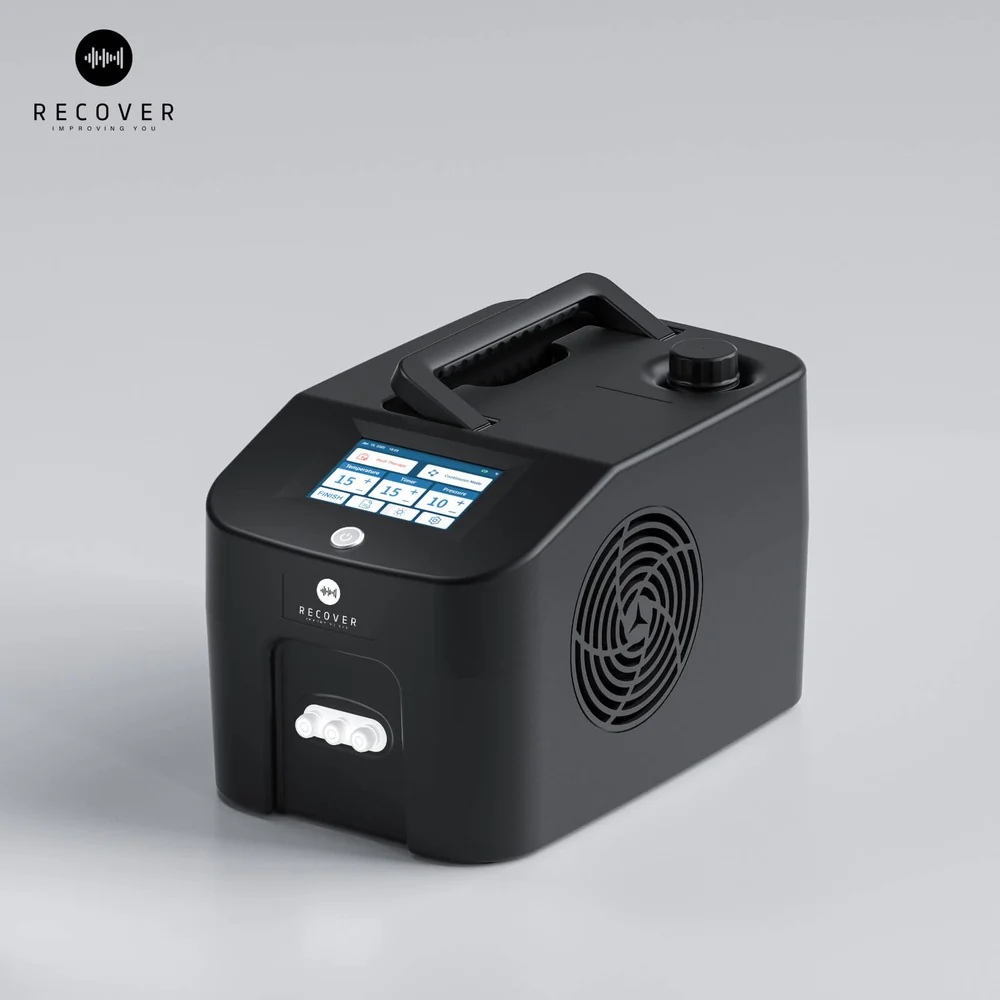
An ice bath chiller is a compact refrigeration unit that cools water drawn from your tub and returns it colder. A pump circulates the water through a heat exchanger, a controller monitors the temperature, and the unit switches on and off to hold your chosen set point. Many models also pass the water through a filter, which helps keep it clean between changes.
The term overlaps with "water chiller", the broader category that covers everything from small domestic units to large commercial plants. Ice bath chillers sit at the compact end of that range and are designed for plunge tubs rather than buildings or industrial processes.
Some tubs have a chiller built in, while others pair with a standalone unit through hoses and fittings. A few units can also produce ice, but most simply remove heat from the water.
How Does a Water Chiller Machine Work?
A chiller moves heat rather than creating cold. Inside the unit, a refrigerant circulates through four main parts: a compressor, a condenser, an expansion device and an evaporator. Warm tub water passes through a heat exchanger connected to the evaporator, where the refrigerant absorbs its heat. The compressor then pushes that heat-laden refrigerant to the condenser, which releases the heat into the surrounding air, usually with the help of a fan.
That's why the air around a chiller feels warm, and why ventilation matters. If the unit can't dump heat easily, it works harder and cools more slowly.
A temperature sensor tells the controller when to start and stop the compressor, while the pump keeps water moving through the filter and heat exchanger. Understanding this helps you place the unit sensibly and troubleshoot problems later.
What Can a Chiller Do, and What Can't It?
A chiller can hold a steady temperature, remove the chore of buying ice and make regular sessions practical. It usually includes some filtration too, which reduces how often you need to change the water.
It can't chill a full tub instantly. Cooling a few hundred litres takes hours, and the time depends on the water volume, the starting temperature, the unit's capacity and how hot the surroundings are. It also can't compensate for a poorly insulated tub, direct sun or an uncovered surface losing cold constantly. And it doesn't replace sanitation, so you still need to maintain the water.
Be cautious about "fast cooling" claims without figures. Ask for cooling capacity and the conditions under which it was measured, since a number quoted at mild temperatures may not hold in a UAE summer.
Do You Actually Need One?
Your usage is the best guide. If you plunge a couple of times a month, bagged ice may be enough, especially in cooler months. If you plan three or more sessions a week, buying and handling ice quickly becomes tedious, and a chiller starts to make sense.
Climate matters too. In the UAE's summer, tap water can start out warm, which means you'd need a lot of ice to bring it down. A chiller does that work gradually and then maintains the temperature.
Also consider practicalities. You need a suitable power socket, space with airflow around the unit and a tub that's compatible with its fittings. If you're unsure, start with ice, use the tub for a couple of months and upgrade once you know how often you'll really plunge.
What to Check Before You Buy
Start with cooling capacity relative to your tub volume, then check the temperature range, circulation flow rate and filtration. Look at noise levels if the unit will sit near living spaces, and confirm voltage, plug type and power consumption against your home supply.
Check hose sizes and fittings against your tub, because mismatched connectors are a common headache. Ask about warranty length and what it covers, whether spare parts and service are available locally and how filter replacements work.
When you start comparing, browsing a range of ice bath chillers shows how standalone and tub-bundled options differ. Recover is one UAE retailer that lists both formats, though you should still confirm specifications and warranty terms directly before ordering.
Frequently Asked Questions
Is a chiller better than using ice?
For regular use, usually yes, because it keeps temperature steady and removes the daily ice routine. For occasional sessions, ice can be simpler and cheaper. The better option depends on how often you plunge.
How long does a chiller take to cool a tub?
It depends on water volume, starting temperature, the unit's capacity and ambient heat. Expect hours rather than minutes for a full tub, and ask suppliers for figures at realistic conditions.
Can I use a chiller outdoors?
Only if the manufacturer says the unit is suitable. Heat, dust and moisture can affect electronics, so shade, ventilation and weather protection matter even when outdoor use is permitted.
Does a chiller clean the water?
Not by itself. Many units circulate water through a filter, which helps, but you still need sanitising and regular water changes following the manufacturer's guidance.
Conclusion
An ice bath chiller is worth considering if you plunge regularly, especially in a hot climate where ice melts quickly. It holds a steady temperature and removes the ice routine, but it won't cool instantly or replace good water care.
Match capacity to your tub, check fittings and power requirements and ask clear questions about warranty and support. If you're unsure how often you'll plunge, start simple and upgrade once the habit sticks.
- Technology for Students
- Admissions & Applications
- Online Courses
- Career and Jobs
- Campus Life
- Drinks
- Film
- Fitness
- Food
- Giochi
- Gardening
- Health
- Home
- Literature
- Music
- Networking For Students
- Insights
- Party
- Religion
- Shopping
- Sports
- Theater
- Wellness
- Education News
- Business & Finance For Students
- Security, Law & Crime Education
- Insurance
- Science & Technology For Students
 Italiano
 English
 Arabic
 French
 Spanish
 Portuguese
 Deutsch
 Turkish
 Dutch
Dutch
 Russian
 Romaian
 Portuguese (Brazil)
 Greek
Greek