


How Does Hammer Drilling Improve Rock Penetration?
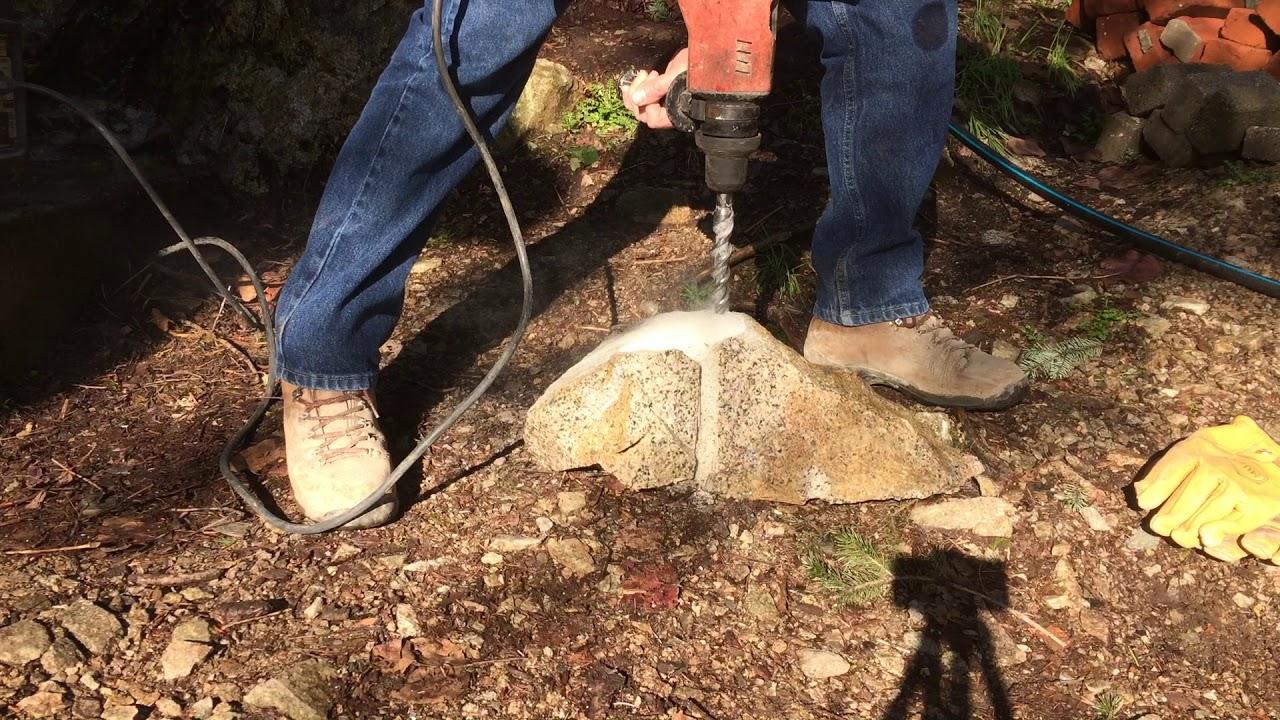
Drilling through hard rock has always posed challenges that test the limits of equipment, personnel, and project economics. Conventional rotary drilling methods lose effectiveness rapidly as rock hardness and abrasiveness increase. Hammer drilling was developed to overcome these limitations by applying fundamentally different physics to the rock fracturing problem. Understanding how hammer drilling actually improves rock penetration helps project planners make better equipment selection decisions. This article explores the mechanics, technology, and operational principles behind hammer drilling’s superior rock penetration performance.
The Physics Behind Hammer Drilling Performance
Rock fracture mechanics explain why hammer drilling outperforms conventional rotary methods in hard formations. Hard crystalline rock has very high compressive strength that resists the grinding action of conventional rotary drill bits. The same rock, however, is much weaker in tension than in compression. This fundamental property of crystalline materials is the key to understanding why percussion drilling is so effective.
When a hammer bit impacts the rock face, it creates a compressive stress wave that propagates through the rock. This wave reflects from boundaries and interfaces within the rock as a tensile stress wave. Tensile stress waves that exceed the rock’s tensile strength cause fracturing, chipping fragments from the rock face. These fragments are the drill cuttings that are carried to the surface by the air flush system. The tensile failure mechanism requires dramatically less energy than overcoming the compressive strength of the rock through rotary grinding, which is the fundamental reason for hammer drilling’s efficiency advantage.
Rotary drilling in hard rock relies on the roller cone or fixed cutter bit making repeated compressive contact with the rock surface while rotating. The energy required to fracture rock in compression is very high, and hard abrasive rocks wear cutting structures rapidly. As bit cutting structures degrade, more energy is required to achieve the same penetration increment, creating a self-reinforcing efficiency decline. Hammer drilling does not face this degradation dynamic in the same way because percussion energy is applied perpendicular to the rock face, exploiting tensile weakness rather than fighting compressive strength.
Down-the-Hole Versus Top-Hammer Systems
Two distinct types of hammer systems are used in drilling applications, each with different performance characteristics. Top-hammer systems attach the percussion mechanism to the drill head at the surface and transmit impact energy through the drill string to the bit at depth. These systems are practical and cost-effective for shallow applications where the drill string is short enough that energy transmission losses are acceptable. As depth increases, energy losses in the drill string reduce the effective impact energy arriving at the bit, progressively diminishing performance.
Down-the-hole hammer systems solve the energy transmission problem by positioning the hammer mechanism immediately above the drill bit inside the borehole. Compressed air delivered through the drill string drives the piston mechanism at the bottom of the hole, eliminating the long energy transmission path of top-hammer systems. The impact energy that the piston delivers to the bit shank is fully available for rock fracturing regardless of how deep the borehole is. This design makes down-the-hole hammer systems the preferred choice for deep hard rock applications where consistent performance at depth is essential.
The piston mechanism inside a down-the-hole hammer reciprocates at frequencies ranging from several hundred to over two thousand cycles per minute, depending on hammer size and air pressure. Each piston stroke delivers a precisely timed blow to the bit shank through a direct mechanical connection. The energy delivered per blow is a function of piston mass and velocity at impact, which in turn depends on air pressure. Higher air pressure produces faster piston movement and greater impact energy, which is why high-pressure air supply is so critical to maximizing hammer drilling performance in the hardest formations.
The Drill Bit Design That Enables Percussion Performance
The drill bit in a hammer drilling system is a precisely engineered component that translates piston impact into efficient rock fracturing. Tungsten carbide buttons arranged on the bit face are the actual cutting elements that contact and fracture the rock. The geometry of these buttons, their size, and their spacing are all carefully engineered to maximize the transfer of impact energy into rock fracturing rather than waste it as heat or elastic deformation.
Hemispherical button geometry is the most widely used design across a broad range of medium to hard rock types. The rounded surface of hemispherical buttons concentrates impact stress in a small contact area, creating high local stresses that efficiently initiate rock fracture. As wear progresses and buttons become flatter, contact area increases, local stress decreases, and penetration rates decline. This relationship between button geometry and penetration rate makes monitoring bit wear an important operational activity in hard rock hammer drilling programs.
Button material properties are as important as geometry to bit performance in hard abrasive formations. Tungsten carbide is an engineered composite of tungsten carbide particles bonded by a metallic cobalt matrix. The ratio of tungsten carbide to cobalt determines the balance between hardness and toughness. High tungsten carbide content with low cobalt produces maximum hardness and abrasion resistance but reduced impact toughness. Higher cobalt content increases impact toughness at some sacrifice of abrasion resistance. Selecting the right carbide grade for the specific combination of rock hardness and abrasiveness at a target site is a technical decision that significantly affects bit service life.
The Role of Rotation in Hammer Drilling
Although hammer drilling derives its primary rock fracturing energy from percussion rather than rotation, rotation remains an essential component of the system. Without rotation, successive hammer blows would strike exactly the same points on the rock face. After the first few blows create fractures at those points, subsequent blows would find no fresh rock to fracture. The already-fractured material would simply be redistributed rather than removed, and penetration would cease.
Rotation indexes the drill bit so that each successive hammer blow contacts a fresh, unfractured rock surface. The angular increment of rotation between blows is carefully chosen so that every button path on the bit face is covered systematically. This indexing action converts the series of point contacts from percussion into a systematic full-face cutting action that removes the entire borehole diameter with every complete rotation cycle. The combination of percussion and rotation is what makes hammer drilling achieve efficient full-face penetration rather than simply creating random fractures in isolated locations.
Optimal rotation speed in hammer drilling is much lower than in conventional rotary drilling applications. Excessive rotation speed causes buttons to slide across the rock face rather than impact it squarely. Sliding contact generates heat, accelerates abrasive wear, and reduces the effectiveness of each percussion blow. The optimal rotation speed for a specific hammer and bit combination in a specific rock type must be determined through field testing. Operating at optimal rotation speed is one of the practical skills that distinguishes experienced hammer drillers from those who simply apply generic operating parameters.
Air Supply as the Engine of Hammer Performance
Compressed air is the working fluid that powers the hammer mechanism and flushes cuttings from the borehole simultaneously. The hammer piston is driven by the pressure differential between the high-pressure air supply and the return path back to the hammer inlet. Higher supply pressure creates a larger pressure differential, which accelerates the piston to higher velocity at impact. Since impact energy is proportional to the square of piston velocity, increasing air pressure produces disproportionate increases in impact energy and therefore penetration rate.
Air volume delivered to the hammer determines both percussion performance and cuttings flushing effectiveness. Insufficient air volume reduces hammer blowrate as the piston mechanism is starved of the working fluid it needs to complete its full stroke cycle. The same volume deficit reduces annular air velocity in the borehole, allowing drill cuttings to settle rather than being carried to the surface. Settled cuttings packed around the hammer and bit obstruct penetration and create the risk of stuck equipment in severe cases. Sizing the air compressor correctly for the hammer tool and borehole diameter being used is an essential pre-project planning step.
The application of hammer bit drilling with properly sized and maintained air supply systems is the combination that consistently delivers the rock penetration improvements this technology is capable of producing.
Air purity is an often overlooked but important factor in hammer mechanism longevity and performance. Oil aerosol carryover from compressor lubricating oil can accumulate in hammer mechanisms and degrade the precision fit between moving components. Water condensation in air supply lines, particularly in cold weather operations, can freeze in hammer mechanisms and prevent operation. Oil-water separators on compressor outlets and appropriate aftercoolers in the air supply train protect hammer mechanisms from these contaminants. Maintaining air supply system components in good condition directly protects the investment in hammer drilling tools and ensures that performance potential is consistently realized.
Operational Factors That Maximize Rock Penetration Improvement
Achieving the full rock penetration benefit that hammer drilling technology offers requires attention to several operational factors beyond equipment selection. Weight on bit, which is the downforce applied to the drill string to maintain bit contact with the rock face, must be maintained within the range specified by the hammer manufacturer. Too little weight allows the bit to bounce off the rock face, wasting percussion energy. Too much weight causes the hammer to cushion its blows by compressing against the bit, reducing effective impact energy. Maintaining optimal weight on bit requires attentive monitoring of drilling parameters.
Flush air management requires real-time adjustment as conditions change during drilling. Water inflows from productive fractures reduce the ability of air alone to transport cuttings to the surface. Adding foam to the air stream dramatically improves cuttings lifting capacity in wet conditions. The foam also provides lubrication between the drill string and borehole wall that reduces rotation torque and enables continued penetration in water-producing zones where dry air flushing would fail. Experienced drillers recognize the indicators of inadequate flushing early and respond before cuttings accumulation causes operational problems.
Formation transitions during drilling require prompt operational adjustments to maintain performance. Transitions from competent crystalline rock to fractured or weathered zones change the optimal operating parameters significantly. Reducing weight on bit and rotation speed through unstable fractured intervals prevents borehole wall damage and reduces the risk of drill string sticking. Reverting to optimized parameters when competent rock resumes restores full penetration rate performance. This real-time operational adaptation is what enables hammer drilling programs to navigate geological variability without sacrificing the penetration rate advantages that justify the technology investment.
- Technology for Students
- Admissions & Applications
- Online Courses
- Career and Jobs
- Campus Life
- Drinks
- Film
- Fitness
- Food
- الألعاب
- Gardening
- Health
- الرئيسية
- Literature
- Music
- Networking For Students
- Insights
- Party
- Religion
- Shopping
- Sports
- Theater
- Wellness
- Education News
- Business & Finance For Students
- Security, Law & Crime Education
- Insurance
- Science & Technology For Students
 Arabic
 English
 French
 Spanish
 Portuguese
 Deutsch
 Turkish
 Dutch
Dutch
 Italiano
 Russian
 Romaian
 Portuguese (Brazil)
 Greek
Greek