


How to Choose a Multifunction Time Relay for Your Project?
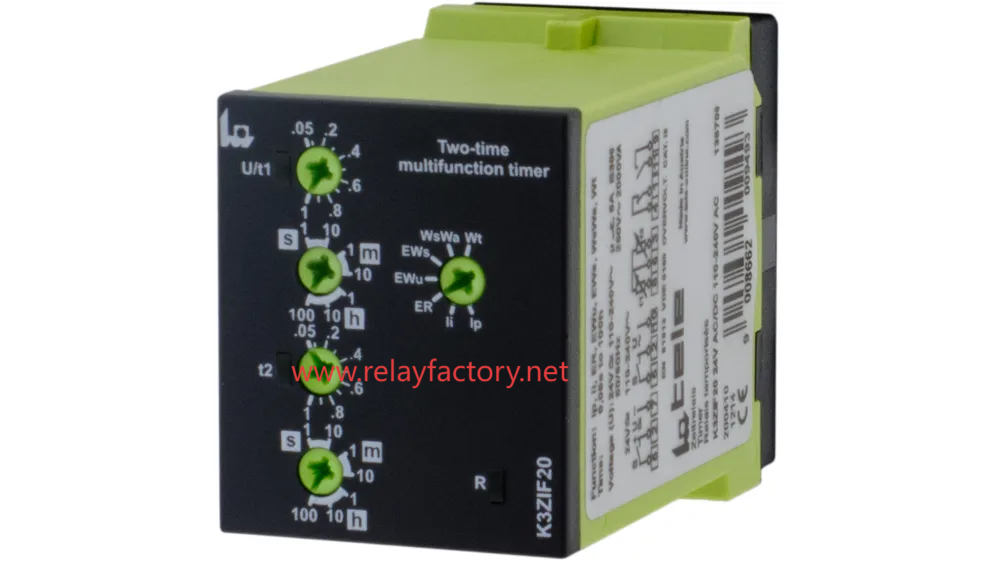
Multifunction Time Relay selection requires buyers to consider how a component will operate within the intended electrical control system. Rather than focusing only on price or appearance, purchasing teams should review operating modes, electrical ratings, wiring requirements, installation conditions, and documentation. A clear understanding of these factors helps businesses compare available products and communicate their technical needs to manufacturers before placing an order.
Identify the Control Functions Your Equipment Needs
The first step is to define the control sequence required by the application. Different machines and electrical systems may need different switching behaviors, so buyers should determine which operating modes are necessary before comparing models.
Consider whether the application requires delayed activation, delayed deactivation, interval control, cyclic operation, or another timing sequence. The actual functions available depend on the product design, so buyers should check the manufacturer's documentation rather than assume every model supports the same options.
It is also helpful to describe the control process in practical terms. Explain what should happen when power is applied, when a control signal changes, and when the operating cycle ends. This gives the manufacturer a clearer picture of the intended use and helps identify suitable configurations.
Check Electrical Ratings and Load Requirements
Electrical compatibility is an important part of product selection. Buyers should verify the supply voltage, frequency where applicable, contact arrangement, switching capacity, and other relevant electrical parameters.
The control supply and the load connected through the output contacts may have different requirements. Confirm that the product specifications match the intended circuit and the equipment being controlled. If the application involves a particular load type or switching frequency, provide those details during the technical discussion.
A datasheet can help engineers review these parameters before approving a model. If any rating is unclear, ask the manufacturer to explain it instead of making assumptions based on the product's external appearance.
Accurate electrical information can also help purchasing teams avoid ordering components that require additional design changes during installation.
Review Wiring and Installation Requirements
A product must fit both the electrical design and the physical installation environment. Buyers should check the terminal layout, wiring diagram, mounting method, overall dimensions, and available panel space.
Before ordering, compare the manufacturer's connection diagram with the intended control circuit. Confirm the purpose of each terminal and identify any differences between the existing system and the proposed component.
Installation conditions also deserve attention. Ambient temperature, enclosure space, vibration, and access for maintenance may influence the selection process. Where equipment has limited space, dimensional drawings can help engineers assess whether the component will fit without changes to the panel layout.
Providing photographs or drawings of the installation area can make communication more precise and help the manufacturer understand any special requirements.
Ask About Configuration and Adjustment Options
Some applications require different operating settings or specific combinations of functions. Buyers should ask how the available modes are selected, how the operating range is adjusted, and whether the settings remain stable under the intended operating conditions.
Depending on the design, configuration may involve switches, adjustment dials, or other setting methods. The product documentation should explain the available options and how they are used.
If a project requires a particular configuration, write down the expected behavior and ask the manufacturer to confirm whether the requested setup is supported. Do not assume that every model offers identical adjustment ranges or control options.
Clear communication at this stage can help engineering teams evaluate the product before finalizing the equipment design.
Evaluate Quality Procedures and Technical Documents
Before purchasing in quantity, buyers should understand how the manufacturer manages product quality. Ask about incoming material checks, assembly inspections, electrical testing, and final verification procedures relevant to the product.
The manufacturer should clarify which inspections are performed and what supporting records are available. If the project has specific acceptance criteria, share them before production begins so both parties understand the requirements.
Technical documents may include datasheets, dimensional drawings, wiring diagrams, installation instructions, and product identification information. Confirm which documents can be supplied and whether they match the model under consideration.
For repeat orders, retaining approved documentation helps purchasing and engineering teams check product details and manage future specification changes.
Consider Supply Arrangements Before Ordering
Technical suitability is only one part of the purchasing decision. Buyers should also review sample availability, minimum order quantities, customization options, production schedules, packaging, payment terms, and shipping arrangements.
A sample may help the engineering team check dimensions, terminal connections, configuration methods, and relevant functions before a larger order is placed. Ask about sample costs and the information needed to arrange an evaluation.
For projects with fixed assembly schedules, clarify expected production and dispatch dates. It is also useful to ask how the supplier communicates changes to product specifications or order schedules.
Keeping the agreed parameters and purchasing conditions in writing can reduce misunderstandings and support more organized cooperation between the buyer and manufacturer.
Discuss Your Application With relayfactory
Selecting a control component involves matching its functions and electrical characteristics to the equipment, confirming installation details, and reviewing documentation before purchasing. A prepared checklist allows buyers to discuss their requirements more clearly and compare available configurations against their project needs. For businesses sourcing electrical control products, relayfactory offers a point of contact for product and order discussions. Visit https://www.relayfactory.net/ to review the company's available information and ask about product specifications, configuration options, and purchasing arrangements.
- Technology for Students
- Admissions & Applications
- Online Courses
- Career and Jobs
- Campus Life
- Drinks
- Film
- Fitness
- Food
- Jogos
- Gardening
- Health
- Início
- Literature
- Music
- Networking For Students
- Insights
- Party
- Religion
- Shopping
- Sports
- Theater
- Wellness
- Education News
- Business & Finance For Students
- Security, Law & Crime Education
- Insurance
- Science & Technology For Students
 Portuguese
 English
 Arabic
 French
 Spanish
 Deutsch
 Turkish
 Dutch
Dutch
 Italiano
 Russian
 Romaian
 Portuguese (Brazil)
 Greek
Greek