


PCB Assembly and PCB China: Smart Manufacturing Solutions for Modern Electronics
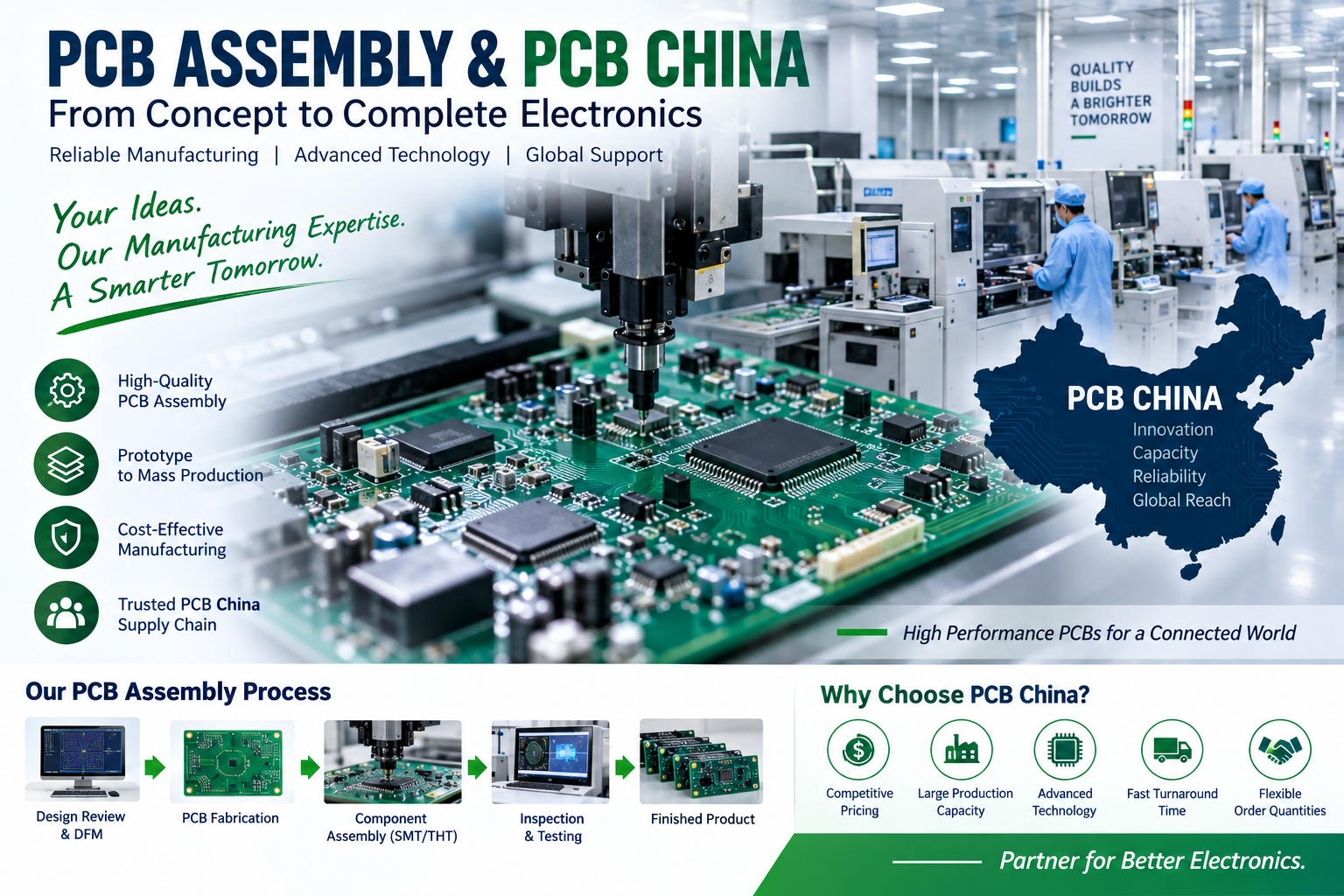
Modern electronics depend on reliable circuit boards that connect components, manage electrical signals, and support consistent product performance. From consumer electronics and industrial automation to telecommunications, automotive systems, medical devices, and smart appliances, PCB assembly plays a central role in turning electronic designs into functional products.
At the same time, PCB China manufacturing has become an important consideration for companies looking for flexible production capabilities, advanced equipment, component sourcing, prototyping, and scalable manufacturing. Choosing the right manufacturing strategy is not simply about finding a low price. Businesses must evaluate engineering capability, material selection, component quality, testing procedures, production consistency, communication, and delivery requirements.
Understanding the complete PCB production process helps buyers make informed decisions and reduce manufacturing risks.
What Is PCB Assembly?
PCB assembly is the process of installing electronic components onto a printed circuit board to create a working electronic circuit. A bare PCB contains conductive pathways, pads, and other structural features, but it becomes functional only after the required components are correctly mounted and connected.
Typical components may include:
-
Resistors and capacitors
-
Integrated circuits
-
Diodes and transistors
-
Connectors
-
Microcontrollers
-
Sensors
-
Relays
-
Transformers and inductors
Modern production can include surface mount technology, through-hole assembly, mixed assembly, soldering, inspection, programming, and functional testing.
The complexity of the process depends on board design, component density, production volume, application, and quality requirements.
How the PCB Assembly Process Works
A professional manufacturing workflow usually follows several carefully controlled stages.
-
The PCB design and bill of materials are reviewed.
-
Components are sourced according to approved specifications.
-
Solder paste is applied to designated PCB pads.
-
Automated equipment places surface-mount components.
-
Boards pass through controlled reflow soldering.
-
Through-hole components are added when required.
-
Inspection identifies placement or soldering defects.
-
Electrical or functional testing verifies performance.
Effective PCB assembly requires accurate coordination between design files, materials, machines, engineers, operators, and quality-control systems.
Even a small component placement error can affect the performance of an entire electronic product.
Surface Mount and Through-Hole Assembly
Two widely used manufacturing approaches are surface mount technology and through-hole technology.
| Factor | Surface Mount Technology | Through-Hole Technology |
|---|---|---|
| Component placement | PCB surface | Leads through drilled holes |
| Automation | Highly suitable | More process-dependent |
| Board density | High | Generally lower |
| Component size | Often compact | Often larger |
| Common use | Modern compact electronics | Mechanical or power applications |
Many manufacturers combine both techniques when product designs require different component types.
The best method should therefore be selected according to electrical, mechanical, thermal, space, and performance requirements rather than cost alone.
Why Companies Consider PCB China Manufacturing
The term PCB China commonly refers to PCB fabrication and electronic assembly services available through Chinese manufacturing suppliers.
Companies may consider this manufacturing route because it can provide access to established electronics production ecosystems, component sourcing networks, engineering support, prototyping capabilities, and scalable manufacturing.
A capable supplier may support projects from early prototype quantities through larger production runs.
However, businesses should evaluate suppliers carefully. Manufacturing location alone does not guarantee quality.
Important considerations include:
-
Engineering experience
-
Production equipment
-
Traceability procedures
-
Component sourcing controls
-
Inspection capabilities
-
Testing processes
-
Communication quality
-
Lead-time management
Selecting a PCB China supplier should therefore involve both technical and commercial evaluation.
Quality Control in PCB Assembly
Quality control should be integrated throughout the production process rather than performed only after manufacturing is complete.
Reliable PCB assembly may involve solder paste inspection, automated optical inspection, X-ray inspection, electrical testing, functional testing, and manual engineering checks depending on product requirements.
Quality management should also cover incoming components.
Counterfeit, incorrect, damaged, or poorly stored electronic components can create problems even when the assembly process itself is accurate.
Manufacturers should maintain appropriate material identification, storage, handling, and traceability procedures.
Choosing the Right PCB China Supplier
Businesses comparing PCB China manufacturing companies should look beyond quotations.
A strong manufacturing partner should understand technical documentation and identify potential production challenges before volume manufacturing begins.
Important evaluation points include:
-
Manufacturing capabilities suitable for your PCB design
-
Experience with similar applications
-
Clear component sourcing procedures
-
Prototype and production support
-
Effective quality inspection
-
Transparent communication
-
Engineering feedback
-
Consistent production control
Requesting prototype production before placing a larger order can help confirm manufacturing quality and communication reliability.
Prototype Versus Volume PCB Production
Prototype manufacturing allows engineers to test a circuit board before committing to larger production quantities.
During prototyping, businesses can evaluate component placement, connectivity, functionality, thermal behavior, mechanical fit, and overall design performance.
Once the product is validated, production can transition toward larger volumes.
A reliable PCB assembly partner should help maintain consistency between prototype and production stages so unnecessary process changes do not introduce new problems.
This approach can reduce redesign costs and improve product-launch confidence.
Benefits of Professional PCB Assembly
Professional manufacturing provides several advantages for electronics companies:
-
Accurate component placement
-
Consistent soldering
-
Faster production
-
Better inspection capability
-
Reduced manual errors
-
Scalable manufacturing
-
Improved traceability
-
Access to specialized equipment
For growing electronics companies, outsourcing manufacturing can also reduce the need for significant investment in placement machines, inspection systems, soldering equipment, facilities, and specialized production staff.
Common PCB Manufacturing Challenges
PCB manufacturing can still involve challenges even with advanced equipment.
Common problems include incorrect component substitutions, solder defects, supply-chain disruptions, incomplete design information, component availability issues, and insufficient testing.
Companies using PCB China production should provide complete manufacturing documentation and establish clear quality expectations before production starts.
Communication is particularly important when designs require special materials, controlled impedance, unusual components, programming, customized testing, or strict tolerances.
Future of PCB Assembly Manufacturing
Electronics are becoming smaller, smarter, faster, and increasingly connected. These trends are creating demand for more compact boards, higher component densities, sophisticated inspection, improved automation, and advanced manufacturing processes.
The future of PCB assembly will increasingly involve automated production monitoring, machine vision, smarter inspection systems, digital traceability, and data-driven quality control.
Manufacturers capable of combining engineering expertise with flexible automation will be better positioned to support new generations of electronic products.
Frequently Asked Questions About PCB Assembly and PCB China
1. What does PCB assembly mean?
It means mounting and connecting electronic components onto a printed circuit board to create a functional electronic circuit.
2. What is PCB China manufacturing?
PCB China generally refers to PCB fabrication, component sourcing, assembly, testing, and related electronics manufacturing services provided by suppliers located in China.
3. What files are normally required for PCB production?
Manufacturers commonly require PCB design data, a bill of materials, component information, assembly drawings, and placement data depending on the project.
4. Can manufacturers produce PCB prototypes?
Yes. Many suppliers support prototype quantities so engineers can validate designs before larger production runs.
5. What is SMT assembly?
Surface mount technology places electronic components directly onto designated pads on the surface of a PCB.
6. What is through-hole assembly?
Through-hole assembly uses components with leads inserted through drilled PCB holes before soldering.
7. Can SMT and through-hole components be used together?
Yes. Mixed-technology boards can contain both surface-mounted and through-hole components.
8. Why is PCB testing important?
Testing helps identify assembly defects, electrical issues, incorrect components, connection problems, and functional failures before boards enter final products.
9. How should I select a PCB manufacturer?
Evaluate technical capability, quality systems, testing resources, communication, component sourcing, production capacity, and experience relevant to your application.
10. Is the cheapest PCB supplier always the best choice?
No. Low manufacturing cost provides little value if poor quality, component problems, delays, or inconsistent production create expensive failures later.
- Technology for Students
- Admissions & Applications
- Online Courses
- Career and Jobs
- Campus Life
- Drinks
- Film
- Fitness
- Food
- Spellen
- Gardening
- Health
- Home
- Literature
- Music
- Networking For Students
- Insights
- Party
- Religion
- Shopping
- Sports
- Theater
- Wellness
- Education News
- Business & Finance For Students
- Security, Law & Crime Education
- Insurance
- Science & Technology For Students
 Dutch
Dutch
 English
 Arabic
 French
 Spanish
 Portuguese
 Deutsch
 Turkish
 Italiano
 Russian
 Romaian
 Portuguese (Brazil)
 Greek
Greek