


What Should Buyers Ask minidumperfactory Before Ordering?
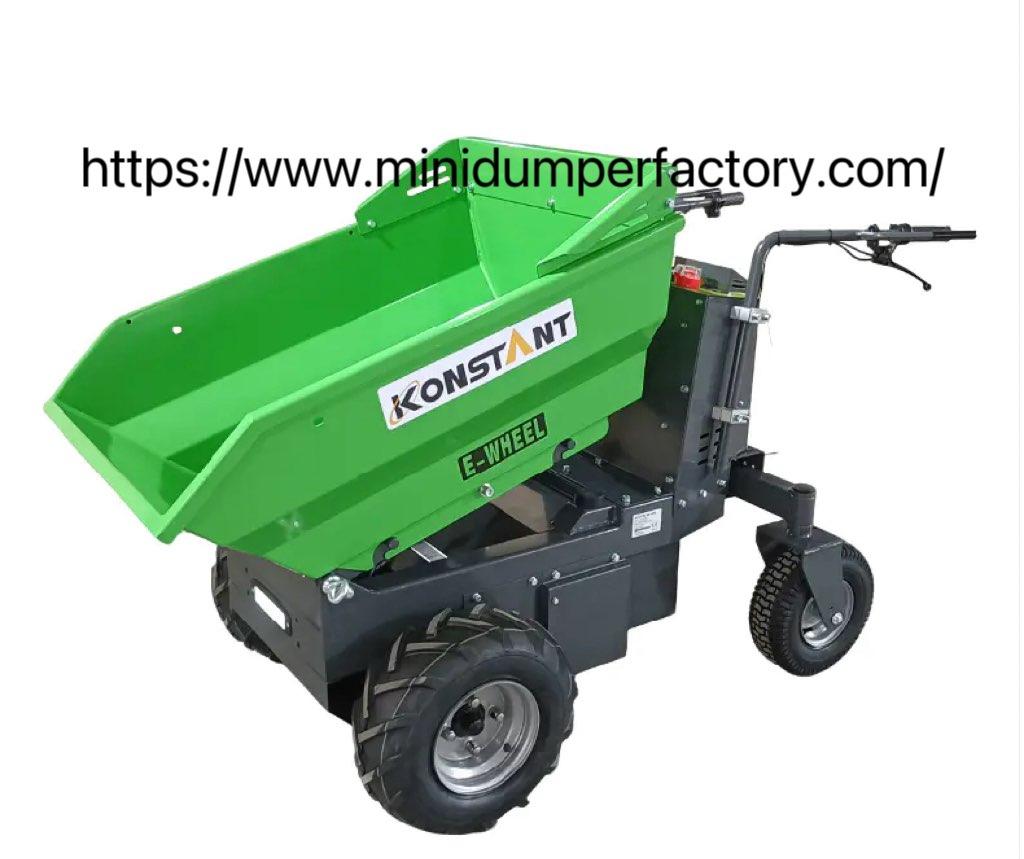
Mini Dumper Supplier discussions should begin with the actual project requirements rather than a product photograph or basic quotation. Buyers should explain the intended application, material type, expected load, site access, terrain, unloading position, operating frequency, power preference, and destination market. This information gives the manufacturer a practical basis for discussing configurations with importers, distributors, contractors, rental businesses, and private-label buyers.
What Type of Work Will the Equipment Handle?
The intended application should be clarified before comparing individual models. Construction sites, landscaping projects, farms, property maintenance, and material transportation can involve different operating conditions.
A buyer should describe the material being moved, travel distance, ground surface, slope conditions, access width, unloading area, and approximate daily workload.
This information helps connect the product configuration with the actual job instead of selecting equipment from a general specification list.
How Much Material Needs to Be Moved?
Load planning should consider both weight and volume. A hopper may have enough physical space for a particular material while the actual load weight creates a different requirement.
Buyers should identify the normal load, material density, number of trips, loading method, and transportation distance.
For commercial projects, estimating the number of transport cycles per day can also provide a clearer picture of whether the selected configuration matches the intended workflow. Current buying guidance similarly recommends considering payload, hopper capacity, material type, route conditions, and cycle requirements together.
What Are the Site Access Restrictions?
A compact machine may be selected specifically because the worksite has limited access.
Before ordering, measure the narrowest gate, doorway, pathway, ramp, or passage that the equipment must use. Buyers should also consider turning space, storage area, overall height, machine length, and ground clearance.
These measurements can prevent an avoidable situation where the equipment meets the technical requirements but cannot comfortably reach the intended work area.
Which Drive Configuration Fits the Terrain?
Ground conditions should be part of the technical discussion.
Firm paved surfaces may create different requirements from muddy ground, loose soil, gravel, slopes, or uneven terrain. Buyers should explain the usual surface conditions and whether the machine will move between several types of ground during one project.
Track or wheel configuration, ground clearance, traction requirements, and turning behavior can then be considered according to the actual application rather than selected only by appearance.
Where Will the Material Be Unloaded?
Unloading is another point that deserves specific questions.
Buyers should explain whether material will be discharged onto open ground, beside a building, into a container, onto another vehicle, or at another restricted location.
Ask about dumping direction, unloading height, tipping structure, control method, and hydraulic requirements where applicable.
The unloading process should fit the entire transport cycle. A configuration that works well for loading may still be inconvenient if the final discharge location has limited space.
What Power System Is Suitable for the Market?
Power requirements can vary according to application and destination.
Buyers can ask about available engine or motor configurations, rated output, fuel or energy requirements, starting method, maintenance access, and operating conditions.
For overseas orders, it is also useful to consider local maintenance resources and parts availability. If a particular power configuration is requested, buyers should confirm the exact model and specifications in writing before production.
Which Accessories Are Included?
Two quotations can look similar while containing different equipment packages.
Buyers should ask which accessories are included in the quoted configuration and which items are optional.
Questions can cover:
Additional attachments
Spare parts
Manuals
Tools
Protective components
Customized labels
Packaging
Other requested items
Writing these details into the purchasing specification makes comparisons more transparent.
How Can Buyers Confirm Customization Details?
Customization may be important for distributors and private-label businesses.
Possible requirements include color, logo placement, nameplates, manuals, packaging artwork, accessories, or selected configuration changes.
Buyers should provide drawings, logo files, reference images, dimensions, and written requirements before production.
For larger orders, an approved sample can serve as a useful reference. It allows both parties to confirm appearance and configuration before batch production.
What Inspection Information Should Be Requested?
Inspection requirements should be discussed before shipment.
Buyers can ask how dimensions, operating functions, appearance, accessories, labels, and packaging are checked.
For bulk orders, a written checklist can identify the specifications that must be confirmed before loading.
Photographs, videos, test records, or other agreed inspection materials may also be useful for overseas buyers who cannot visit the production site personally.
What Should Buyers Know About Spare Parts?
Replacement components should be considered before the equipment enters regular operation.
Ask which parts are subject to routine wear, how components are identified, whether parts diagrams are available, and how future orders can be arranged.
For distributors, keeping selected replacement components in stock may help them respond to customer maintenance needs.
Clear information about parts ordering can also reduce uncertainty when equipment is operating far from the original production location. Documentation and spare-parts access are commonly highlighted as points worth confirming before purchase.
How Should Packaging Be Confirmed?
Packaging should be discussed according to the transportation method and destination.
Buyers can confirm package dimensions, protection materials, labels, loading arrangements, spare parts packaging, manuals, and special market requirements.
Private-label customers may also need customized packaging or documentation. These materials should be approved before production reaches the final stage.
Clear packaging instructions can help reduce last-minute changes before shipment.
What Should Be Written Into the Order?
Important technical and commercial details should not depend only on informal conversations.
A complete purchasing record can include the product configuration, quantity, dimensions, payload, power system, accessories, customization, inspection requirements, packaging, documentation, spare parts, and delivery arrangements.
This provides a shared reference during production.
It can also make repeat orders easier because the buyer can refer to an approved specification instead of rebuilding the requirements from the beginning.
How Should Different Offers Be Compared?
Buyers should compare equivalent configurations rather than simply comparing the final quoted amount.
A useful comparison sheet can include:
Application suitability
Payload
Dimensions
Hopper configuration
Drive system
Unloading method
Power system
Included accessories
Customization
Inspection
Spare parts
Packaging
Documentation
Delivery
This approach can reveal differences that are not obvious from a short quotation and gives purchasing teams a more consistent way to evaluate several manufacturers.
What Should Buyers Prepare Before Contacting minidumperfactory?
A detailed inquiry can make technical communication much more efficient. Buyers can prepare the intended application, material type, expected load, access measurements, terrain, unloading requirements, preferred power configuration, quantity, customization needs, packaging requirements, and destination.minidumperfactory provides product information for businesses reviewing compact material transport equipment for construction, landscaping, agriculture, and related applications. Buyers can review the available product range at https://www.minidumperfactory.com/product/ and use the product information to prepare specifications before discussing a potential order.
- Technology for Students
- Admissions & Applications
- Online Courses
- Career and Jobs
- Campus Life
- Drinks
- Film
- Fitness
- Food
- Jeux
- Gardening
- Health
- Domicile
- Literature
- Music
- Networking For Students
- Insights
- Party
- Religion
- Shopping
- Sports
- Theater
- Wellness
- Education News
- Business & Finance For Students
- Security, Law & Crime Education
- Insurance
- Science & Technology For Students
 French
 English
 Arabic
 Spanish
 Portuguese
 Deutsch
 Turkish
 Dutch
Dutch
 Italiano
 Russian
 Romaian
 Portuguese (Brazil)
 Greek
Greek