


How Do You Select the Right Drill Bit for Metal, Stainless Steel, and Aluminum?
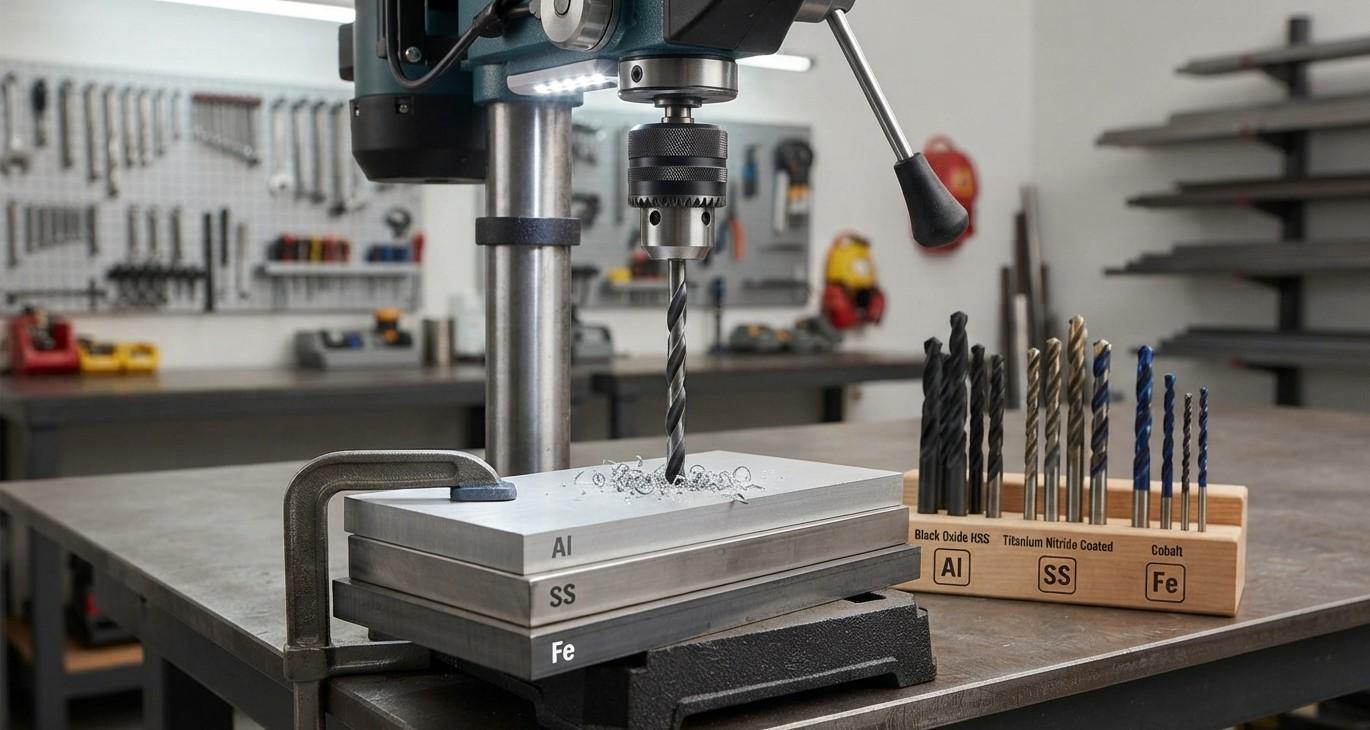
Selecting the right drill bit is essential for producing accurate holes, maintaining good surface quality, extending tool life, and improving machining efficiency. Metal, stainless steel, and aluminum all have different machining characteristics, so using the same drill bit for every material may result in poor hole quality, excessive heat, premature tool wear, or even tool breakage.
The right drill bit depends on several factors, including the workpiece material, hardness, hole diameter, hole depth, machine type, cutting speed, feed rate, and required accuracy. High-speed steel (HSS), cobalt-alloyed HSS, carbide, and coated drill bits are among the common choices for industrial drilling applications.
For businesses looking for reliable machining and workshop tools, Khokhawala Trading LLC serves as an Industrial Tools Supplier in Dubai, offering solutions for a wide range of industrial applications.
This guide explains how to select the right drill bit for metal, stainless steel, aluminum, and other common industrial materials.
Table of Contents
-
Why Drill Bit Selection Matters
-
Understanding Different Drill Bit Materials
-
Choosing Drill Bits for General Metal
-
Choosing Drill Bits for Stainless Steel
-
Choosing Drill Bits for Aluminum
-
Important Drill Bit Features to Consider
-
Drill Bit Selection Comparison
-
Common Drill Bit Selection Mistakes
-
Tips for Better Drilling Performance
-
Frequently Asked Questions
-
Conclusion and CTA
Why Drill Bit Selection Matters
A drill bit is a cutting tool designed to remove material and create a hole. Its geometry and material must be suitable for the workpiece being drilled.
Using the wrong drill bit can cause:
-
Excessive heat generation
-
Premature tool wear
-
Poor hole accuracy
-
Oversized or undersized holes
-
Burr formation
-
Poor surface finish
-
Tool breakage
-
Workpiece damage
-
Reduced productivity
For example, a standard HSS drill may be suitable for many general metal applications, while stainless steel may benefit from a cobalt-alloyed HSS drill designed for higher heat and wear resistance. Aluminum may require geometry that promotes efficient chip evacuation and helps prevent material from sticking to the cutting edges.
Understanding Different Drill Bit Materials
Before selecting a drill bit, it is important to understand the main tool materials available.
HSS Drill Bits
High-speed steel, commonly called HSS, is one of the most widely used drill bit materials for general metalworking.
HSS drill bits offer:
-
Good toughness
-
Reliable performance
-
Versatility
-
Good resistance to heat
-
Suitable performance for many steels and non-ferrous metals
They are commonly used for general-purpose drilling where extreme productivity or difficult materials are not the primary concern.
Cobalt HSS Drill Bits
Cobalt-alloyed HSS drill bits are designed for applications where greater heat and wear resistance are required. They are particularly useful for stainless steel and other difficult-to-machine metals. Manufacturer specifications commonly identify cobalt HSS drills specifically for steel and stainless-steel drilling.
Carbide Drill Bits
Carbide drills are harder and can provide excellent wear resistance and cutting performance in demanding applications.
They are commonly considered when:
-
High productivity is required
-
Tight tolerances are important
-
Hard or abrasive materials are being machined
-
The machine setup is rigid
-
Long tool life is required
However, carbide is more brittle than HSS and requires appropriate machine stability and cutting conditions.
Coated Drill Bits
Some HSS and carbide drills have coatings designed to improve wear resistance, reduce friction, or increase tool life.
The coating should be selected according to the workpiece material and machining application rather than simply choosing a coated tool because it appears more advanced.
Choosing Drill Bits for General Metal
For general steel and common metalworking applications, standard HSS drill bits are often a practical choice.
A quality ground HSS drill can provide accurate holes and good cutting performance for many standard applications. Drill designs with self-centering or split-point geometries can also help improve starting accuracy and reduce wandering.
When drilling general metal, consider:
-
Material hardness
-
Hole diameter
-
Required hole tolerance
-
Drill depth
-
Machine rigidity
-
Cutting speed
-
Feed rate
-
Coolant requirements
For thicker materials, ensure that the drill has sufficient working length and that chips can be evacuated effectively.
Choosing Drill Bits for Stainless Steel
Stainless steel can be more challenging to drill than many ordinary steels. Its combination of strength, heat generation, and work-hardening behavior means that tool selection and cutting conditions are especially important.
Use Suitable HSS-Co Drill Bits
Cobalt-alloyed HSS drill bits are a common choice for stainless steel. They provide greater heat and wear resistance than conventional HSS and are specifically available in designs intended for stainless-steel drilling.
Use Appropriate Cutting Conditions
Avoid simply increasing pressure when the drill is not cutting efficiently. Excessive rubbing can generate heat and contribute to work hardening.
Maintain a controlled feed and appropriate cutting speed according to the specific stainless-steel grade and drill manufacturer's recommendations.
Use Suitable Lubrication or Coolant
Proper cutting fluid can help control heat and reduce friction. This is especially important during deeper drilling or when producing multiple holes.
Avoid Unnecessary Pausing
When drilling stainless steel, inconsistent cutting action can contribute to heat buildup and work hardening. Maintain a stable drilling process whenever possible.
Choosing Drill Bits for Aluminum
Aluminum is generally easier to machine than stainless steel, but it presents its own drilling challenges.
One common issue is material sticking to the cutting edges. This can interfere with chip evacuation and reduce hole quality.
When drilling aluminum, consider drill geometry that provides efficient chip removal and a sharp cutting edge.
Important considerations include:
-
Sharp cutting edges
-
Effective flute design
-
Good chip evacuation
-
Appropriate cutting speed
-
Suitable lubrication when required
-
Proper workpiece support
A drill designed specifically for aluminum or non-ferrous materials can provide better results than a general-purpose drill when hole quality and productivity are important.
Important Drill Bit Features to Consider
Choosing a drill bit is not only about material. Several design characteristics can influence performance.
Point Angle
Point angle affects how the drill enters the workpiece and how cutting forces are distributed.
A common 135-degree split-point design is used in many metal drilling applications because it can provide good centering and reduce wandering.
However, the ideal point geometry depends on the material and application.
Flute Design
The flutes provide a path for chips to leave the hole.
Efficient chip evacuation becomes increasingly important when drilling deeper holes. Poor chip evacuation can increase friction, heat, and tool wear.
Drill Diameter
Always select the drill diameter according to the required finished hole size.
For applications involving tapping, the drill diameter must also be selected according to the required thread size and pitch.
Overall Length and Working Length
Choose a drill long enough to reach the required depth, but avoid unnecessarily long tools when a shorter drill can perform the job.
Longer drills can be more susceptible to deflection and vibration.
Shank Type
The shank must be compatible with the machine or tool holder. Common configurations include cylindrical shanks and other specialized designs.
Coating
Coatings can improve wear resistance and reduce friction for suitable applications. However, coating selection should match the workpiece material and machining conditions.
Drill Bit Selection Comparison
| Workpiece Material | Common Drill Choice | Key Considerations |
|---|---|---|
| Mild Steel | HSS or coated HSS | General-purpose drilling, correct speed and feed |
| Alloy Steel | HSS-Co or carbide | Hardness, heat, tool life |
| Stainless Steel | HSS-Co or suitable carbide | Heat control, work hardening, lubrication |
| Aluminum | Sharp HSS or suitable carbide | Chip evacuation, edge sharpness, sticking |
| Cast Iron | HSS or carbide | Abrasion, dust/chip management |
| Hardened Materials | Specialized carbide tooling | Hardness, rigidity, cutting conditions |
The table provides general guidance. The exact drill specification should always be selected based on the material grade, machine, hole requirements, and manufacturer's cutting recommendations.
Common Drill Bit Selection Mistakes
Using One Drill for Every Material
A general-purpose drill may work for several materials, but specialized applications often require specialized tooling.
Ignoring Tool Geometry
Point angle, flute design, helix, and cutting-edge geometry all affect drilling performance.
Selecting Only by Price
A cheaper drill may have a lower initial cost but may produce shorter tool life or poorer hole quality.
Using Incorrect Cutting Speed
Incorrect speed can result in excessive heat, premature wear, poor surface finish, or tool failure.
Poor Workpiece Support
If the workpiece moves or vibrates during drilling, hole quality can suffer and tool damage can occur.
Ignoring Tool Condition
A worn drill should not be expected to produce the same hole quality as a sharp tool.
Tips for Better Drilling Performance
Follow these practical steps to improve drilling results:
-
Identify the exact workpiece material and grade.
-
Select a drill material appropriate for that material.
-
Choose the correct drill diameter.
-
Consider point geometry and flute design.
-
Check the required hole depth.
-
Use appropriate cutting speed and feed.
-
Apply suitable coolant or cutting fluid where required.
-
Keep the workpiece securely clamped.
-
Ensure the drill is properly aligned.
-
Inspect the drill regularly for wear or damage.
-
Replace worn tools before hole quality deteriorates.
-
Store drills properly to protect their cutting edges.
Good drilling performance depends on the entire machining process rather than the drill bit alone.
Frequently Asked Questions
What is the best drill bit for metal?
HSS drill bits are a common choice for general metal drilling. For harder materials or more demanding applications, cobalt HSS or carbide drills may be more suitable.
What type of drill bit is best for stainless steel?
Cobalt-alloyed HSS drill bits are commonly used for stainless steel because they offer good heat and wear resistance. Suitable carbide drills can also be used for demanding production applications.
Can the same drill bit be used for steel and aluminum?
Some general-purpose drills can work with both materials, but application-specific geometry may provide better results. Aluminum drilling often benefits from sharp cutting edges and efficient chip evacuation.
Are cobalt drill bits better than HSS?
Cobalt HSS drills can offer better heat and wear resistance than standard HSS and are particularly useful for demanding materials such as stainless steel. However, standard HSS can be the more economical choice for many general applications.
When should carbide drills be used?
Carbide drills are useful for demanding production applications where high wear resistance, productivity, or hole accuracy is required. They work best with suitable machine rigidity and properly controlled cutting conditions.
Why does a drill bit overheat when drilling metal?
Overheating can result from excessive cutting speed, insufficient lubrication, poor chip evacuation, excessive feed, a worn tool, or incorrect drill geometry.
How can drill bit life be increased?
Use the correct drill for the workpiece material, follow recommended cutting parameters, use suitable coolant or lubrication, maintain proper alignment, and replace worn tools before excessive wear occurs.
How do I select the correct drill diameter?
Select the diameter according to the required finished hole size and application. If the hole will later be tapped, use the appropriate tap-drill size for the specified thread.
Conclusion
Selecting the right drill bit for metal, stainless steel, and aluminum requires more than simply choosing a drill with the correct diameter. Material type, hardness, drill geometry, tool material, coating, hole depth, machine capability, cutting conditions, and required accuracy should all be considered.
For general metal, HSS drills can provide reliable and economical performance. Stainless steel often benefits from cobalt-alloyed HSS or suitable carbide tooling, while aluminum requires attention to sharp cutting edges and efficient chip evacuation.
Using the right drill bit can improve hole quality, reduce tool wear, minimize downtime, and increase overall machining productivity.
Khokhawala Trading LLC supplies industrial tools and machining solutions for workshops and manufacturing applications. As an Industrial Tools Supplier in Dubai, we can help businesses select suitable drilling, cutting, measuring, and machining tools for different industrial requirements.
For better drilling performance, always match the drill bit to the material, machine, hole specification, and production requirements.
- Technology for Students
- Admissions & Applications
- Online Courses
- Career and Jobs
- Campus Life
- Drinks
- Film
- Fitness
- Food
- Spiele
- Gardening
- Health
- Startseite
- Literature
- Music
- Networking For Students
- Insights
- Party
- Religion
- Shopping
- Sports
- Theater
- Wellness
- Education News
- Business & Finance For Students
- Security, Law & Crime Education
- Insurance
- Science & Technology For Students
 Deutsch
 English
 Arabic
 French
 Spanish
 Portuguese
 Turkish
 Dutch
Dutch
 Italiano
 Russian
 Romaian
 Portuguese (Brazil)
 Greek
Greek