


From Wrestling Fan to Collector: How to Build a Championship Belt Collection Without Buying Random Titles
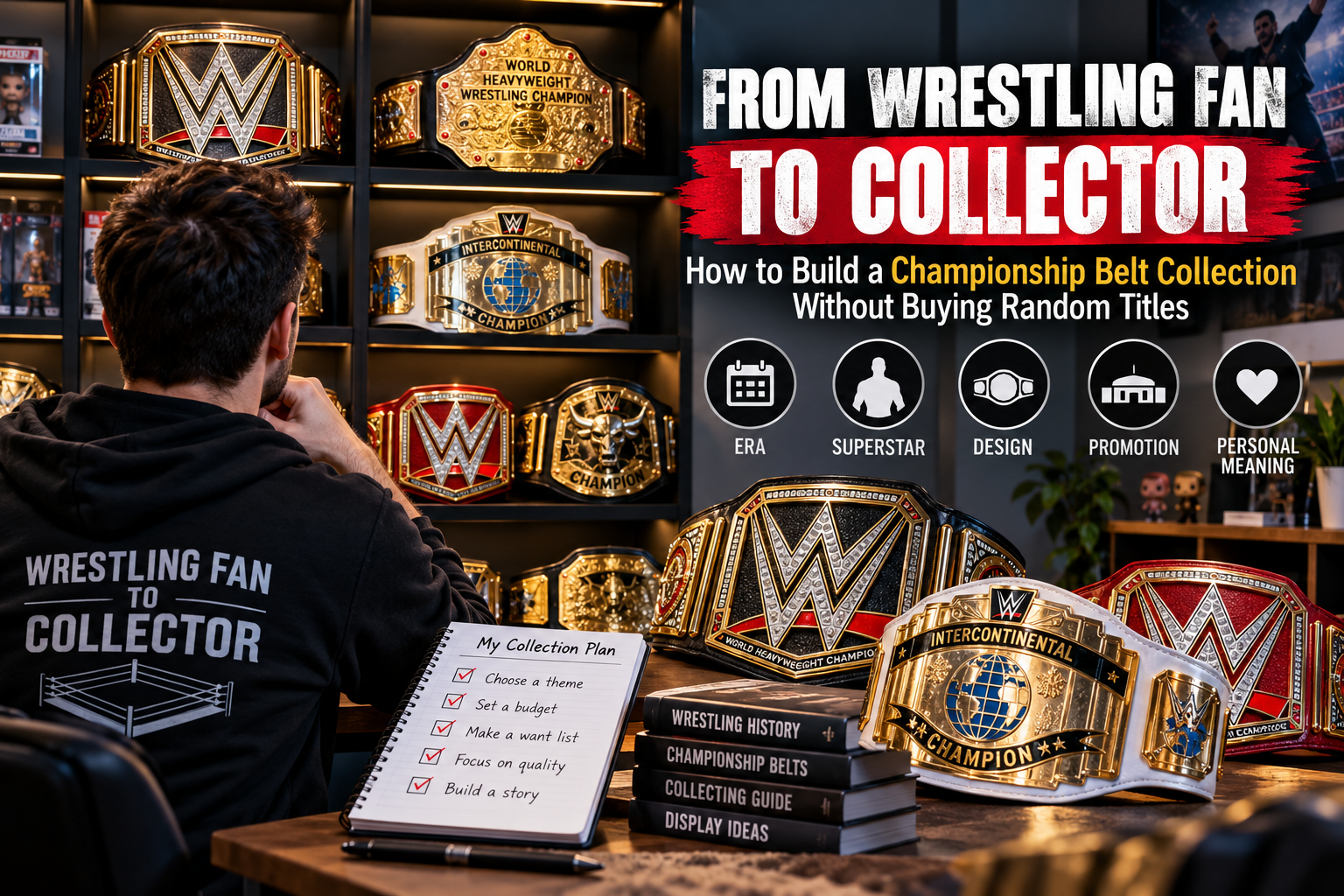
For many wrestling fans, owning a championship belt starts with a single purchase.
Maybe it is a replica of a title associated with a favorite wrestler. Maybe it represents a memorable championship reign, a legendary era, or a design that has always stood out. Whatever the reason, that first belt can eventually lead to something bigger: a genuine championship belt collection.
But there is a common mistake new collectors make.
They buy belts simply because they look good.
After a few purchases, the collection can become a random assortment of designs with no clear theme, story or connection between the pieces. A better approach is to decide what you want your collection to represent before buying your second, third or tenth belt.
Whether you are collecting in the United States, United Kingdom, Canada or elsewhere, building a thoughtful wrestling belt collection can be much more rewarding than simply accumulating titles.
What Makes a Championship Belt Collection Different From a Group of Belts?
The easiest way to understand collecting is to think about the difference between ownership and curation.
Owning several championship belts means you have multiple pieces.
Curating a collection means there is a reason those pieces belong together.
For example, a collector might focus on:
-
Belts from a particular wrestling era
-
Championships associated with favorite superstars
-
Specific championship designs
-
Classic and modern title designs
-
Belts from different wrestling promotions
-
Custom championship concepts
-
Iconic designs from memorable storylines
-
Belts connected to personal wrestling memories
There is no single correct collecting strategy.
The best collection is one that has meaning to the person building it.
How to Start a Championship Belt Collection
Before buying your first belt—or adding another one—ask yourself a simple question:
What do I want my collection to represent?
This question can prevent many unnecessary purchases.
Instead of immediately searching for another championship belt, write down three or four themes that genuinely interest you.
For example:
Era:
Do you prefer the Attitude Era, Ruthless Aggression Era, modern WWE or another period?
Superstar:
Is your collection centered around wrestlers such as John Cena, The Rock, Stone Cold Steve Austin, Roman Reigns, CM Punk or another favorite?
Design:
Do you prefer traditional wrestling championship designs, large modern plates, classic shapes or distinctive custom designs?
Promotion:
Would you like to collect belts representing different wrestling promotions?
Personal meaning:
Is there a particular championship, match or wrestling memory that means something to you?
Once you know your direction, buying becomes much easier.
The Five-Part Collection Formula
One useful way to organize a championship belt collection is:
Era → Superstar → Design → Promotion → Personal Meaning
These five categories can help you decide whether a belt genuinely belongs in your collection.
1. Era
Start by identifying the wrestling period that interests you most.
Some collectors may prefer classic championship designs, while others may gravitate toward modern belts.
You do not necessarily need to choose only one era. You can create a collection that shows how championship designs changed over time.
For example:
Classic → Transitional → Modern
This creates a visual story rather than a collection of unrelated belts.
2. Superstar
Another approach is to collect championships connected to wrestlers you admire.
A fan of a particular superstar could build a collection around the championships associated with that wrestler's career.
This approach works especially well when the wrestler has had a recognizable championship history.
Instead of buying every belt available, ask:
Does this title have a meaningful connection to the wrestler I am collecting?
If the answer is yes, it may deserve consideration.
3. Design
Some collectors care more about the physical design than the wrestler associated with it.
This can become an interesting collecting strategy.
You might look for:
-
Unique center plates
-
Distinctive side plates
-
Classic shapes
-
Modern designs
-
Detailed engraving
-
Different color combinations
-
Special-edition concepts
-
Unusual championship layouts
A design-focused collection can become visually impressive because every belt contributes something different.
4. Promotion
Collectors can also organize their belts around wrestling promotions.
Instead of collecting only one company's championships, you could explore how different promotions approach championship design.
This creates an opportunity to compare:
-
Plate styles
-
Logos
-
Strap designs
-
Championship names
-
Visual identities
-
Traditional versus modern aesthetics
For serious wrestling memorabilia collectors, this approach can turn a collection into a visual history of professional wrestling.
5. Personal Meaning
Perhaps the most important category is personal meaning.
A championship belt does not have to be historically significant to everyone to be valuable to you.
Maybe you watched a particular championship match with your family.
Maybe a certain wrestler introduced you to professional wrestling.
Maybe a particular title reminds you of your childhood.
Those personal connections can make a belt much more meaningful than its appearance alone.
Should Beginners Start With One Championship Belt?
Absolutely.
There is no requirement to buy several belts immediately.
Starting with one carefully selected championship belt can actually be a better strategy.
Use your first belt to understand what you enjoy about collecting.
Ask yourself:
-
Do I care most about the design?
-
Do I prefer a specific wrestling era?
-
Do I want belts connected to certain wrestlers?
-
Do I prefer display pieces?
-
Do I want to wear my belts at events?
-
Am I interested in custom designs?
Your answers can influence future purchases.
This prevents the collection from growing in a direction you did not originally intend.
How Many Championship Belts Should a Beginner Collect?
There is no magic number.
A beginner might be perfectly happy with one belt, while another collector may eventually want a large display.
Instead of setting an arbitrary target, consider creating collection milestones.
For example:
Stage 1: One statement belt
Stage 2: Three belts with a common theme
Stage 3: Five to ten belts representing different aspects of that theme
Stage 4: Expand into related eras, wrestlers or promotions
This approach gives the collection room to grow naturally.
The goal should not be to own the most belts.
The goal should be to own the right belts for your collection.
Avoid Buying a Belt Just Because It Is Popular
Popularity can be useful, but it should not be your only buying factor.
A championship belt may be extremely popular among fans but still have little connection to your personal collecting goals.
Before purchasing, ask:
“If this belt were not currently popular, would I still want it?”
If the answer is yes, it may be a strong addition.
If the answer is no, consider waiting.
This simple question can prevent impulse purchases.
Create a Championship Belt Collection Budget
Championship belt collecting can become expensive if you do not establish boundaries.
Create a budget before you start.
You could establish:
-
A monthly collecting budget
-
A yearly collecting budget
-
A maximum price per belt
-
A separate fund for special pieces
A budget also allows you to save for a belt that genuinely matters instead of purchasing several less-important pieces.
For example, rather than buying three belts simply because they are available, you might save for one centerpiece championship that perfectly matches your collection.
Quality Matters More Than Quantity
A collection of five thoughtfully selected belts can be more impressive than a collection of twenty unrelated pieces.
When evaluating a championship belt, consider:
-
Overall design
-
Plate details
-
Engraving
-
Finish
-
Strap construction
-
Dimensions
-
Side plates
-
Weight
-
Display potential
-
Personal relevance
Do not judge a belt exclusively by its weight or price.
The best collection is usually one where every piece has a reason for being there.
Think About Your Display Before Your Collection Gets Too Large
One thing new collectors often overlook is space.
A championship belt can be a substantial display item, particularly when you begin collecting multiple designs.
Before your collection grows, think about where you will keep your belts.
Possible options include:
-
Wall displays
-
Display cases
-
Shelving
-
Dedicated collector rooms
-
Office displays
-
Entertainment rooms
-
Studio backgrounds
If you are a content creator, championship belts can also become part of your visual identity.
A carefully arranged collection can create a strong background for YouTube videos, podcasts, livestreams and wrestling-related social content.
Should You Buy Replica Championship Belts or Custom Belts?
This depends on your collecting goals.
Replica belts can make sense when you want a design associated with a particular championship, wrestler or wrestling era.
Custom championship belts can be more appropriate when you want something personal or unique.
For example, a custom belt could represent:
-
A fantasy championship
-
A personal achievement
-
A sports league
-
A fantasy football competition
-
A content brand
-
A family event
-
A private wrestling-style competition
If you are building a collection around established wrestling designs, replicas may provide consistency.
If you want one unique centerpiece, a custom championship belt could give your collection something that cannot be found anywhere else.
Create a “Want List” Before You Buy
One of the easiest ways to avoid random purchases is to maintain a championship belt want list.
Divide your list into three categories:
Must Have
Belts you definitely want because they have strong personal or collecting value.
Maybe
Interesting designs that could fit your collection but are not priorities.
Future
Belts you may want later if your collecting interests expand.
This simple system can stop impulse buying and help you focus your budget.
Compare Every Potential Belt With Your Existing Collection
Before buying a new championship belt, put it next to the belts you already own—at least mentally.
Ask:
Does it add something different?
Maybe your collection already contains several modern designs. A classic-style belt could introduce contrast.
Maybe you already have multiple belts connected to one superstar. Another belt from the same category may add less value than a title from another era.
The objective is not necessarily to avoid similarities.
It is to make sure every purchase contributes something.
Where Should You Buy Championship Belts?
When purchasing online, collectors should look beyond photographs.
Check whether the product listing provides useful information about:
-
Dimensions
-
Weight
-
Materials
-
Plate details
-
Strap construction
-
Product photographs
-
Customer reviews
-
Shipping information
-
Return policies
Detailed product information makes it easier to compare potential additions to your collection.
For collectors looking for a range of wrestling-inspired championship designs, a dedicated WWE belts collection can be a useful starting point for comparing different styles and deciding which designs fit their collecting strategy.
Build a Collection With a Story
The best championship belt collections often tell a story.
Imagine walking into a collector's room and seeing:
One classic design → one superstar-inspired title → one modern championship → one unique custom piece
Immediately, there is a narrative.
You can explain why each belt is there and what it represents.
That story is what transforms a group of products into a collection.
Your story could be about a particular wrestling era.
It could be about your favorite wrestlers.
It could be about championship design.
Or it could simply be the history of your own journey as a wrestling fan.
Final Checklist for New Championship Belt Collectors
Before buying your next belt, ask:
-
Does it fit my collection theme?
-
Does it represent a wrestler, era or design I care about?
-
Does it add something different?
-
Is the quality appropriate for my collection?
-
Do I have enough display space?
-
Is it within my collecting budget?
-
Have I compared the specifications?
-
Would I still want it if it were not currently popular?
-
Does it have personal meaning?
-
Can I explain why this belt belongs in my collection?
If you can answer “yes” to most of these questions, you are probably making a thoughtful collecting decision.
Frequently Asked Questions
How should I start collecting championship belts?
Start with a clear theme. Choose an era, wrestler, design style, promotion or personal connection that genuinely interests you, then select your first belt around that theme.
How many championship belts should a beginner collect?
There is no required number. Starting with one or three carefully selected belts can be better than immediately purchasing a large number of unrelated titles.
What makes a good championship belt collection?
A strong collection has a clear theme, meaningful pieces, variety where appropriate and a reason behind each purchase.
Should I collect belts from one wrestler?
You can. Superstar-focused collections are a popular way to create a clear theme, particularly when a wrestler has a memorable championship history.
Are replica championship belts good for collectors?
They can be, particularly for fans who want to recreate the visual experience of famous championship designs. Collectors should evaluate construction, detailing, dimensions and overall quality before purchasing.
Are custom championship belts good for collections?
Custom belts can make excellent statement pieces because they allow collectors to create a design around a personal achievement, fantasy championship, sports league, event or unique concept.
Should I buy expensive championship belts first?
Not necessarily. Start with pieces that have the greatest relevance to your collecting goals rather than simply choosing the most expensive option.
Final Thoughts
Building a championship belt collection should be about more than buying every design that catches your eye.
Start with a theme. Think about the eras, wrestlers, designs and memories that matter most to you. Set a budget, create a want list and give yourself time to decide whether each potential purchase genuinely belongs in the collection.
The most satisfying collections are rarely built overnight.
They develop gradually, with every championship belt adding another piece to the story.
Whether you are starting with one belt or planning a dedicated wrestling memorabilia room, remember the simplest rule of collecting:
- Technology for Students
- Admissions & Applications
- Online Courses
- Career and Jobs
- Campus Life
- Drinks
- Film
- Fitness
- Food
- Spiele
- Gardening
- Health
- Startseite
- Literature
- Music
- Networking For Students
- Insights
- Party
- Religion
- Shopping
- Sports
- Theater
- Wellness
- Education News
- Business & Finance For Students
- Security, Law & Crime Education
- Insurance
- Science & Technology For Students
 Deutsch
 English
 Arabic
 French
 Spanish
 Portuguese
 Turkish
 Dutch
Dutch
 Italiano
 Russian
 Romaian
 Portuguese (Brazil)
 Greek
Greek