


Can yh-jinyi Jinyi Clamps Meet Customized Project Requirements?
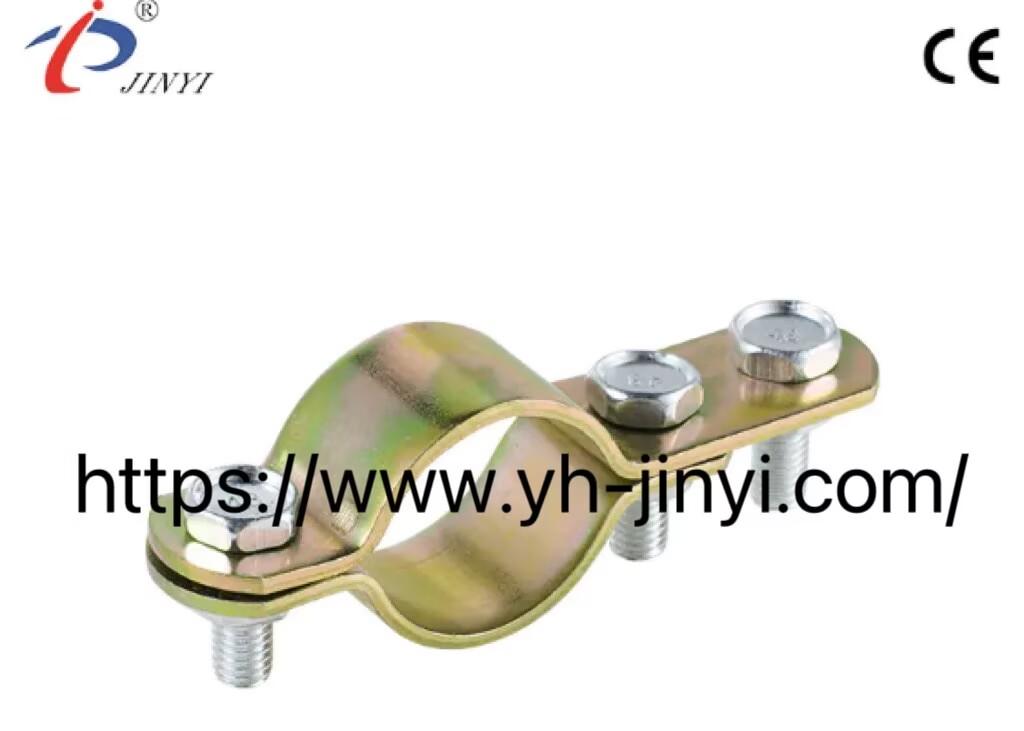
Jinyi Clamps can be an important part of piping, HVAC, plumbing, cable management, and industrial installation projects, but choosing the right product requires more than checking the listed price. Buyers should evaluate pipe dimensions, application conditions, material, fastening method, surface treatment, installation space, production consistency, and customization options before placing an order. A clear specification can make communication between purchasing teams, installers, and manufacturers much easier.
Start With The Application
The intended application should be identified before comparing different models.
A component used for a water line may have different requirements from one used for heating circuits, HVAC piping, cable conduits, or industrial equipment. Some installations require vibration reduction, while others may place greater emphasis on corrosion resistance or quick assembly.
The manufacturer should receive information about the actual working environment whenever possible. Details such as indoor or outdoor use, temperature changes, moisture exposure, pipe material, and installation direction can help determine which design is appropriate.
Confirm Pipe Dimensions
Correct sizing is one of the most important purchasing details.
Buyers should measure the outside diameter of the pipe rather than relying on a general description such as small, medium, or large. They should also check whether insulation will be installed around the pipe.
Different models may cover different diameter ranges. For example, the JY-1008 pipe hanger model is offered in several sizes covering different pipe diameters, giving buyers several configurations to consider.
Accurate measurements can reduce the possibility of ordering a component that does not correspond with the actual installation.
Check The Fastening Method
The connection method should match the installation structure.
Some designs use bolts or screws, while others include welded nuts for threaded rods or specific mounting arrangements. Buyers should consider whether the component will be attached to a wall, ceiling, threaded rod, mounting rail, or another structural surface.
For example, JY-1005 includes a welded nut and is designed for connection with threaded rods or ceiling anchors.
Understanding the installation method before ordering can make field assembly more predictable.
Consider Material Requirements
Material selection should reflect the working environment.
Galvanized steel can be considered for many general building and piping applications where corrosion resistance is required. Stainless steel may be suitable for environments where moisture, hygiene, or corrosion conditions require a different material approach.
The choice should also take weight, mechanical requirements, appearance, processing method, and purchasing budget into account.
yh-jinyi manufactures hardware products using materials including steel, stainless steel, brass, and aluminum, allowing customers to discuss material selection according to project requirements.
Examine Surface Treatment
Surface treatment can influence both appearance and environmental resistance.
Buyers should ask whether the product uses zinc plating, galvanized treatment, painting, powder coating, or another finish. The appropriate option depends on the base material and intended environment.
For outdoor or humid locations, buyers should pay particular attention to corrosion-related requirements.
Surface treatment should be included in the purchase specification rather than left as an assumption. This helps ensure that the delivered batch corresponds with the agreed technical requirements.
Think About Vibration
Some piping systems experience vibration caused by pumps, compressors, flowing fluids, thermal movement, or nearby machinery.
In these situations, buyers should consider whether an insulated or rubber-lined design is appropriate.
JY-1001, for example, uses an EPDM rubber insert and is designed for pipe installation while also providing sound absorption and surface protection.
The decision should depend on the actual piping system rather than simply selecting a rubber-lined model for every application.
Review Installation Space
Available space can affect product selection.
Buyers should check the distance between the pipe and the mounting surface, surrounding equipment, insulation thickness, valves, fittings, and service areas.
A compact installation may require a different configuration from a large mechanical room where more adjustment space is available.
The installation direction should also be considered. Some products can be used for horizontal or vertical mounting, while others are designed for particular structural arrangements.
Check Product Construction
The physical design should be examined before purchasing in quantity.
Buyers can review the number of bolts, hole locations, fastening method, inner surface, welded components, adjustment mechanism, and overall geometry.
For applications involving repeated maintenance, an easy-to-open design may save time during service work.
For permanent installations, the purchasing team may instead focus more heavily on dimensional consistency and compatibility with the planned fixing structure.
Pay Attention To Pipe Protection
Metal-to-metal contact is not appropriate for every application.
Certain pipes or surface finishes may benefit from an internal liner or protective layer. Rubber-lined designs can help reduce direct contact and may also reduce vibration transfer.
Buyers should determine whether the pipe material, insulation, temperature range, and operating environment are compatible with the selected liner.
The JY-1003 repairing pipe clip, for example, combines zinc-plated steel with a rubber insert for pipe protection and vibration damping.
Evaluate Manufacturing Consistency
For distributors and wholesale buyers, consistency across batches can be as important as the initial product specification.
Purchasing teams can ask manufacturers about raw material inspection, dimensional control, forming processes, welding, surface treatment, and final inspection.
A clear drawing should be used when the order involves customized dimensions.
This becomes especially useful when the same model will be purchased repeatedly. Keeping the approved drawing, sample, material specification, and finish requirement on file can help reduce differences between orders.
Consider Customization
Standard dimensions may not always match a particular project.
OEM customers may require changes to diameter range, width, thickness, hole arrangement, material, surface treatment, packaging, or branding.
Rather than modifying a standard product at the installation site, buyers can discuss the required specifications with the manufacturer before production.
yh-jinyi states that it provides customized design and production services and can develop products according to customer drawings or samples.
Providing complete technical information can make this process more efficient.
Request Samples For New Projects
A sample can be useful when the product will be used for a new application or private-label program.
Buyers can check actual dimensions, material, surface condition, fastening operation, pipe fit, and installation clearance.
If the sample requires modification, the changes can be recorded before mass production.
This approach can be particularly helpful for distributors introducing a new hardware specification or contractors working with unfamiliar equipment.
Compare Supplier Capabilities
A supplier comparison should include more than the unit quotation.
Buyers can compare material options, production capacity, customization services, inspection procedures, packaging, minimum order quantities, communication, and delivery arrangements.
For repeat purchasing, production traceability and technical documentation can also be useful.
A supplier capable of handling both standard products and customized designs may provide greater flexibility when project requirements change.
Prepare A Purchasing Checklist
Before requesting a quotation, buyers should prepare a concise specification covering pipe diameter, pipe material, insulation, operating environment, installation direction, mounting method, material preference, surface treatment, required quantity, packaging, and customization needs.
This information gives the manufacturer a clearer understanding of the application and can reduce unnecessary revisions during the purchasing process.
For buyers looking for pipe fastening products and related hardware, the https://www.yh-jinyi.com/ provides product information and manufacturing details. Customers can review available options and contact yh-jinyi to discuss dimensions, materials, finishes, samples, OEM requirements, and project-specific specifications.
- Technology for Students
- Admissions & Applications
- Online Courses
- Career and Jobs
- Campus Life
- Drinks
- Film
- Fitness
- Food
- Juegos
- Gardening
- Health
- Home
- Literature
- Music
- Networking For Students
- Insights
- Party
- Religion
- Shopping
- Sports
- Theater
- Wellness
- Education News
- Business & Finance For Students
- Security, Law & Crime Education
- Insurance
- Science & Technology For Students
 Spanish
 English
 Arabic
 French
 Portuguese
 Deutsch
 Turkish
 Dutch
Dutch
 Italiano
 Russian
 Romaian
 Portuguese (Brazil)
 Greek
Greek