


Interior Designers in Delhi: 7 Things to Check First
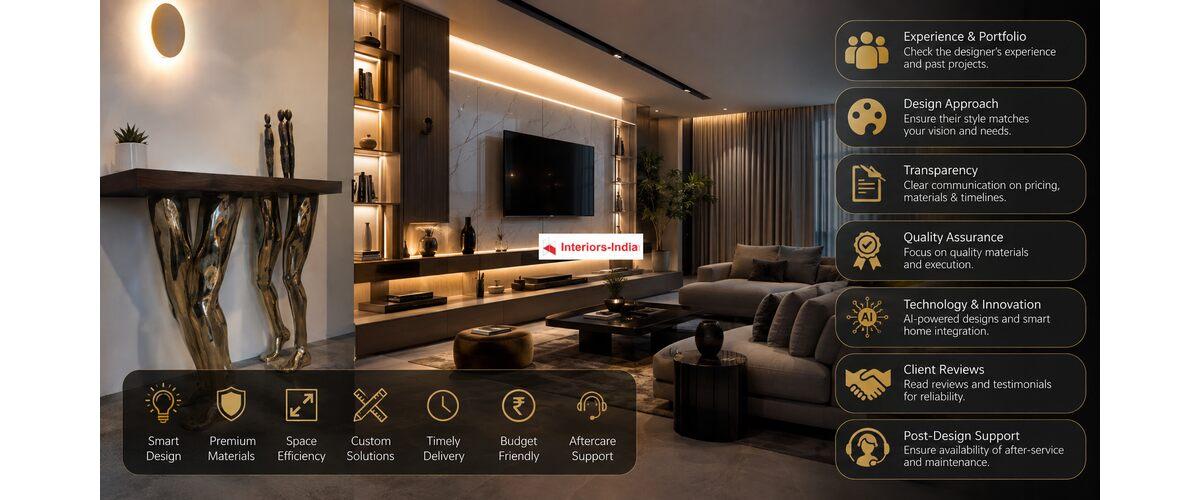
Choosing the right professional for your home is about much more than finding attractive pictures online. A good designer should understand your lifestyle, space, budget, materials, timeline, and practical needs before suggesting a final design. This is why comparing Interior Designers in Delhi carefully can help you avoid costly changes and execution problems later. The right team should be able to turn your ideas into a home that looks refined while remaining comfortable and functional.
Delhi has a wide range of residential and commercial design professionals, from independent designers to full-service firms. Current search results also show that homeowners are increasingly comparing portfolios, project costs, materials, execution models, warranties, and customer reviews before making a decision.
1. Check the Portfolio Before You Discuss the Price
A portfolio is one of the easiest ways to understand whether a designer's style matches your expectations. However, do not judge a company only by beautifully rendered 3D images.
Ask to see completed projects, particularly homes similar to yours in size and layout. Look at kitchens, wardrobes, living rooms, bedrooms, lighting, storage, and finishing details.
It is also useful to ask whether the images show completed work or proposed concepts. A professional portfolio should give you a realistic idea of what the team can actually execute.
What to check in a portfolio
- Completed residential projects
- Before-and-after photographs where available
- Similar property sizes
- Different design styles
- Kitchen and wardrobe detailing
- Lighting and electrical planning
- Quality of finishes
- Space-saving solutions
A beautiful design is useful only when it can be executed properly within your budget.
2. Compare Scope, Materials and Pricing
Price should never be compared without comparing the scope of work. Two designers can quote very different amounts for what appears to be the same project because their material specifications, furniture, civil work, hardware, installation, and services may differ.
Current Delhi cost guides show a broad range depending on property size and specification. For example, recent estimates put complete 2BHK interiors anywhere from roughly ₹5 lakh to ₹12 lakh or more, while premium projects can go considerably higher. Modular kitchens alone may range from around ₹1.2 lakh to ₹6 lakh depending on size, materials, hardware, and customization. These are indicative figures, not fixed market rates.
Before signing, ask for an itemised quotation covering:
- Plywood or board specifications
- Laminate, acrylic, veneer or other finishes
- Hardware and fittings
- Kitchen accessories
- Wardrobes and storage
- False ceiling
- Electrical work
- Lighting
- Painting
- Civil work
- Installation and labour
- Transportation
- Taxes
- Warranty
This makes it much easier to compare different Interior Design Firms in Delhi on a like-for-like basis.
3. Understand the Design and Execution Process
A designer may have excellent ideas, but execution determines how those ideas finally appear in your home.
Ask who will handle site measurements, drawings, material procurement, carpentry, electrical work, installation, quality checks, and final handover. You should also understand whether the firm uses an in-house team, contractors, or a combination of vendors.
A clearly defined process reduces confusion. A typical workflow can include consultation, site measurement, space planning, concept development, 3D visualisation, material selection, quotation approval, production, installation, inspection, and handover.
For example, Interiors-India describes a process built around discovery, concept development, and move-in, along with services such as project management, functional space planning, and installation.
4. Look at Local Experience
Local experience matters because every area has different property types, access conditions, building rules, site constraints, and contractor networks.
If your project is around Dwarka, Gurugram, or the NCR region, ask whether the designer has completed similar projects nearby. This becomes particularly important for larger homes, offices, renovations, and properties where site coordination can be complicated. For example, someone searching for Interior Designers in Dwarka Expressway should not only look at design photographs.
They should also ask about site visits, execution experience, material delivery, project supervision, and the team's ability to coordinate work at the property.
A designer familiar with the local environment may be better prepared to identify practical issues before execution begins.
5. For Offices, Check Functionality First
An office should not be designed like a residential living room. Workplace interiors need to support productivity, movement, privacy, storage, collaboration, lighting, electrical requirements, and employee comfort. Businesses looking for Interiors-India - Office Interior Designers in Dwarka Expressway should therefore ask for examples of completed office projects rather than relying only on residential portfolios.
Important questions include:
- How will workstations be arranged?
- Where will meeting rooms be located?
- Is there enough storage?
- How will cables and electrical points be managed?
- Is the lighting suitable for long working hours?
- Are acoustic requirements considered?
- Can the design accommodate future expansion?
- How will work continue while the office is occupied?
A good commercial interior plan balances brand identity with everyday usability.
6. Pay Special Attention to the Kitchen
The kitchen is one of the most frequently used areas of a home, so appearance should not be the only consideration. Storage, workflow, hardware, ventilation, cleaning, counter height, appliance placement, and material durability are equally important. When comparing Modular Kitchen Designers in Delhi NCR ask what is included in the quotation and which materials are being specified.
A practical kitchen should provide a sensible relationship between the cooking area, sink, refrigerator, appliances, storage, and movement space. Hardware quality also matters because drawers and shutters are opened repeatedly every day.
Do not choose a kitchen only because its colour or finish looks attractive in a showroom. Check the internal construction and hardware as carefully as the visible surfaces.
7. Review the Contract, Timeline and Warranty
The final check is often the most important one: get everything in writing.
Your agreement should clearly mention the project scope, materials, payment stages, estimated timeline, design revisions, exclusions, installation responsibilities, warranty terms, and the process for handling changes.
Avoid making a decision based only on the lowest quotation. A cheaper proposal can become expensive if important work is excluded or if material specifications are unclear.
Ask these questions before making a commitment:
- What exactly is included in the quotation?
- What is excluded?
- When are payments due?
- What happens if the design changes?
- Who supervises the site?
- What happens if materials are unavailable?
- What warranty is provided after handover?
Recent Delhi hiring guides similarly recommend checking completed portfolios, pricing structures, contracts, project timelines, execution teams, and warranties before selecting a designer.
What Is the 80/20 Rule in Interior Design?
The 80/20 rule in interior design generally means keeping around 80% of a room visually calm and using the remaining 20% for personality, contrast, artwork, colour, textures, or statement pieces.
For example, walls, flooring, major furniture, and core finishes can form the calmer 80%, while cushions, artwork, lighting, accessories, or an accent chair create the more expressive 20%.
The idea is not a strict mathematical formula. It is a way to create visual hierarchy and prevent too many competing elements from fighting for attention. Current interior-design discussions also describe the rule as a balance between a calm structural base and more personal decorative elements.
What Color Makes a House Look Expensive?
There is no single colour that automatically makes a home look expensive. However, warm white, cream, greige, taupe, muted green, deep navy, charcoal, and warm wood tones can create a sophisticated appearance when used correctly.
The finish, lighting, furniture, flooring, and colour combination matter just as much as the paint itself. Current design guidance continues to favour restrained warm neutrals and carefully selected deeper accents for an elevated appearance.
For a polished Delhi home, a warm neutral base combined with natural wood, subtle metallic details, textured fabrics, and layered lighting can create a more premium effect than using several bold colours.
What Is the Red Rule in Interior Design?
The red rule in interior design is commonly described as using red as a controlled accent rather than allowing it to dominate an entire room. Some contemporary sources describe a guideline of keeping red to roughly 10% of the visual palette.
For example, instead of painting every wall red, you could introduce the colour through a chair, artwork, cushion, rug, lamp, or decorative accessory.
This approach works because red naturally attracts attention. Used carefully, it can create a focal point; used excessively, it can make a space feel visually intense.
What Does Red Mean in a Bedroom?
Red can communicate energy, passion, warmth, confidence, and intimacy. In a bedroom, however, its effect depends heavily on the shade and amount used.
Deep burgundy, wine, terracotta, or muted red can create a warm and dramatic atmosphere. Bright red across large surfaces may feel more stimulating and intense.
For a restful bedroom, consider using red as an accent rather than the dominant colour. A muted red headboard, artwork, cushion, throw, or bedside accessory can provide warmth without overwhelming the room.
What Two Colors Do Not Go Well Together?
There are no two colours that universally cannot work together. The result depends on undertones, saturation, proportions, lighting, materials, and the surrounding palette.
However, highly saturated colours with competing visual intensity can easily become difficult to balance. For example, bright red and bright green can feel harsh when both are used heavily, although carefully selected muted versions can work beautifully.
The better approach is to control the proportion of each colour and give the eye a neutral or softer shade to rest on. Even traditionally difficult combinations can work when their tones and proportions are carefully selected.
Final Checklist Before Hiring an Interior Designer
Before you sign an agreement, make sure you have checked:
- Portfolio of completed projects
- Client reviews and references
- Detailed quotation
- Material specifications
- Execution responsibilities
- Project timeline
- Payment schedule
- Revision policy
- Warranty terms
- Site supervision
- Quality-control process
- Final handover procedure
The best designer is not necessarily the one offering the lowest quote or the most dramatic-looking portfolio. It is the professional who understands your requirements, explains the choices clearly, provides realistic costing, and can execute the approved design reliably. For homeowners comparing Interior Designers in Delhi taking these seven checks seriously can make the entire project more predictable.
A thoughtful selection process at the beginning can save money, time, and stress during execution.
About Interiors-India
Interiors-India presents itself as a comprehensive interior design company offering home interior solutions, virtual consultations, 3D designs, modular kitchens, wardrobes, office interiors, project management, and related services. Its website states that the company has 60+ design experts, 1,200+ customers, and more than 10 years of warranty coverage.
Some Important Questions
1. How much does an interior designer cost in Delhi?
There is no single fixed price. In 2026, indicative Delhi home-interior estimates range widely according to BHK size, materials, customization, and scope. Recent guides place many 2BHK projects around ₹5–12 lakh, while premium or highly customized projects can be substantially higher.
2. What is the 80/20 rule in interior design?
It means keeping roughly 80% of the room visually calm and using 20% for accents, personality, contrast, artwork, textures, or statement pieces. It helps create balance without making the room feel crowded.
3. What color makes a house look expensive?
Warm white, cream, greige, taupe, and carefully used deep shades such as navy or charcoal can create an expensive-looking interior. The finish, lighting, flooring, and overall coordination are just as important as the colour itself.
4. What is the red rule in interior design?
The red rule is a styling principle that recommends using red sparingly, usually as an accent rather than the dominant colour. Some sources describe keeping red to around 10% of a room's visual palette.
5. What does red mean in a bedroom?
Red can represent passion, warmth, energy, confidence, and intimacy. Softer or darker red shades can work well as accents, while large areas of bright red may create a more energetic atmosphere.
6. What two colors do not go well together?
No two colours are universally incompatible. However, highly saturated colours with competing intensity can clash. Bright red and bright green, for example, require careful control of shade and proportion to avoid looking harsh.
About us -
Mobile No. - +91 971-812-5263
Email - team@interiors-india.com
Website - https://interiors-india.com/
Youtube - https://www.youtube.com/@interiors-india
Google Map - https://maps.app.goo.gl/7n1vfP2vhT7ueefv8
- Technology for Students
- Admissions & Applications
- Online Courses
- Career and Jobs
- Campus Life
- Drinks
- Film
- Fitness
- Food
- Giochi
- Gardening
- Health
- Home
- Literature
- Music
- Networking For Students
- Insights
- Party
- Religion
- Shopping
- Sports
- Theater
- Wellness
- Education News
- Business & Finance For Students
- Security, Law & Crime Education
- Insurance
- Science & Technology For Students
 Italiano
 English
 Arabic
 French
 Spanish
 Portuguese
 Deutsch
 Turkish
 Dutch
Dutch
 Russian
 Romaian
 Portuguese (Brazil)
 Greek
Greek