


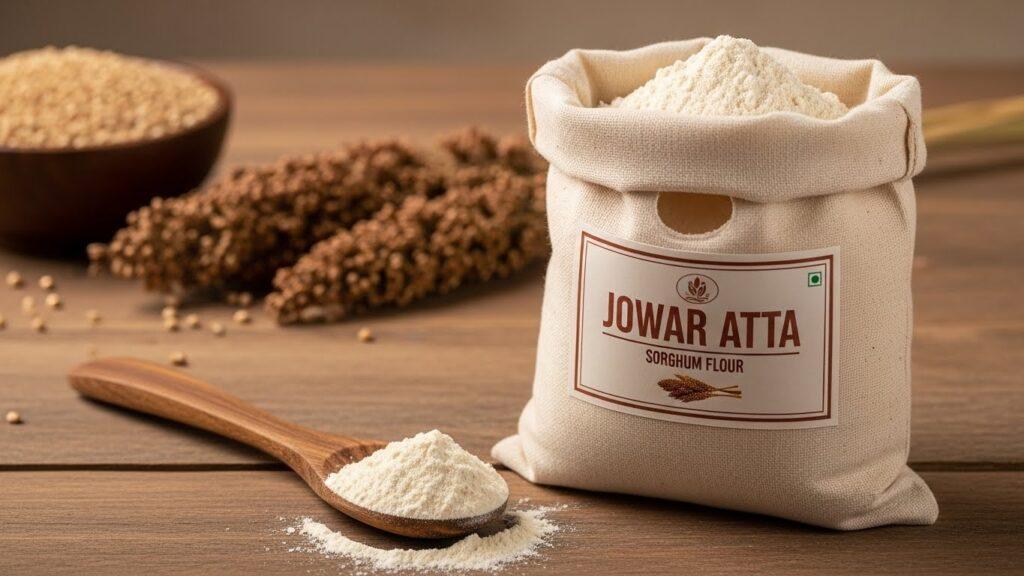
Jowar Atta has quietly moved from rural kitchens to nutrition labels, wellness conversations, and the shopping carts of health-conscious Indians everywhere. And for good reason. This ancient grain — known internationally as sorghum — packs a formidable nutritional punch: high protein, high fibre, low glycemic index, and zero gluten.
Whether you are switching to a gluten-free diet, managing blood sugar, looking to improve digestion, or simply trying to eat more wholesome food, jowar atta belongs in your kitchen. This guide covers everything — nutrition facts, health benefits, cooking tips, and how to choose a quality product.
1. What is Jowar Atta?
Jowar Atta is flour made by grinding whole jowar (sorghum) grains into a fine powder. The word jowar comes from the Hindi name for sorghum — one of the world's oldest cultivated grains and the fifth most important cereal crop globally. In India it is also called jwaraa, jola (Kannada), jonna (Telugu), cholam (Tamil), and jwari (Marathi).
Jowar has been a staple in Maharashtra, Karnataka, Rajasthan, and parts of Gujarat for centuries — especially as bhakri, the thick flatbread that farmers ate before long days in the fields. The grain thrives in dry, rain-scarce conditions, making it a resilient and sustainable crop ideal for the Deccan plateau.
When ground into atta, jowar yields a pale, cream-coloured flour with a mild, slightly nutty flavour. It contains no gluten — the elastic protein found in wheat — which changes both how it behaves in cooking and what it does (or does not do) to your body.
2. Jowar Atta Nutrition (Per 100g)
Here is what you get in every 100g of jowar atta, referenced against ICMR-NIN Dietary Guidelines and laboratory analysis:
| Nutrient | Per 100g | Why It Matters |
|---|---|---|
| Calories | ~349 kcal | Energy-dense but nutrient-rich — not empty calories |
| Protein | 11.0 g | Higher than wheat atta; supports muscle repair and satiety |
| Dietary Fibre | 7.0 g | Feeds gut bacteria, supports regular digestion |
| Carbohydrates | ~72 g | Complex carbs; slow-release energy due to low GI |
| Fat | ~3.3 g | Mostly healthy unsaturated fats |
| Iron | ~4.1 mg | Supports haemoglobin production; important for women |
| Manganese | ~1.1 mg | Supports bone health and antioxidant enzymes |
| Phosphorus | ~287 mg | Essential for bone density and energy metabolism |
| Magnesium | ~165 mg | Regulates blood sugar, muscle function, and nerve signals |
| Gluten | 0 | Naturally gluten-free — safe for celiac and intolerant individuals |
| Glycemic Index | ~55–62 (Low) | Prevents blood sugar spikes; suitable for diabetics |
Values are approximate and may vary by variety and milling method. Data referenced from ICMR-NIN Nutritive Value of Indian Foods and 10on10Foods lab reports.
3. 7 Key Health Benefits of Jowar Atta
Regulates Blood Sugar
Jowar's low glycemic index (GI ~55–62) means it releases glucose gradually into the bloodstream, preventing the spikes and crashes associated with refined flour.
Naturally Gluten-Free
Pure jowar atta contains zero gluten, making it a safe and nutritious alternative for people with celiac disease or gluten sensitivity.
Supports Gut Health
With 7g of dietary fibre per 100g, jowar atta feeds beneficial gut bacteria, promotes regular bowel movements, and helps reduce bloating.
High in Plant Protein
At 11g protein per 100g, jowar atta offers more protein than most grain-based flours, supporting muscle health and keeping you full longer.
Helps with Weight Management
The combination of high fibre and protein increases satiety and reduces overall caloric intake — a practical ally for those managing their weight.
Supports Heart Health
Jowar contains polyphenols and is rich in magnesium, both of which have been linked to healthier cholesterol levels and reduced cardiovascular risk.
Rich in Bone-Supporting Minerals
Phosphorus, magnesium, and manganese in jowar atta contribute to strong bones, healthy teeth, and proper mineral density over time.
4. Jowar Atta for Diabetes: What the Numbers Say
One of the most frequently asked questions about jowar atta is whether it is safe — and beneficial — for people with type 2 diabetes. The short answer is yes, and here is why.
The glycemic index (GI) measures how rapidly a food raises blood glucose levels. Foods with a GI below 55 are considered low; those above 70 are considered high. Jowar atta has a GI of approximately 55–62, which places it firmly in the low-to-moderate category — far below refined wheat flour (maida), which has a GI of 70–80.
What this means in practice: jowar roti produces a gentler, more gradual rise in blood sugar compared to a wheat chapati made with refined flour. Combined with its 7g of dietary fibre, which further slows glucose absorption, jowar atta is widely considered one of the most sensible everyday grains for diabetic management.
Practical Tips for Diabetics Using Jowar Atta
Start by replacing 25–30% of your regular wheat atta with jowar atta and monitor your blood sugar response. Over two to three weeks, you can increase the proportion. Many people eventually enjoy 100% jowar rotis comfortably once the gut has adapted to the higher fibre content.
5. Jowar Atta as a Gluten-Free Flour
Gluten is a protein complex found in wheat, barley, and rye. For people with celiac disease — an autoimmune condition affecting roughly 1% of the global population — consuming gluten triggers an immune response that damages the small intestine. Many more people experience non-celiac gluten sensitivity, with symptoms including bloating, fatigue, and digestive discomfort.
Jowar (sorghum) is naturally gluten-free. It belongs to an entirely different botanical family and does not contain gluten or any related proteins. This makes jowar atta one of the most practical gluten-free flours available in Indian markets — it is affordable, widely available, familiar in taste, and nutritionally superior to many imported gluten-free alternatives.
6. Jowar Atta vs Wheat Atta: A Nutritional Comparison
How does jowar atta stack up against the wheat atta most Indian households rely on every day?
| Nutrient (per 100g) | Jowar Atta | Whole Wheat Atta | Maida (Refined Flour) |
|---|---|---|---|
| Calories | ~349 kcal | ~341 kcal | ~364 kcal |
| Protein | 11.0 g | ~12.1 g | ~10.3 g |
| Dietary Fibre | 7.0 g | ~11.2 g | ~2.7 g |
| Glycemic Index | ~55–62 (Low) | ~54–60 (Low) | ~70–85 (High) |
| Gluten | None | High | High |
| Iron | ~4.1 mg | ~3.9 mg | ~2.8 mg |
| Best for | Gluten-free, diabetes, gut health | General use, high fibre | Baking texture (not recommended daily) |
The comparison shows that jowar atta is not dramatically different from whole wheat atta in calories or protein — but its gluten-free nature, comparable GI, and strong mineral profile make it an excellent swap, whether you have a specific health reason or simply want more dietary diversity.
7. How to Use Jowar Atta: Recipes & Ideas
Jowar atta is more versatile than most people realise. While it is best known for rotis and bhakris, the flour can be used across a surprisingly wide range of preparations.
Traditional Uses
Jowar Roti / Bhakri: The classic. A thick, soft flatbread eaten with dal, vegetables, or pickle. Maharashtra's bhakri is thicker and crispier; Rajasthan's jowar roti is thinner. Both are deeply satisfying.
Jowar Paratha: Mix jowar atta with whole wheat atta in a 50:50 ratio and stuff with spiced potato, paneer, or vegetables for a nutritious paratha.
Modern Uses
Jowar Cheela: A savoury pancake made by mixing jowar atta with water, vegetables, and spices. Ready in minutes and packed with protein and fibre.
Jowar Upma / Porridge: Dry-roast jowar flour and cook into a thick porridge with vegetables and spices. A warm, grounding breakfast.
Jowar Cookies and Muffins: Jowar atta can partially replace refined flour in baked goods for a healthier, nutty texture. Use 50–75% jowar atta blended with almond flour or rice flour for best results.
Jowar Dosa: Ferment a jowar batter with urad dal for a crisp, gluten-free dosa — excellent for those who want the dosa experience without rice.
Jowar Laddoos: Roasted jowar flour mixed with ghee and jaggery makes a traditional, energy-dense sweet that is also healthier than its maida-based counterparts.
8. How to Make Soft Jowar Roti: Step-by-Step
Jowar contains no gluten, which means the dough does not have the same elasticity as wheat dough. This is where most beginners go wrong — they use cold water and rush the process. Follow these steps for consistently soft rotis.
Use Hot Water (Not Cold)
Boil water and let it cool for 30 seconds until it is very hot but not scalding. Hot water partially cooks the starch and makes the dough more pliable.
Add Water Gradually
Pour hot water into the jowar atta little by little, mixing as you go with a spoon first to avoid burning your hands. Use approximately 200–220ml water per 200g flour.
Knead Well
Knead the dough for 3–4 minutes until smooth. The dough will be softer and slightly stickier than wheat dough — this is normal. It should hold together without cracking.
Rest the Dough
Cover with a damp cloth and rest for 5–10 minutes. This allows the starch to hydrate fully and makes rolling significantly easier.
Roll Between Plastic Sheets
Place a ball of dough between two pieces of plastic wrap or a banana leaf. Roll gently and evenly. The plastic prevents sticking without needing extra flour.
Cook on High Heat
Place on a hot iron tawa. Cook for 60–90 seconds on each side until light brown spots appear. Finish directly on the flame for a few seconds if you want a puffed roti.
9. Why Stone-Ground Jowar Atta is Better
Not all jowar atta is created equal. The milling method matters enormously — and stone-grinding (chakki-milling) is widely recognised as the superior method.
Stone-Ground vs Roller-Milled Jowar Atta
Commercial roller mills process grain at high speeds and temperatures that strip away the bran and germ — the two most nutritious parts of the grain. The resulting flour may look fine and uniform but is nutritionally diminished.
Stone-milling uses slow-turning granite or basalt millstones that crush the entire grain at low temperatures. This process preserves the bran, the germ, the natural oils, and the full spectrum of nutrients. The result is a coarser, more flavourful flour with far greater nutritional integrity.
Freshness Is Everything
Whole-grain flours contain natural oils that can go rancid over time. This is why most commercial brands use preservatives — or mill months in advance and store in cold warehouses. Freshly stone-milled jowar atta, milled to order, retains its natural oils and delivers noticeably better flavour and nutrition.
- All bran and germ retained — full nutritional spectrum intact
- No heat damage — enzymes and natural oils preserved
- No preservatives, additives, or anti-caking agents
- Noticeably better flavour — subtle nuttiness comes through
- Superior freshness — milled on order, not shelf-stored for months
10. How to Buy the Best Jowar Atta in India
With jowar atta gaining popularity, the market is flooded with options of varying quality. Here is what to look for when choosing a brand.
Checklist: What to Look For
- Stone-milled / chakki-ground: Look for this explicitly on the label. Avoid brands that say "fine-milled" or omit the milling method entirely.
- No additives: Ingredients should list one thing: jowar. Avoid products with anti-caking agents, preservatives, or added colours.
- Recent milling date: Freshly milled jowar atta should have a manufacturing date within weeks, not months. Some brands mill to order.
- FSSAI licensed: Verify the FSSAI licence number on the pack — a basic assurance of food safety compliance in India.
- Transparency: Brands that share lab reports, manufacturing videos, or QR codes linking to freshness proof are generally more trustworthy.
- Packaging: Airtight, opaque packaging protects the flour from moisture and light, both of which degrade freshness.
Try 10on10Foods Jowar Atta
Stone-ground fresh after your order. No preservatives. No additives. Just pure, freshly milled jowar atta — scan the QR on the pack to watch your flour being milled.
FSSAI Licensed · ISO 22000:2018 Certified · Free shipping above ₹299
11. How to Store Jowar Atta
Because freshly stone-milled jowar atta contains no preservatives and retains its natural oils, proper storage is important.
Best Practices
- Store in an airtight container — exposure to air accelerates rancidity of natural oils
- Keep in a cool, dry place away from direct sunlight and heat sources
- Refrigeration extends freshness in hot, humid climates — especially through the monsoon months
- Use within 3–4 weeks of the milling date for optimal flavour and nutrition
- If you notice a sour or musty smell, discard the flour — it has gone rancid
12. Frequently Asked Questions About Jowar Atta
Key Takeaways
- Jowar atta is stone-ground sorghum flour — an ancient Indian grain with outstanding nutritional credentials
- It provides 11g protein and 7g dietary fibre per 100g, with a low glycemic index of ~55–62
- It is naturally gluten-free — suitable for celiac disease and gluten sensitivity
- Its low GI and high fibre make it an excellent choice for managing blood sugar and supporting digestion
- Stone-ground, freshly milled jowar atta is nutritionally superior to commercially roller-milled alternatives
- Start with a 50:50 jowar-wheat blend if you are new to millet flours, and increase the proportion gradually
- Store in an airtight container and use within 3–4 weeks of milling for best results

 English
 Arabic
 French
 Spanish
 Portuguese
 Deutsch
 Turkish
 Italiano
 Russian
 Romaian
 Portuguese (Brazil)
 Greek
Greek