Introduction:
In today’s industrial landscape, the demand for durable, lightweight, and cost-effective materials is continuously increasing. HDPE woven fabric has emerged as one of the most reliable solutions to meet these needs. Widely used across industries such as agriculture, construction, packaging, and transportation, this fabric is known for its exceptional strength and long-lasting performance. Its versatility and resistance to harsh environmental conditions make it an essential material for modern applications.
What Is HDPE Woven Fabric?
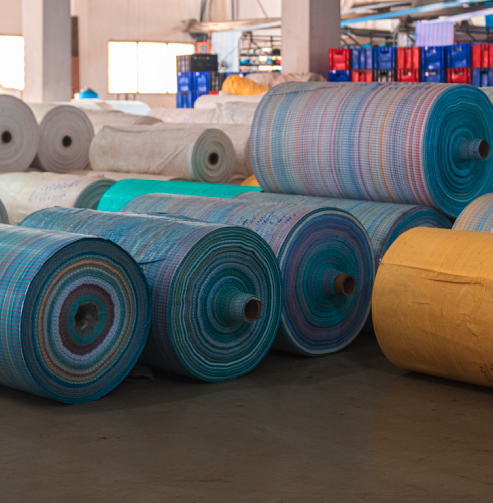
HDPE woven fabric is made from High-Density Polyethylene, a thermoplastic polymer known for its high strength-to-density ratio. The fabric is created by weaving HDPE tapes or strips in a crisscross pattern, resulting in a strong and flexible material. This weaving process enhances the fabric’s load-bearing capacity and durability, making it suitable for heavy-duty uses.
Key Features of HDPE Woven Fabric:
One of the most notable features of HDPE woven fabric is its high tensile strength, which allows it to withstand heavy loads and rough handling. It is lightweight, making it easy to transport and install. The fabric is also resistant to moisture, chemicals, and UV radiation, ensuring reliable performance even in challenging environments. Additionally, it offers excellent tear resistance and can be manufactured in various thicknesses and densities to suit specific requirements.
Advantages of HDPE Woven Fabric:
HDPE woven fabric provides numerous benefits that make it a preferred choice across industries. Its durability ensures a longer lifespan, reducing the need for frequent replacements. The material is cost-effective, offering high performance at a relatively low price. It is also reusable and recyclable, making it an environmentally friendly option. Furthermore, the fabric can be laminated or coated to enhance its properties, such as water resistance and printability.
Applications Across Industries:
The versatility of HDPE woven fabric allows it to be used in a wide range of applications. In agriculture, it is commonly used for ground covers, crop protection sheets, and shade nets. In the construction industry, it is used for scaffolding covers, tarpaulins, and temporary shelters. The packaging industry uses HDPE woven fabric for making sacks and bags for storing grains, fertilizers, and other bulk materials. It is also used in transportation for covering goods and protecting them from environmental damage.
Customization and Flexibility:
HDPE woven fabric can be customized according to specific industrial needs. Manufacturers can adjust the weave density, thickness, color, and coating to meet particular requirements. It can also be printed with branding or product information, making it suitable for commercial use. This flexibility allows businesses to use the material for both functional and promotional purposes.
Environmental Benefits:
As sustainability becomes a global priority, HDPE woven fabric offers an eco-friendly alternative to many traditional materials. It is recyclable and can be reused multiple times without significant loss of quality. Its durability also reduces waste generation, contributing to environmental conservation. Many manufacturers are now focusing on producing eco-conscious variants of HDPE woven fabric to support green initiatives.
Technological Advancements:
Advancements in manufacturing technology have significantly improved the quality and performance of HDPE woven fabric. Modern production techniques ensure consistent strength, uniform weaving, and enhanced durability. Additional features such as UV stabilization, anti-slip coatings, and waterproof lamination have expanded its range of applications. These innovations continue to drive the popularity of HDPE woven fabric in various industries.
Conclusion:
HDPE woven fabric has proven to be a highly reliable and versatile material for industrial and commercial applications. Its combination of strength, durability, flexibility, and cost-effectiveness makes it an ideal choice for a wide range of uses. As industries continue to seek efficient and sustainable solutions, HDPE woven fabric is expected to play an increasingly important role in shaping the future of modern materials and packaging systems.



 French
 English
 Arabic
 Spanish
 Portuguese
 Deutsch
 Turkish
 Dutch
Dutch
 Italiano
 Russian
 Romaian
 Portuguese (Brazil)
 Greek
Greek