


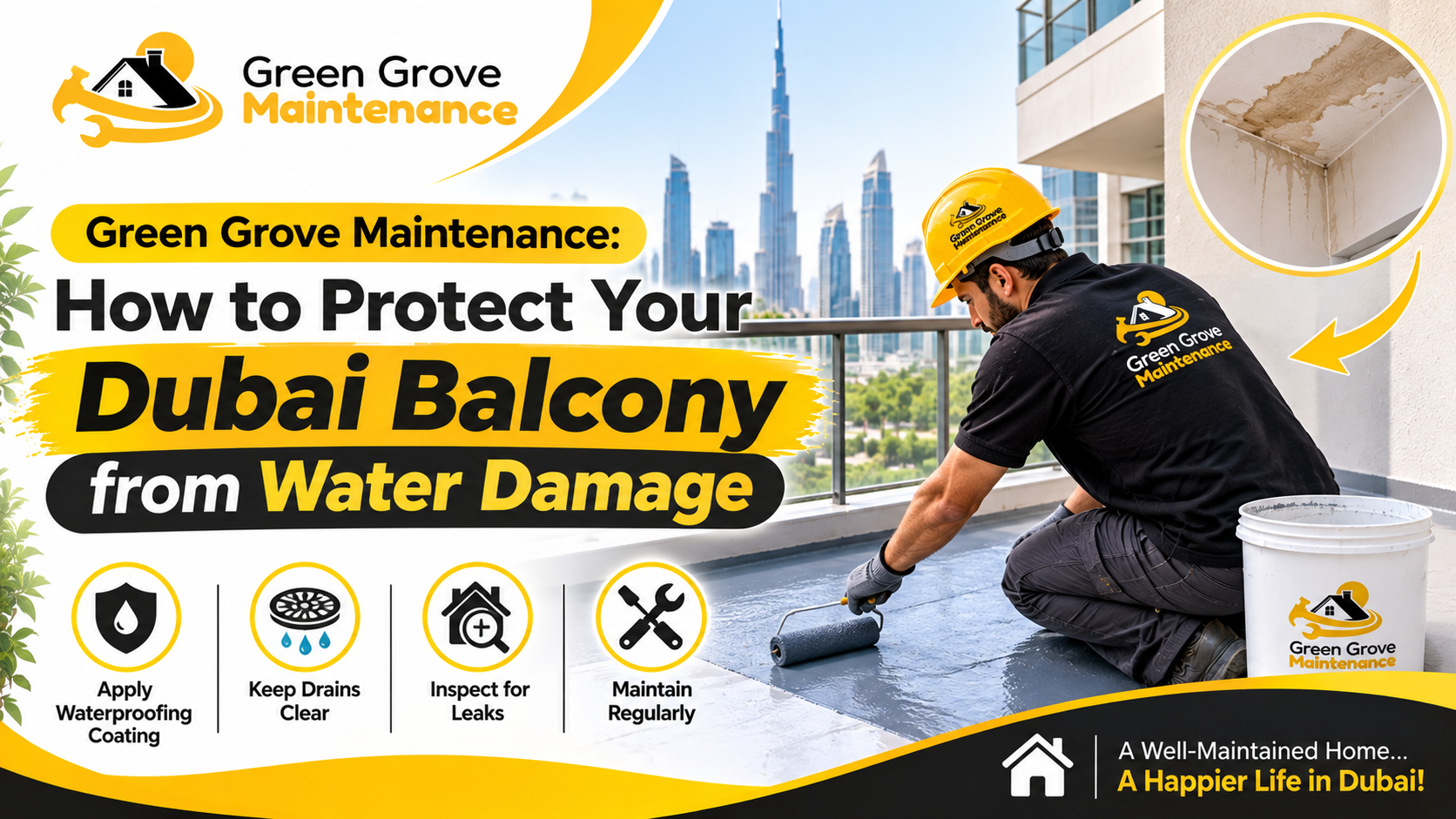
Green Grove Maintenance: How to Protect Your Dubai Balcony from Water Damage
Introduction
A balcony adds valuable outdoor space to a property. It provides an area to relax, enjoy fresh air, and appreciate the surroundings. In Dubai, balconies are common in apartments, villas, and residential buildings. However, constant exposure to sunlight, heat, dust, humidity, and occasional heavy rainfall can gradually affect balcony surfaces and waterproofing systems.
Water penetration is one of the most common concerns associated with poorly maintained balconies. Small cracks, damaged grout, worn sealants, and blocked drainage outlets can allow moisture to enter the underlying structure. Over time, this may cause damp patches, peeling paint, damaged flooring, and leakage into rooms or neighbouring apartments.
Professional balcony waterproofing in Dubai can help protect exposed balcony areas and reduce the risk of water-related property damage. Green Grove Maintenance understands the importance of preventive maintenance and keeping outdoor spaces in suitable condition.
Why Balcony Waterproofing Is Important in Dubai
Balconies are directly exposed to outdoor weather conditions. Unlike interior floors, their surfaces must withstand sunlight, temperature changes, dust, moisture, and rainwater.
High temperatures can affect certain waterproofing materials and sealants over time. Small gaps may develop around floor joints, wall connections, and drainage outlets. When rainwater reaches these weak areas, it can penetrate beneath tiles or into the concrete structure.
Waterproofing helps create a protective barrier that reduces water absorption and protects the building beneath the balcony surface. It also helps prevent moisture from affecting internal walls, ceilings, flooring, and nearby rooms.
For apartment buildings, balcony leakage can become a concern for neighbouring residents and building management. Addressing waterproofing issues early can help avoid disputes, repeated repairs, and unnecessary restoration expenses.
Common Causes of Balcony Water Leakage
Balcony leakage can develop for several reasons. Identifying the actual source is essential before selecting a repair method.
Cracked Balcony Tiles and Grout
Tiles provide a finished walking surface, while grout fills the joints between them. Over time, grout may crack, become loose, or deteriorate due to movement, ageing, and environmental exposure.
Damaged grout can allow water to pass beneath the tiles. Although the tiles themselves may appear undamaged, moisture can reach the underlying layers and create problems.
Replacing damaged grout may help in certain situations, but it is important to determine whether the waterproofing layer beneath the tiles is also affected.
Damaged Waterproofing Membrane
The waterproofing membrane is an important protective layer beneath or within the balcony flooring system. If it becomes damaged, water may reach the concrete slab and surrounding building materials.
Membranes can deteriorate because of ageing, incorrect installation, structural movement, or damage during renovation work.
A professional assessment can help determine whether a localised repair is suitable or whether a larger section of the waterproofing system needs attention.
Blocked Balcony Drainage
Balconies should have suitable drainage arrangements to remove rainwater and cleaning water. When drainage outlets become blocked with dust, sand, leaves, or other debris, water may collect on the surface.
Standing water increases the time that moisture remains in contact with the flooring and joints. If weak areas are present, prolonged water exposure may increase the likelihood of leakage.
Keeping drainage outlets clear is an important part of balcony maintenance.
Poorly Sealed Wall and Floor Connections
The connection between balcony floors and walls is particularly important. If sealants or protective materials around these joints deteriorate, water may enter through the gaps.
Similar concerns can occur around door frames, railings, pipes, and other balcony installations.
These areas should receive attention during inspections because even small openings can allow water to reach concealed building components.
Incorrect Balcony Slope
Balcony flooring should generally direct water towards the drainage outlet. If the surface is uneven or does not have a suitable slope, water may remain in certain areas.
Poor drainage can increase moisture exposure and contribute to recurring leakage problems.
Simply applying a waterproof coating may not solve the issue if the underlying drainage arrangement is incorrect.
Warning Signs Your Balcony Needs Waterproofing
Property owners should pay attention to visible changes that may indicate water penetration. Some symptoms appear on the balcony itself, while others may become noticeable inside the property.
Common warning signs include damp patches on walls or ceilings beneath the balcony, peeling paint near balcony doors, cracked grout, loose tiles, and persistent water accumulation.
Other signs may include:
-
Water appearing inside the property after rainfall or balcony cleaning.
-
Damp smells, discolouration, or bubbling paint near balcony walls.
-
Cracks around floor joints, door frames, and drainage outlets.
-
Repeated leakage complaints from residents in apartments below.
These symptoms should be investigated rather than covered with paint or temporary sealant. The visible damage may not be located directly above the actual point of water entry.
What Does Professional Balcony Waterproofing Include?
The correct waterproofing process depends on the balcony's construction, existing flooring, drainage arrangement, and extent of damage.
Initial Inspection and Assessment
The first step is to inspect the balcony and identify potential water entry points. Technicians may examine the tiles, grout, wall connections, drainage outlets, surface slope, and existing waterproofing condition.
They may also check the rooms or ceilings beneath the balcony for signs of moisture damage.
A detailed assessment helps determine whether the problem is caused by surface defects, membrane failure, poor drainage, or another underlying issue.
Surface Preparation
Proper surface preparation is essential for effective waterproofing. Depending on the selected system, loose materials, dirt, dust, damaged sealants, and unsuitable coatings may need to be removed.
If tiles are damaged or the existing waterproofing layer has failed, additional preparation or partial removal may be necessary.
Applying waterproofing products over an unsuitable surface can affect adhesion and reduce the effectiveness of the completed work.
Repairing Cracks and Joints
Cracks and damaged joints should be repaired using materials suitable for the balcony's construction and waterproofing system.
The repair process may include filling appropriate cracks, treating vulnerable corners, and restoring connections around drainage outlets or door frames.
The cause of recurring cracks should also be considered. If structural movement is involved, surface filling alone may not provide a lasting solution.
Applying Waterproofing Materials
Different waterproofing products are available for balcony applications. These may include liquid-applied membranes, flexible coatings, and sheet-based systems.
The correct material should be selected according to the existing construction, exposure conditions, surface preparation requirements, and manufacturer's recommendations.
Application must follow the product instructions, including coverage, thickness, curing time, and treatment of joints and corners.
Final Inspection and Drainage Check
After waterproofing work is completed, the treated area should be inspected for visible gaps, incomplete coverage, and finishing issues.
Drainage arrangements should also be checked to ensure that water can move towards the appropriate outlet.
Any testing should be carried out using a method suitable for the installed system and building requirements.
Types of Balcony Waterproofing Systems
Not every balcony requires the same waterproofing solution. The appropriate system depends on the existing flooring, structure, accessibility, and condition of the surface.
Liquid-applied waterproofing systems are applied as coatings that form a continuous protective layer after curing. They can be suitable for selected balcony surfaces and areas with multiple corners or connections.
Sheet membranes use protective layers installed over a prepared surface. Their suitability depends on installation details, joint treatment, and compatibility with the balcony's construction.
Cementitious waterproofing products may be suitable for certain applications where the substrate and system requirements allow their use.
Flexible waterproofing materials may also be considered where the system needs to accommodate limited movement.
A professional assessment is important before choosing a product. The selected material should be compatible with the complete balcony flooring system rather than chosen only because of its price.
Balcony Waterproofing for Different Property Types
Balcony designs and maintenance requirements can vary between residential and commercial buildings.
Apartments and Residential Buildings
Apartments often have balconies connected to living rooms, bedrooms, or kitchens. Water leakage may affect interior flooring, walls, and the ceiling of the apartment below.
Residents should report recurring dampness or leakage to building management and arrange an appropriate inspection.
In shared residential buildings, waterproofing work may also require approval and coordination with the responsible management team.
Villas and Private Homes
Villas may have balconies, terraces, rooftop seating areas, and outdoor spaces with different flooring arrangements.
Homeowners should monitor exposed joints, drainage outlets, and areas around external doors. Regular maintenance can help identify small defects before they affect internal rooms or surrounding structures.
Hotels and Serviced Apartments
Hotels and serviced apartments often have balconies that are used regularly by guests. Water leakage can affect guest comfort, interior finishes, and property presentation.
Planned inspections and timely repairs help property managers maintain these outdoor areas and reduce unexpected maintenance interruptions.
Commercial and Mixed-Use Buildings
Some commercial properties include balconies, terraces, or outdoor access areas. Their maintenance requirements depend on usage, foot traffic, drainage, and exposure.
Property managers should ensure that waterproofing and drainage arrangements are suitable for the building's intended use.
How Often Should Balcony Waterproofing Be Inspected?
There is no single inspection schedule that applies to every balcony. The ideal frequency depends on the building's age, construction, waterproofing system, weather exposure, and previous repair history.
Property owners should include balcony surfaces and drainage outlets in their general maintenance routine. Older balconies or those with previous leakage problems may require closer monitoring.
An inspection is also advisable after significant rainfall, renovation work, tile replacement, or any incident that may have damaged the balcony surface.
Regular inspection does not mean waterproofing must be replaced every year. It helps determine whether the existing protective system remains suitable or requires targeted repairs.
Practical Tips to Prevent Balcony Water Damage
Simple maintenance habits can help property owners reduce the risk of water penetration and maintain balcony surfaces.
-
Keep Drainage Outlets Clear: Remove accessible dust, leaves, and debris from drainage areas so water can flow away properly. Arrange professional assistance for blocked or damaged drainage systems.
-
Inspect Tiles and Sealants: Check for loose tiles, cracked grout, damaged joints, and gaps around doors or walls. Arrange repairs when deterioration becomes visible.
Avoid drilling into balcony floors or walls without understanding the location of the waterproofing layer and concealed services. Unplanned alterations can damage protective materials and create new leakage points.
Property owners should also avoid using unsuitable chemicals or harsh cleaning methods that may damage grout, sealants, or protective coatings.
Choosing a Balcony Waterproofing Company in Dubai
Choosing an appropriate service provider is important because waterproofing performance depends on proper inspection, surface preparation, material selection, and installation quality.
Before arranging a service, consider whether the company has experience with balcony waterproofing and the type of construction used at your property.
A suitable provider should explain the cause of the problem, recommend an appropriate repair method, and provide a clear quotation before work begins.
Ask about the waterproofing products, preparation process, treatment of joints, curing requirements, and any applicable warranty. It is also important to understand whether tile removal, replacement, or additional drainage work is included.
Green Grove Maintenance aims to support property owners with practical maintenance solutions that help protect buildings and maintain comfortable living spaces.
Understanding Balcony Waterproofing Costs in Dubai
The cost of waterproofing depends on the balcony's size, surface condition, selected materials, accessibility, and amount of preparation required.
A balcony with minor joint damage may need less work than one with extensive leakage, damaged tiles, or a failed waterproofing membrane.
Additional work may be required if the existing flooring needs removal, the drainage arrangement needs correction, or damaged concrete requires repair.
Before approving a project, request a detailed quotation that explains the proposed work, materials, labour, and any additional charges.
Comparing quotations based on the same scope of work can help property owners make informed decisions.
Why Timely Waterproofing Can Save Money
Water penetration can affect more than the visible balcony surface. Moisture may damage concrete, internal walls, ceilings, paint, flooring, and nearby building components.
If leakage continues, repairs may become more extensive and involve several areas of the property. In apartment buildings, water may also affect neighbouring units and create additional maintenance responsibilities.
Addressing the source of leakage early can help reduce the risk of further damage and make repairs easier to manage.
Investing in suitable balcony waterproofing in Dubai is therefore an important part of protecting a property's structure, interior finishes, and long-term condition.
How Green Grove Maintenance Supports Property Care
Balconies are exposed areas that require appropriate maintenance to remain safe, functional, and visually appealing.
Green Grove Maintenance aims to help residential and commercial property owners maintain their buildings through practical property maintenance solutions. Identifying damaged surfaces, understanding drainage concerns, and assessing vulnerable joints are important steps towards selecting suitable repair work.
Every balcony has different requirements, so waterproofing recommendations should reflect the actual surface condition, building design, and existing protective system.
Property owners can visit the official website to explore available maintenance solutions and discuss their property requirements.
Conclusion
Balcony waterproofing plays an important role in protecting Dubai properties from water penetration and moisture-related damage. Cracked grout, damaged membranes, blocked drainage outlets, weak joints, and poor surface slopes can all contribute to leakage.
Regular inspections, clear drainage outlets, suitable materials, and timely repairs help maintain balcony surfaces and protect the rooms and structures beneath them.
Choosing professional balcony waterproofing in Dubai can help property owners address existing problems and reduce the likelihood of recurring water damage. With proper installation and ongoing maintenance, balconies can remain attractive, functional, and better protected.
Green Grove Maintenance recognises the importance of preventive property care and aims to help customers keep their buildings comfortable, protected, and well maintained.
- Technology for Students
- Admissions & Applications
- Online Courses
- Career and Jobs
- Campus Life
- Drinks
- Film
- Fitness
- Food
- Juegos
- Gardening
- Health
- Home
- Literature
- Music
- Networking For Students
- Insights
- Party
- Religion
- Shopping
- Sports
- Theater
- Wellness
- Education News
- Business & Finance For Students
- Security, Law & Crime Education
- Insurance
- Science & Technology For Students
 Spanish
 English
 Arabic
 French
 Portuguese
 Deutsch
 Turkish
 Dutch
 Italiano
 Russian
 Romaian
 Portuguese (Brazil)
 Greek