


Custom Cardboard Box and Custom Paper Box: Packaging That Builds Brand Value
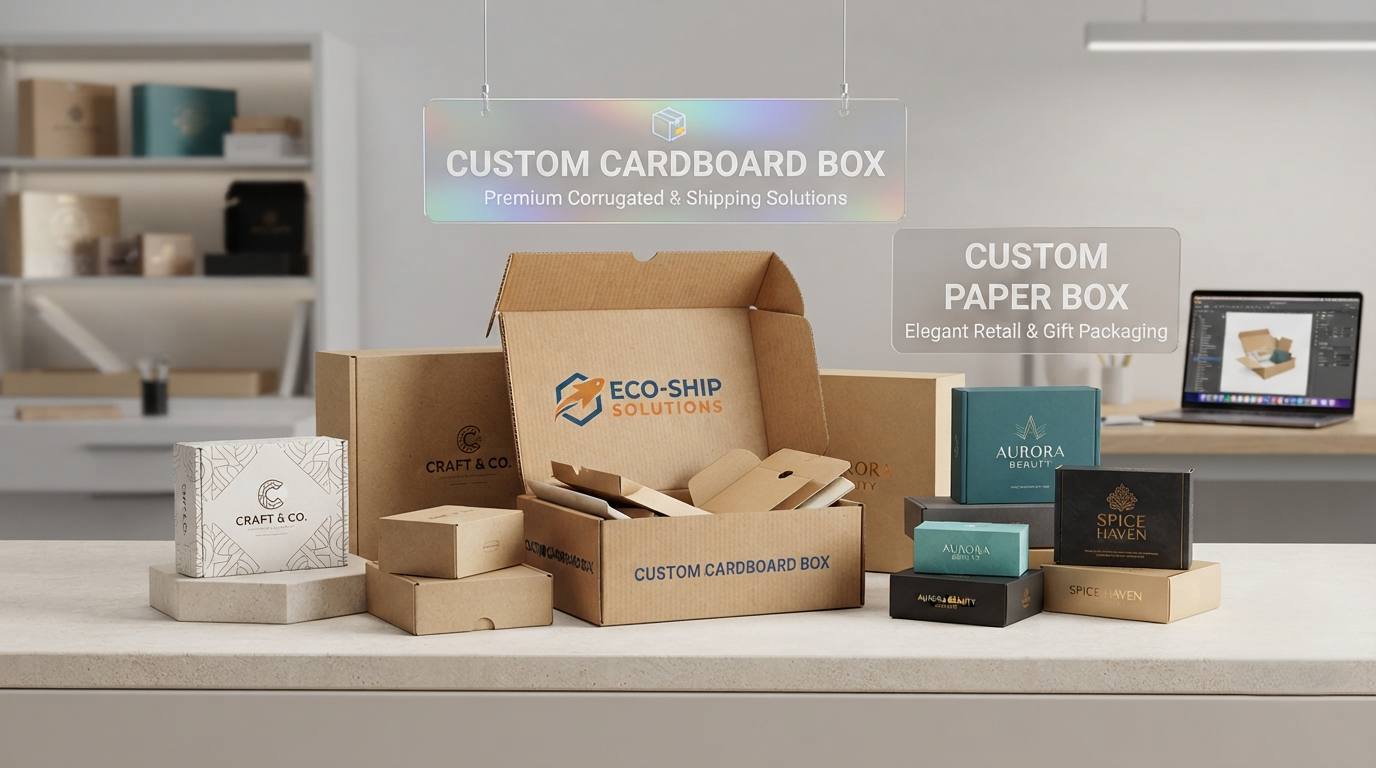
Before they discover the product, they notice the box, its texture, printing, and opening experience. Choosing between a Custom Cardboard Box and a Custom Paper Box therefore involves more than appearance. The right packaging protects products, supports efficient operations, and communicates what makes a brand different.
Whether you sell cosmetics, apparel, electronics, gifts, or subscription products, understanding each material can help you balance presentation, strength, and cost.
Why Custom Packaging Matters
Standard packaging may fit a product, but rarely tells its story. A carefully designed box creates a consistent brand impression across retail shelves, deliveries, and social media unboxing videos.
Well-planned packaging can help businesses:
-
Reduce movement and damage during transportation.
-
Present logos, colors, and instructions clearly.
-
Avoid unnecessary fillers and oversized shipping cartons.
-
Make products feel more thoughtful and gift-ready.
-
Simplify packing, stacking, storage, and handling.
The goal is not simply to make a beautiful box. It is to create a packaging system that works from production to delivery.
Understanding a Custom Cardboard Box
A Custom Cardboard Box is typically selected when protection, structural strength, or versatile sizing is important. In shipping applications, manufacturers commonly use corrugated board, which contains a fluted layer between flat liners. Other cardboard constructions serve display and specialty packaging needs.
Where Cardboard Packaging Performs Best
Corrugated boxes are practical for online orders, fragile items, bulk shipments, and subscription kits. Businesses can specify box dimensions, board grade, closure style, and printing based on their products.
Features Worth Considering
Look beyond outer dimensions. Internal inserts, reinforced corners, suitable flute profiles, and secure closures can make a noticeable difference. A snug fit may reduce filler consumption, while thoughtful opening tabs can improve customer convenience.
A Custom Cardboard Box can also carry branding through flexographic printing, digital graphics, labels, or sleeves, depending on quantity and finish requirements.
What Makes a Custom Paper Box Different?
A Custom Paper Box generally refers to packaging made from paperboard or similar folding carton materials. These boxes are widely used where shelf appeal, crisp printing, and a refined retail presentation matter.
Common uses include skincare products, chocolates, stationery, accessories, and lightweight consumer goods. Paperboard cartons can be folded flat before assembly, potentially reducing storage space.
Design Options for Retail Impact
Brands may choose matte or gloss finishes, embossing, foil details, window cutouts, or printed interiors. However, decorative treatments should suit the product and budget rather than overwhelm the message.
A well-designed Custom Paper Box combines readable product information, accurate sizing, strong folds, and an appealing surface finish.
Custom Cardboard Box vs. Custom Paper Box
| Factor | Cardboard box | Paper box |
|---|---|---|
| Typical construction | Corrugated board | Folding paperboard |
| Main priority | Shipping protection | Retail presentation |
| Common products | Electronics, deliveries, kits | Cosmetics, gifts, food cartons |
| Storage | Often supplied flat | Often supplied flat |
| Printing | Varies by board and method | Often supports detailed graphics |
Neither format is automatically better. The ideal choice depends on product weight, distribution conditions, desired appearance, and required protection.
How to Choose the Right Packaging
Start with the product rather than the artwork. Measure its length, width, height, and weight. Consider whether it will travel through courier networks, sit on a shop shelf, or be presented as a gift.
Then review these practical decisions:
-
Protection: Test samples with the actual product and any inserts.
-
Dimensions: Minimize excess space without creating a tight, damaging fit.
-
Printing: Match color accuracy and finish to your brand identity.
-
Budget: Compare unit price alongside setup, storage, and transport costs.
-
Materials: Ask suppliers about recycled content and local disposal options.
For many businesses, a Custom Paper Box works as the branded retail pack, while a Custom Cardboard Box provides the protective outer shipper. Using both can solve different problems without forcing one material to do everything.
Sustainability Without Misleading Claims
Customers increasingly notice excess packaging. Right-sizing, reducing mixed-material components, and choosing recyclable structures where local facilities accept them can improve packaging decisions.
Avoid claiming a box is universally sustainable simply because it is paper-based. Coatings, adhesives, inks, and windows may affect recyclability. Ask for material specifications and make environmental statements that can be verified.
For food-contact applications, confirm that selected materials and inks meet relevant safety requirements. For heavier shipments, request compression and transit testing before approving large production quantities.
Frequently Asked Questions
1. Which box is better for shipping?
Corrugated cardboard is often suitable for shipping because its structure can provide cushioning and stacking strength.
2. Are paper boxes suitable for luxury products?
Yes. Premium printing, precise folds, and restrained finishes can create an elegant presentation.
3. Can I print my logo on both?
Yes. Both formats support branding, although printing methods and results differ.
4. What affects the price of custom boxes?
Material, dimensions, quantity, printing, tooling, and finishing all influence cost.
5. Can packaging be made in unusual shapes?
Yes, but complex shapes may require custom dies and additional assembly.
6. Do I need inserts for fragile products?
Often. Inserts can limit movement and improve protection when properly tested.
7. Are these boxes recyclable?
Many are, but acceptance depends on coatings, added materials, and local recycling systems.
8. Can boxes arrive flat?
Many folding cartons and corrugated designs can be delivered flat for storage efficiency.
9. How do I select the right thickness?
Match board specifications to product weight, handling conditions, and supplier testing.
10. Should I order samples first?
Absolutely. Physical samples reveal fit, print quality, assembly issues, and protection gaps.
- Technology for Students
- Admissions & Applications
- Online Courses
- Career and Jobs
- Campus Life
- Drinks
- Film
- Fitness
- Food
- Games
- Gardening
- Health
- Home
- Literature
- Music
- Networking For Students
- Insights
- Party
- Religion
- Shopping
- Sports
- Theater
- Wellness
- Education News
- Business & Finance For Students
- Security, Law & Crime Education
- Insurance
- Science & Technology For Students
 English
 Arabic
 French
 Spanish
 Portuguese
 Deutsch
 Turkish
 Dutch
 Italiano
 Russian
 Romaian
 Portuguese (Brazil)
 Greek