


Aluminum Prototype and Sheet Metal Prototyping: Smart Methods for Faster, Accurate Product Development
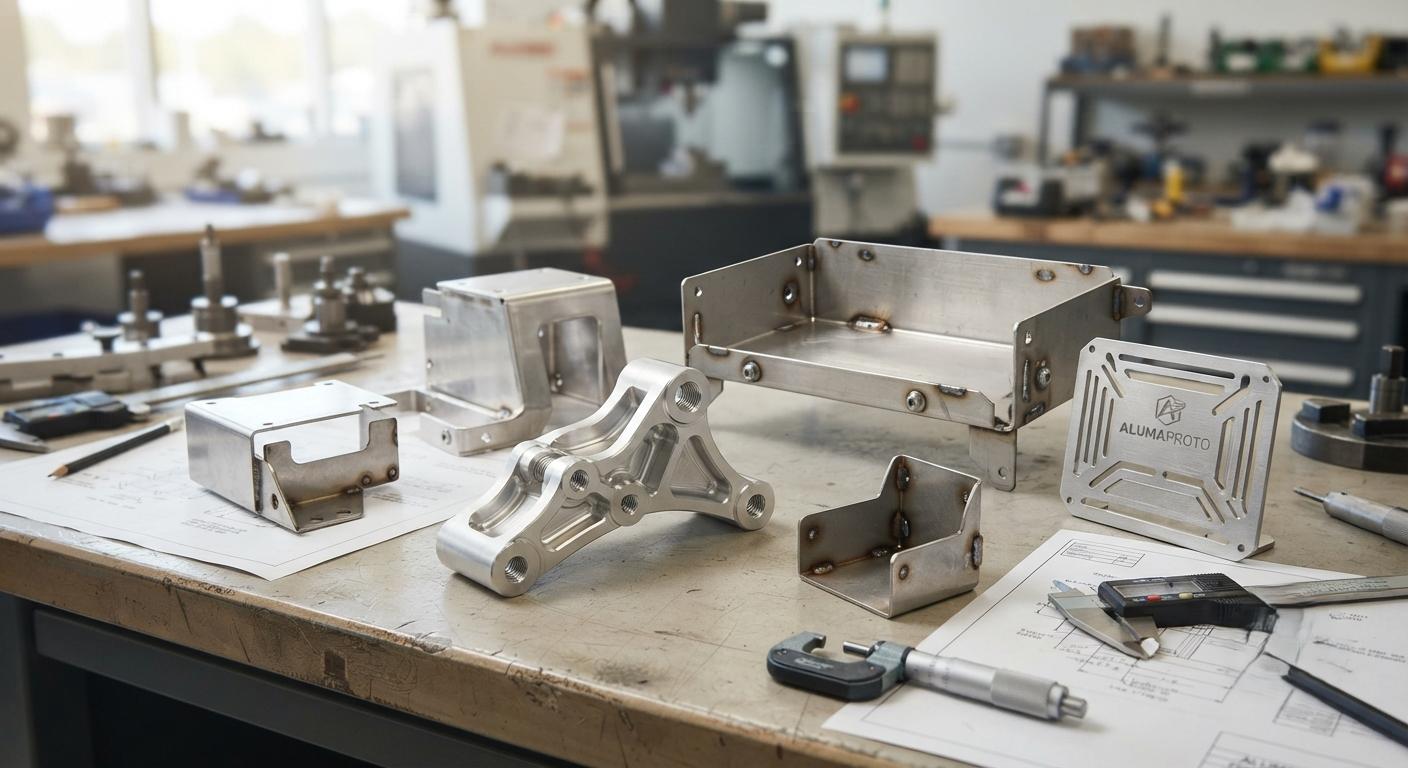
Modern product development depends on speed, accuracy, and testing before full-scale manufacturing. Two widely used approaches are aluminum prototype development and sheet metal prototyping. Both help teams evaluate form, fit, function, and manufacturability while reducing costly mistakes.
An aluminum prototype is useful when a project needs strength, machinability, thermal performance, or a production-like metal finish. Sheet metal prototyping is ideal for enclosures, brackets, panels, frames, housings, and formed components. Selection depends on geometry, tolerance, finish, and production needs.
What Is Aluminum Prototype Development?
An aluminum prototype is a functional or visual part produced from aluminum before mass production. It may be created through CNC machining, milling, turning, cutting, or other suitable fabrication methods.
Aluminum combines low weight, strength, corrosion resistance, thermal conductivity, and machinability. Designers often use an aluminum prototype when plastic samples cannot represent the mechanical behavior of the final product.
Typical applications include:
-
Automotive components
-
Aerospace brackets
-
Electronics housings
-
Robotics parts
-
Medical equipment
-
Industrial machine parts
-
Heat sinks
What Is Sheet Metal Prototyping?
Sheet metal prototyping creates trial components from flat metal sheets using laser cutting, bending, punching, welding, forming, and finishing. It is especially valuable when the final product will also be produced from sheet metal.
It helps teams verify dimensions, bends, holes, clearances, fastening points, and enclosure performance before tooling.
Common applications include cabinets, electrical enclosures, chassis, mounting plates, guards, brackets, covers, and control panels.
Aluminum Prototype vs. Sheet Metal Prototyping
| Factor | Aluminum Prototype | Sheet Metal Prototyping |
|---|---|---|
| Best for | Solid machined parts | Bent and formed parts |
| Common process | CNC machining | Cutting and bending |
| Geometry | Complex 3D shapes | Flat or folded structures |
| Strength testing | Excellent | Excellent for assemblies |
| Design changes | Easy before production | Easy before tooling |
| Typical uses | Housings, blocks, mounts | Panels, brackets, enclosures |
Both support rapid validation but address different engineering needs.
Key Benefits of Aluminum Prototype Manufacturing
A well-made aluminum prototype gives engineers a realistic view of how a production metal part may perform.
Better Functional Testing
Aluminum supports load, vibration, fit, thermal, and assembly testing, making it more useful than a visual model.
High Dimensional Accuracy
CNC processes can hold tight tolerances when the aluminum prototype must fit precision components.
Professional Surface Options
Prototypes can be bead blasted, polished, brushed, anodized, painted, or coated.
Main Advantages of Sheet Metal Prototyping
Sheet metal prototyping helps identify fabrication problems early in designs with bends, holes, tabs, slots, or welded joints.
Main advantages include:
-
Verification of bend allowances and radii
-
Fast testing of enclosure dimensions
-
Lower risk before production tooling
-
Easier evaluation of assembly methods
-
Better design for manufacturability
-
Realistic testing with production-like materials
Important Design Considerations
Material Selection
Aluminum grades differ in strength, corrosion resistance, machinability, and finishing behavior. Sheet metal projects may use aluminum, stainless steel, mild steel, or galvanized steel.
Tolerance Planning
Use tight tolerances only where function requires them; practical tolerances help control cost.
Bend and Edge Details
For sheet metal prototyping, bend radius, material thickness, hole distance from bends, and relief features can strongly affect accuracy.
Surface Finish
Finishing should be considered early because anodizing, powder coating, polishing, or painting may influence dimensions and lead time.
How the Prototyping Process Works
A practical workflow includes:
-
Review the 3D CAD model and technical drawing.
-
Select the material and manufacturing method.
-
Check tolerances, wall thickness, holes, bends, and undercuts.
-
Manufacture the aluminum prototype or sheet metal part.
-
Apply the required finish.
-
Inspect critical dimensions.
-
Test fit, function, assembly, and performance.
-
Revise the design before production if required.
This reduces uncertainty before manufacturing.
When Should You Choose Each Method?
Choose an aluminum prototype when the part needs complex machining, rigidity, detailed pockets, threaded features, thermal testing, or accurate functional evaluation.
Choose sheet metal prototyping when the design mainly consists of panels, brackets, folded housings, frames, covers, or assemblies made from uniform-thickness sheet.
Some projects combine both methods to validate a complete assembly.
Frequently Asked Questions
1. What is an aluminum prototype used for?
It is used to test dimensions, strength, appearance, fit, thermal behavior, and function before mass production.
2. Is aluminum suitable for functional prototypes?
Yes. Aluminum is lightweight, strong, machinable, corrosion resistant, and suitable for realistic mechanical testing.
3. What is sheet metal prototyping?
It is the creation of trial sheet metal parts through cutting, bending, forming, joining, and finishing.
4. Which products commonly use sheet metal prototypes?
Enclosures, brackets, cabinets, panels, chassis, covers, guards, and mounting structures commonly use them.
5. Can prototype parts receive production-quality finishes?
Yes. Finishes may include anodizing, powder coating, painting, brushing, polishing, or blasting.
6. Does prototyping reduce manufacturing risk?
Yes. It helps identify dimensional, functional, assembly, and manufacturability problems before production.
7. Can tight tolerances be achieved?
Yes, particularly with CNC-machined aluminum, although tolerances should match real functional requirements.
8. Is sheet metal prototyping suitable for low quantities?
Yes. It works well for one-off parts, engineering samples, pilot builds, and low-volume production.
9. Can designs be changed after testing?
Yes. Prototyping is intended to reveal improvements before the final production design is approved.
10. Which method is more cost-effective?
Cost depends on geometry, material, quantity, tolerances, finishing, and complexity. The best method closely reflects the final part.
- Technology for Students
- Admissions & Applications
- Online Courses
- Career and Jobs
- Campus Life
- Drinks
- Film
- Fitness
- Food
- Games
- Gardening
- Health
- Home
- Literature
- Music
- Networking For Students
- Insights
- Party
- Religion
- Shopping
- Sports
- Theater
- Wellness
- Education News
- Business & Finance For Students
- Security, Law & Crime Education
- Insurance
- Science & Technology For Students
 English
 Arabic
 French
 Spanish
 Portuguese
 Deutsch
 Turkish
 Dutch
Dutch
 Italiano
 Russian
 Romaian
 Portuguese (Brazil)
 Greek
Greek